As an Amazon Associate I earn from qualifying purchases.
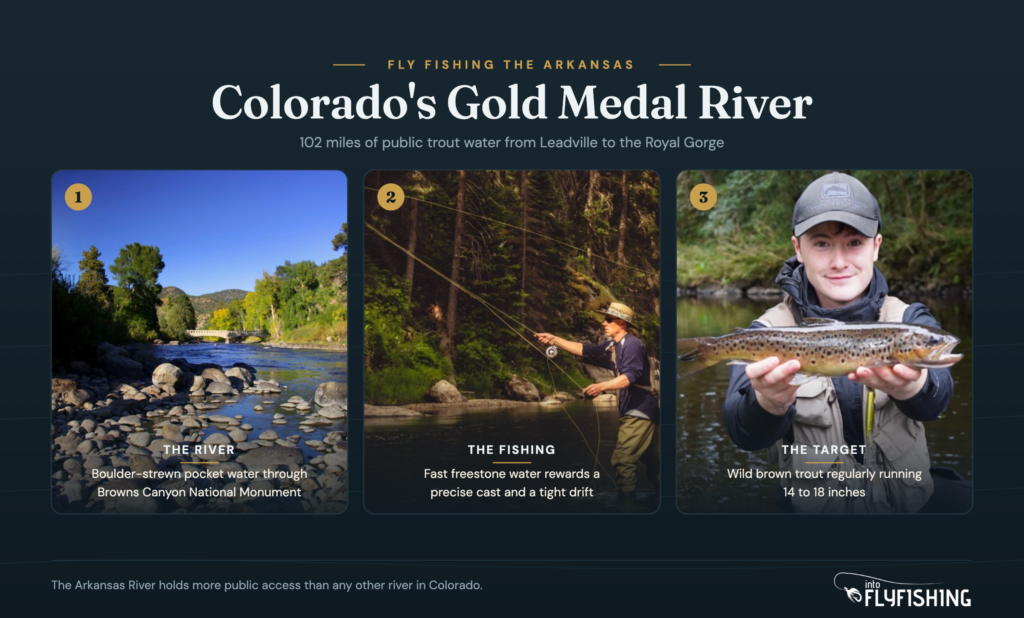
The Arkansas River is not a secret. It shows up on every shortlist of top Colorado trout rivers, and for good reason: 102 contiguous miles of Gold Medal water, more public access than any other river in the state, and wild brown trout stacked in every stretch from Leadville down to the Royal Gorge. The fishing holds up whether you have one afternoon or five days to burn.
I’ve fished the Ark across multiple seasons and a handful of different sections. What keeps drawing me back is how different the river feels from one stretch to the next. The upper basin fishes like a freestone mountain creek. Browns Canyon is big, boulder-strewn pocket water. The Royal Gorge section gets technical. Each one rewards a different approach.
This guide covers what you need to plan a trip, from the best sections and the hatch calendar to regulations, access, and gear setup.
Other Rivers In Colorado
- Rio Grande In Colorado
- Animas River
- Frying Pan River
- Eagle River
- Taylor River
- Roaring Fork River
- Yampa River
- Cache la Poudre River
- Gunnison River
- Colorado River
- South Platte River
- North Platte River (Colorado)
- Conejos River
- Dolores River
- Big Thompson River
- White River
- San Miguel River
- Elk River
- Crystal River
- Fraser River
- Williams Fork River
Compare Colorado river guides in the Colorado River Directory. For trip ideas beyond Colorado, browse our guide to fly fishing rivers across the US.
Why the Arkansas River Stands Apart
One number explains why the Arkansas gets so much attention: 102 miles of continuous Gold Medal water, running from just below Leadville all the way to above the Royal Gorge. That is roughly one-third of all the Gold Medal mileage in Colorado, on a single river.
Colorado’s Gold Medal designation requires a fishery to produce at least 60 pounds of trout per acre and a minimum of 12 trout at 14 inches or larger per acre. The Arkansas hits that bar across 102 miles. That kind of density and size is hard to find anywhere, let alone on this much public water.
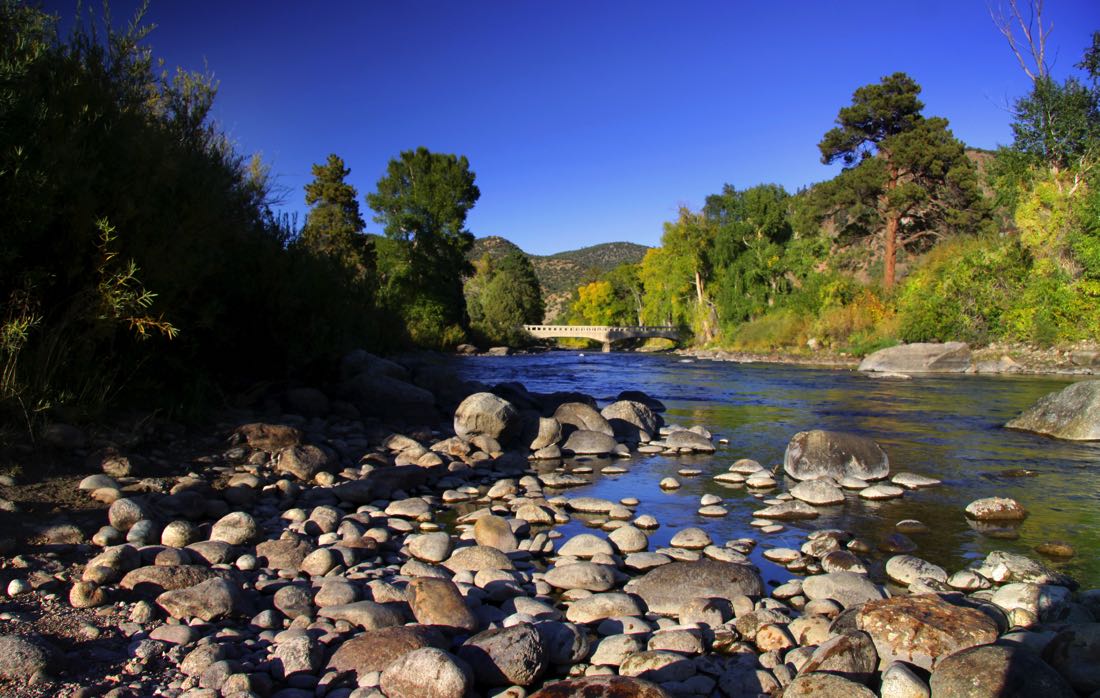
The Arkansas has public access in Arkansas Headwaters Recreation Area and Browns Canyon National Monument. AHRA fee sites require a Colorado State Parks pass. Browns Canyon has no entrance fee, but parking at Ruby Mountain or Hecla Junction requires a CPW parks pass.
If you want more context on Colorado’s trout rivers broadly, our Fly Fishing Colorado guide covers the full state.
Key Sections of the Arkansas River
The river breaks into three main fishing zones, plus a tailwater section below Pueblo Dam. Each fishes differently, and the best one for you depends on when you go and what you’re after.
Upper Basin: Leadville to Buena Vista
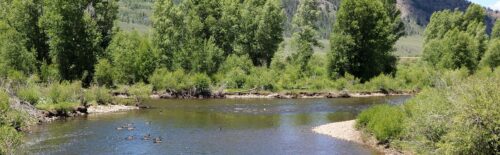
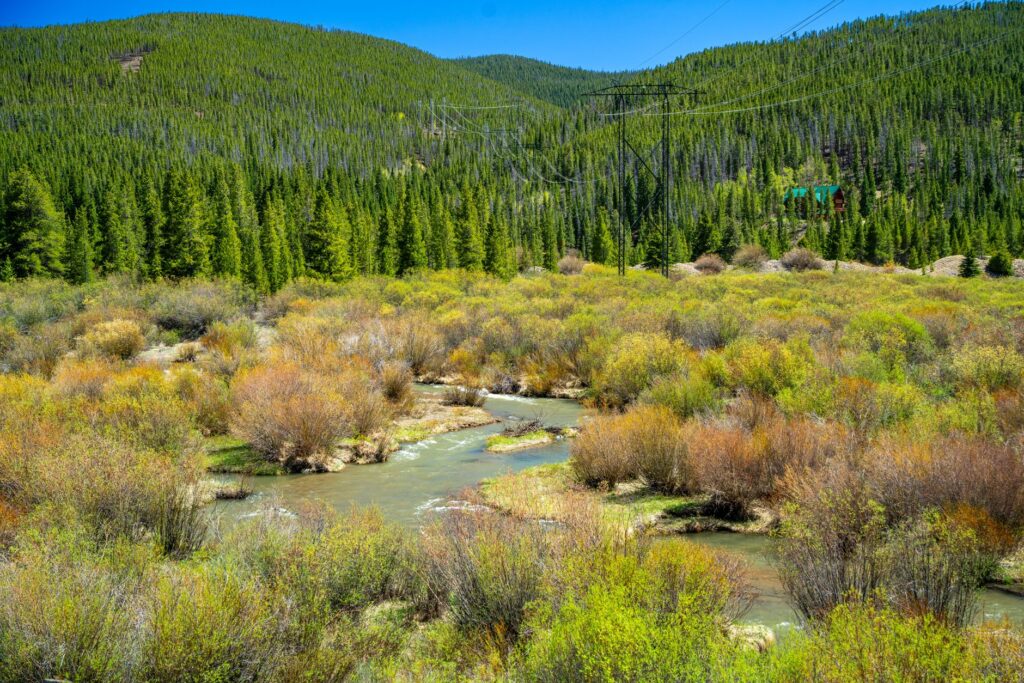
This is the smallest water on the river. Above Buena Vista, the Ark runs fast and narrow, with the kind of riffles and runs you’d expect at 9,000 feet of elevation. The crowds are thinner up here, and the fish are smaller on average, but the water is productive earlier in the spring before the crowds pile into Browns Canyon.
The upper basin fishes well during the Blue-winged Olive hatches in mid-March, before runoff starts. Once the snow melts and flows spike, this section gets blown out first.
Middle Basin: Browns Canyon (Buena Vista to Salida)
This is the heart of the Arkansas, and the section most people come for. Browns Canyon National Monument sits right in the middle of it, protecting 21,000 acres of canyon country around the river. The trout densities here are the highest on the Arkansas, and the water is wide enough for boat access while still holding plenty of wade-friendly runs.
The pocket water in Browns Canyon is some of the best dry fly water in Colorado when the caddis hatch is on. The boulders create the kind of seams and cushions where big browns hold in plain sight.
Lower Basin: Royal Gorge to Cañon City
The river through the Royal Gorge is tighter and more technical. Steep canyon walls, fast current, and a different character than the open valley water above Salida. I fish this section when I want to work smaller nymphs in slower tailouts and back eddies. It demands more precise presentations than Browns Canyon, and you’ll have fewer people around you.
Access through the Royal Gorge section is limited compared to the middle basin, but several pullouts along US-50 get you to the water.
Tailwater: Below Pueblo Dam
Nine miles of year-round fishing below Pueblo Dam makes up the tailwater section. It is a different fishery entirely, with more consistent flows and smaller flies. Blue-winged Olives and midges dominate here throughout winter. Worth knowing about if you are in the area in January or February and the upper river is unfishable.
Fish Species: What You’re Targeting
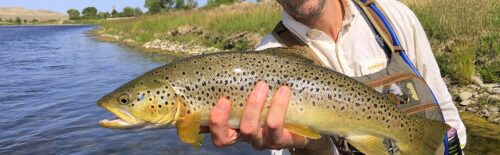
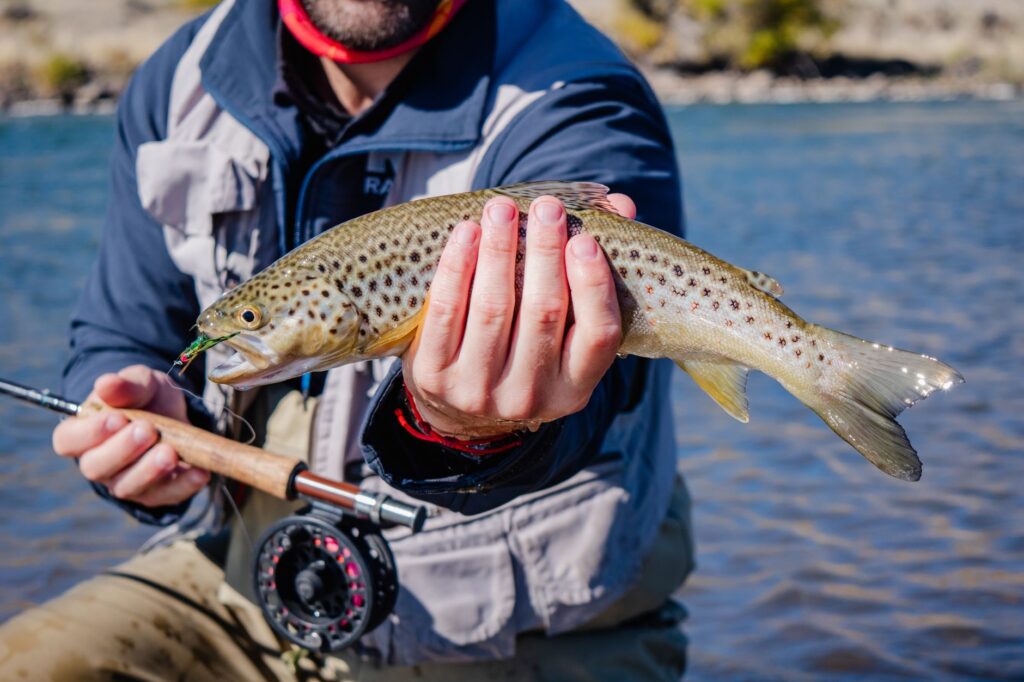
Brown trout are the primary target on the Arkansas. They outnumber rainbows throughout the Gold Medal section, and the river is known for high densities of fish in the 14 to 18 inch range. You will catch them in pocket water, in current seams, and stacked up behind boulders throughout the canyon sections.

Rainbows are present, particularly in the upper basin and tailwater sections. They rise to dry flies with less hesitation than the browns and tend to run a bit smaller. The catch-and-release rules on rainbows in certain sections (more on that below) protect the wild population, so handle them quickly.
The Ark is not a trophy fishery in the sense that you’re hunting 20+ inch fish. It is a numbers river where 15 to 17 inch browns are common, and a fish over 20 inches is a legitimate catch to remember. For that size, I focus on streamers fished deep through the bigger pools in Browns Canyon, especially in late fall.
The Hatch Calendar: Fly Selection by Season
The hatch schedule on the Ark is one of the most varied on any Colorado freestone river. If you time your trip around a hatch, you can find rising fish from March through November.

The table below shows the primary hatches by season, with go-to patterns and hook sizes for each window.
| Season | Insects | Patterns | Hook Sizes |
|---|---|---|---|
| Dec to Feb | Midges | Zebra Midge, Two-bit Hooker | #18 to 22 |
| Mid-Mar | Blue-winged Olives | Parachute Adams, RS2 | #18 to 20 |
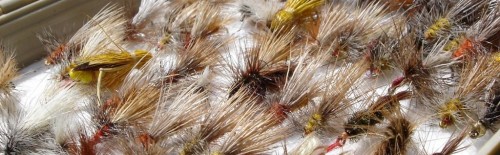
| Mid-Apr to late May | Brachycentrus (Tax Day) caddis | Elk Hair Caddis, Hare’s Ear, Soft Hackle | #14 to 16 |
| Jun to Jul | Golden Stonefly, caddis | Foam Stonefly, Elk Hair Caddis | #10 to 14 |
| Jul to Aug | PMDs, Yellow Sallies | PMD dry, Foam Stonefly dry-dropper + PTN | #14 to 18 |
| Sep to Oct | Red Quills, October Caddis | Red Quill dry, October Caddis, Woolly Bugger | #8 to 14 |
Winter and Early Spring: Midges and BWOs
From December through February, midges are the only consistent game. Fish slow runs and flat water with a #18-22 Zebra Midge or Two-bit Hooker under an indicator. The tailwater section below Pueblo Dam fishes better than the main river during this window.
Mid-March brings the first Blue-winged Olive activity on the upper river. BWO hatches trigger surface feeding on overcast, cold days, usually between 10 a.m. and 2 p.m. A #18 Parachute Adams or RS2 in a size 18-20 works well as a dropper or on the surface when fish are rising.
Spring: The Tax Day Caddis Hatch
This is the most famous hatch on the Arkansas and one of the best spring caddis events in the country. The Brachycentrus grannom caddis start appearing near Cañon City around mid-April, when water temperatures reach 54°F. The hatch then moves upriver slowly over roughly six weeks, reaching Buena Vista and Salida in late May in a normal water year.
That progression means you can follow the hatch up the river all spring. Fish the lower sections in April, then work your way up as temperatures climb. By the time the hatch reaches the upper basin, spring runoff is usually starting to blow out the upper sections, so timing matters.
The go-to patterns are an Elk Hair Caddis in #14-16 on the surface, or a soft hackle and Hare’s Ear nymph dropped below it. Fish the swing on a soft hackle as caddis pupa rise to the surface during the hatch; it is one of the most effective presentations on the river during this window.
Summer: PMDs, Yellow Sallies, and Stoneflies
Once spring runoff clears, usually by early July, summer hatches take over. Pale Morning Duns come off in the mornings and evenings through July and August. Yellow Sallies (small stoneflies) hatch sporadically throughout the day in the afternoon. Golden Stoneflies come off in big numbers in June and July and produce some of the best surface takes of the year on the bigger boulder sections in Browns Canyon.
One thing to plan around in summer: the Arkansas is popular with whitewater rafters, and boat traffic through Browns Canyon can be heavy from 10 a.m. to 3 p.m. Fishing early and fishing late solves this. The fish feed well at dawn and again in the last two hours of light, and both windows are largely raft-free.
A dry-dropper rig works best through the summer months. Fish a size 10-12 foam stonefly as the indicator fly and drop a Pheasant Tail Nymph in #14-18 below it. This setup covers surface and subsurface feeding at once and handles the choppy pocket water well.
Fall: Red Quills and October Caddis
Fall is my favorite time on the Arkansas. Flows drop, water clears, the crowds disappear, and the fish feed aggressively before winter. Red Quills hatch through September and October, along with Pseudocloeons, Gray Drakes, and Green Drakes in some years. October Caddis, the big orange dry fly, comes off in the lower sections in late September and early October.
Brown trout are also in pre-spawn mode through October, and the bigger fish move into shallower water. Streamer fishing gets good in the fall, particularly with olive or brown Woolly Buggers stripped through pools and runs in the morning before the caddis activity picks up.
Best Time to Fish the Arkansas
The two best windows are mid-March through late May, and September through November. Both offer clear water, active hatches, and fish that have not been pressured all summer.
Spring runoff is the main obstacle on the Ark. Snowmelt from the Sawatch Range turns the upper sections into fast, silty water that is nearly unfishable, usually from late May through late June in a heavy snow year. In a dry year, runoff can clear by early June. Check flows before you go. ArkAnglers in Salida and Buena Vista post weekly fishing reports that are accurate and include current CFS numbers.
Summer fishing is productive but the rafting traffic through Browns Canyon is real. If you fish July or August, go early, go late, and focus on sections away from the main raft launch points near Buena Vista.
Winter fishing on the tailwater below Pueblo Dam is worth considering if you are nearby. Midge fishing in January and February on the tailwater is consistent, and you will have the river almost entirely to yourself.
Gear Setup for the Ark
A 9-foot, 5-weight rod covers most situations on the Arkansas. The pocket water in Browns Canyon and the Royal Gorge section calls for quick, accurate casts rather than long ones, and the 5-weight handles dry flies, dry-droppers, and light nymph rigs well throughout the season.
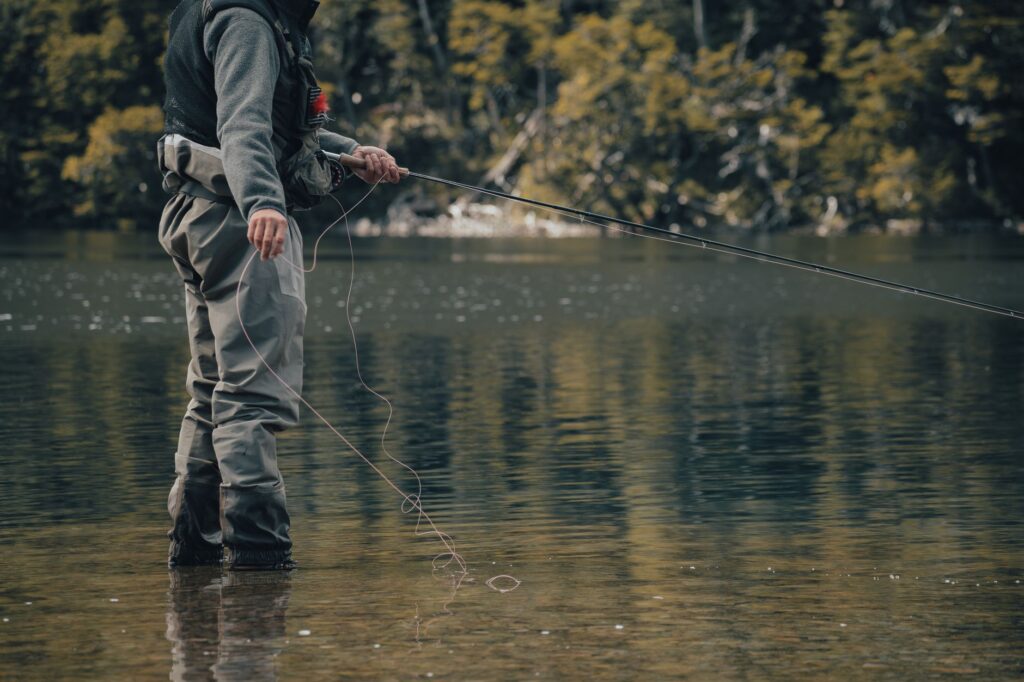
Move to a 6-weight with a sink-tip line when you’re throwing streamers in high water or working deep pools in the fall. The Ark runs fast in places, and getting a weighted fly down in the current requires more line weight than most people expect.
Tippet: 4X or 5X fluorocarbon is the standard for most nymphing. Drop to 6X for small midge and BWO patterns on flat water, and go up to 3X for big streamers and stonefly patterns in heavy current. The water is clear in summer and fall, and fish that have seen a lot of pressure are leader-shy. Make sure your knots are solid , fast current will find any weak connection at the worst time.
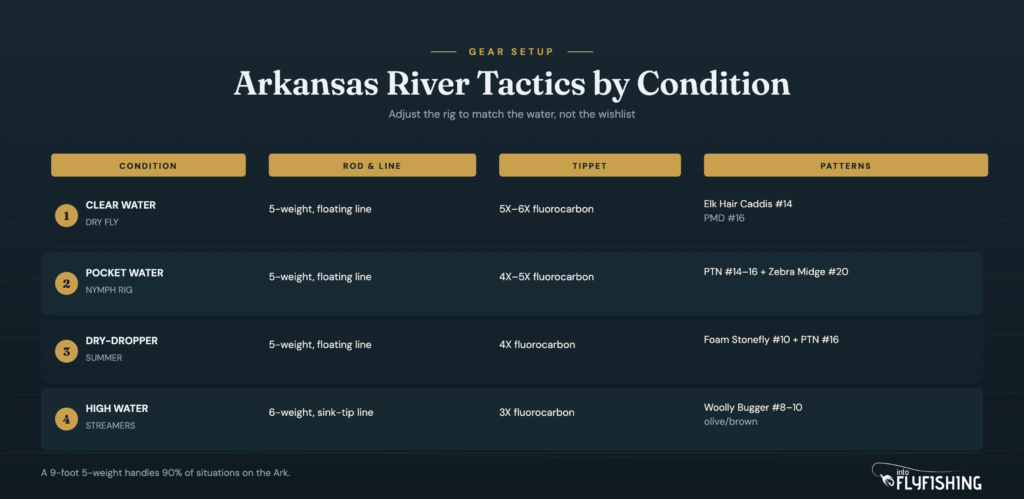
For more on choosing the right rod for trout rivers like this, our Best Fly Rods for Trout guide covers the rods our team has tested on western freestone water. If you want to see how the top rods stack up across all fly fishing styles, our Best Fly Rods roundup goes broader. A 9-foot 5-weight is the recommendation for 90% of what you’ll encounter on the Ark.
A few other things worth packing: wading boots with felt or rubber studs (the riverbed is cobbled and slippery), polarized glasses for spotting fish in the riffles, and a wading staff if you’re fishing alone through the deeper Royal Gorge sections. The current is stronger than it looks in a lot of places.
Access Points and Regulations
The Ark is as accessible as any trout river in the country. Most of the Gold Medal section runs through Arkansas Headwaters Recreation Area, which provides pullouts, parking areas, and river access at regular intervals along US-24 and US-50. Browns Canyon National Monument adds additional publicly accessible land through the canyon section.
Key access points in the middle basin include: Big Bend (north of Salida, good for walk-wade), Rincon (excellent pocket water access), Salida East (below town, easy to reach), and the standard put-in/take-out points along the canyon used by both guides and wading anglers.
| Section | Key Access Points | Regulations |
|---|---|---|
| Upper Basin (Leadville to BV) | Multiple pullouts on US-24 | Standard statewide regs |
| Stockyard Bridge to Badger Creek | AHRA parking areas | C&R for rainbow trout; browns 2-fish limit |
| Browns Canyon (BV to Salida) | Big Bend, Rincon, Salida East | Standard statewide regs; AHRA fee area |
| Royal Gorge to Cañon City | Pullouts along US-50 | Standard statewide regs |
| Tailwater (below Pueblo Dam) | Roadside pullouts, Lake Pueblo SP | Standard statewide regs; license req. |
On regulations, check the Colorado Parks and Wildlife fishing guide for the current year before you go, as specific rules can change. The framework that has applied consistently is:
- Stockyard Bridge to Badger Creek: catch-and-release for rainbow trout only (browns can be kept under statewide limits)
- Downstream from Highway 24 Bridge in Chaffee, Fremont, and Lake Counties: two-fish possession limit
- A valid Colorado fishing license is required for all anglers 16 and older
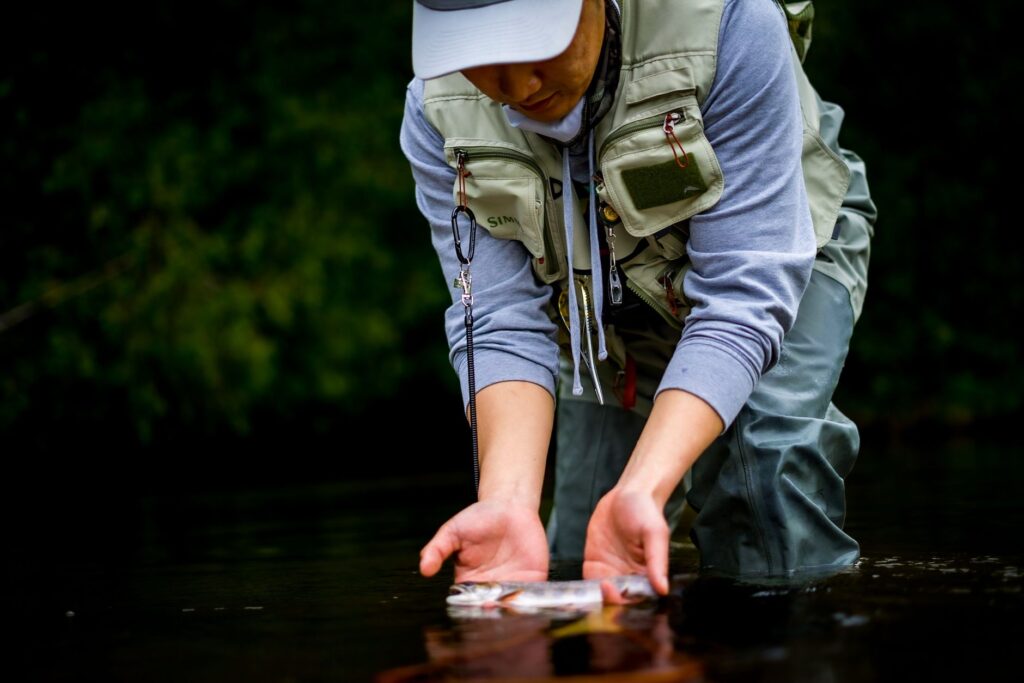
The regulations are not complicated, but the C&R rule on rainbows in the upper sections is worth knowing before you put a fish in your net. A quick look at the CPW regulations before your trip takes five minutes and avoids any confusion on the water.
Tips for Fishing the Arkansas River
Read the pocket water. The Arkansas in Browns Canyon is all about boulders, and the fish hold in four main spots: directly behind the boulders in the cushion, in the seam on either side where fast and slow water meet, in the tailout downstream of the main obstruction, and in any side pool where current pushes foam and food. Work those four zones on every boulder run and you will find fish.
Euro nymphing is highly effective on the Ark. The fast, bouncy pocket water is exactly the kind of water where tight-line techniques shine. You can feel every drift and detect takes that you would miss with a standard indicator setup. For a primer on the technique, the glossary entry on euro nymphing covers the basics.
Adjust your tactics for the caddis hatch. During the Tax Day caddis, fish are not always feeding on the surface even when you see lots of caddis in the air. They often take the emerger or pupa just under the surface film. A soft hackle or Sparkle Pupa on a down-and-across swing is as productive as a dry fly during heavy hatch activity. Drop a Zebra Midge behind it as a trailer.
Check flows. The Ark is managed partly by the Upper Arkansas Voluntary Flow Management Program, which means flows can change based on irrigation demands and reservoir releases. A sudden drop in flow in midsummer can move fish around dramatically. The USGS gauge near Nathrop is the one most local guides reference, and its 56-year record tells you when to come. Winter and early spring sit around 240 cfs and the river fishes small and clear. Runoff is the thing to plan around: June averages close to 1,950 cfs and has run near 2,900 in a heavy year, which is water you look at rather than wade. It settles back through August to about 725, and September comes in near 395, which is the number most people are hoping for.
If you’re newer to western rivers, our beginner mistakes guide covers several of the common errors that cost anglers fish on fast freestone water like this. And check our Animas River guide if you want to compare notes on another top Colorado freestone fishery.
FAQ: Arkansas River Fly Fishing
Yes. The Arkansas River in Colorado holds 102 miles of Gold Medal water open to public fishing year-round. A Colorado fishing license is required for all anglers 16 and older.
Browns Canyon, between Buena Vista and Salida, holds the highest trout densities on the river. The pocket water is excellent for both nymphing and dry fly fishing when the caddis hatch is on. If you only have one day, fish Browns Canyon.
A Pheasant Tail Nymph in #14-18 is the year-round workhorse. For spring, add an Elk Hair Caddis #14-16 and a Hare’s Ear soft hackle. Summer calls for PMD dries, Yellow Sally dry flies, and a foam stonefly dry-dropper. Fall adds a Woolly Bugger for streamers and October Caddis dry flies.
Mid-March through late May for spring hatches, and September through November for fall. Summer fishing is good but heavy rafting traffic runs through Browns Canyon from 10 a.m. to 3 p.m. Avoid late May through late June in most years due to spring snowmelt runoff.
Yes. The section from Stockyard Bridge to Badger Creek is catch-and-release for rainbow trout. Brown trout can be kept under the statewide two-fish possession limit on most sections. Always verify current Colorado Parks and Wildlife regulations before fishing.
Amazon and the Amazon logo are trademarks of Amazon.com, Inc, or its affiliates.
As a part of the Amazon Associates Program and other affiliate programs, Into Fly Fishing® may receive a comission if you order products through links on this website.