As an Amazon Associate I earn from qualifying purchases.
The first time I walked into a fly shop, the guy behind the counter asked if I wanted to rig a 5-weight with a 9-foot 4X leader or go lighter with 6X tippet. I had no idea what he was talking about. I smiled, nodded, and spent the next hour pretending I did.
That experience wasted a full afternoon. If I had a single reference that broke down every term before I walked through that door, the conversation would have taken five minutes.
This glossary covers every fly fishing term you’ll encounter, from the gear on your body to the water under your feet. I’ve organized it by category so you can find what you need without scrolling through an alphabetical list of 200 definitions.
Quick answer: Fly fishing uses a weighted plastic line to cast a nearly weightless artificial fly, rather than a weighted lure. The terminology covers gear (rod, reel, fly line, leader, tippet), fly types (dry fly, nymph, streamer), casting mechanics (backcast, load, loop), water reading (run, riffle, pool, seam), and fish behavior (hatch, rise, dead drift).
Essential Fly Fishing Gear Terms
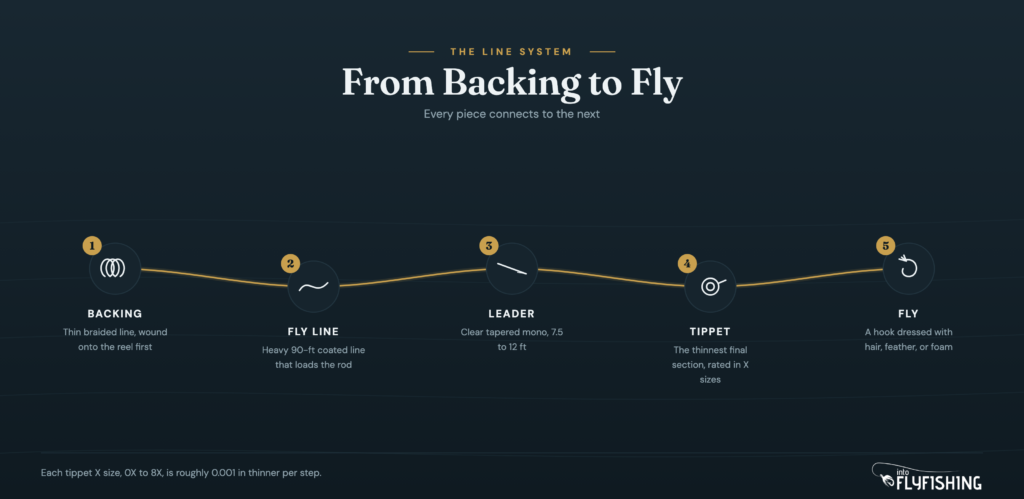
The gear system in fly fishing is different from any other kind of fishing. Every piece connects to the next, and understanding the terminology helps you rig correctly and buy what you actually need.
| Component | What It Is | Where It Fits |
|---|---|---|
| Backing | Thin braided line under the fly line | Wound onto reel first; provides capacity for long runs |
| Fly Line | Heavy 90-ft coated line whose weight loads the rod | Attached to backing; the casting engine |
| Leader | Clear tapered mono or fluorocarbon, 7.5-12 ft | Loop-to-loop to fly line; transfers cast energy |
| Tippet | Very thin final section, X-rated by diameter | Tied to leader tip; replaced when it shortens |
| Fly | Artificial hook dressed with hair, feather, or foam | Tied to tippet with a clinch or Davy knot |
Rod, Reel, and Fly Line
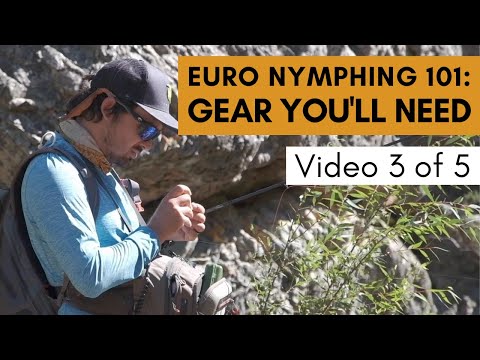
The fly rod is a long, flexible rod, typically 8 to 10 feet, rated by line weight (abbreviated as “wt”). A 5-weight rod handles most trout fishing. A 9-weight is built for saltwater. The weight rating tells you which fly line to pair with it. Rod action refers to where the rod flexes: a fast-action rod bends mainly at the tip, a medium-action rod flexes through the midsection, and a slow-action rod bends all the way into the handle. Fast-action rods cast farther and more accurately; slow-action rods are more forgiving for beginners at short range. If you’re just starting out, our guide to the best beginner fly rods covers the options worth starting with.

The fly reel holds the fly line and backing. On small trout, it’s mostly just a line storage device. On bigger fish, the drag system inside the reel applies resistance when a fish pulls line out, which tires the fish without breaking the tippet. Drag is adjusted by a knob on the reel face. See our best fly reels page for specific recommendations.
The fly line is the heavy, coated plastic line that loads the rod during the cast. Most fly lines are 90 feet long and taper from thick to thin. The weight of the fly line moving through the air bends the rod and stores energy for the cast. This is the opposite of spin fishing, where the lure carries the weight. See our best fly lines guide for line recommendations by type of fishing.
The weight forward (WF) taper concentrates mass in the first 30 feet of line, making it easier to cast at moderate distances. A double taper (DT) distributes weight more evenly and is preferred for delicate presentations on spring creeks. A shooting head is a short, heavy section of fly line designed for maximum distance casting.
Leader and Tippet
The leader is a clear, tapered piece of mono or fluorocarbon that connects the end of your fly line to your fly. It’s usually 7.5 to 12 feet long. The thick end (butt section) attaches to the fly line; the thin end (tippet section) holds the fly. The taper transfers energy from the heavy fly line down to the light fly so the cast unrolls properly and the fly lands softly.
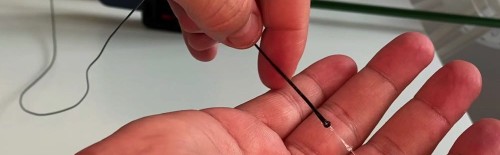
The tippet is the final, thinnest section of your line setup, tied to the hook eye of the fly. Tippet is sold on small spools and replaced as it shortens from knot-tying or breaking off fish. Tippet diameter is rated in X sizes, from 0X (heavy, around 0.011 inches) to 8X (very fine, around 0.003 inches). Bigger numbers mean thinner tippet. You use finer tippet for smaller flies and for wary fish in clear water. For the full breakdown of how leader and tippet work together, see our fly fishing leaders and tippet explained guide.
Backing
The backing is thin, braided line spooled onto the reel first, underneath the fly line. It serves two purposes: it fills the spool so the fly line doesn’t coil too tightly, and it gives you extra line capacity if a big fish runs beyond your 90 feet of fly line. Most freshwater trout setups carry 50 to 100 yards of 20-pound Dacron backing. Saltwater setups carry 200 yards or more. The arbor is the central hub of the reel spool; a large-arbor reel picks up line faster per rotation because of its bigger diameter.
Types of Flies
The term “fly” in fly fishing refers to an artificial lure made of natural and synthetic materials tied onto a hook. Flies fall into categories based on where they fish in the water column and what they imitate.

Dry Flies, Nymphs, and Streamers
A dry fly is designed to float on the water surface. It imitates adult aquatic insects like mayflies, caddisflies, and stoneflies after they hatch and rest on the water. Dry fly fishing is what most people picture when they think of fly fishing. You watch your fly drift on the surface and see the fish rise to eat it.

A nymph imitates the underwater larval or pupal stage of aquatic insects. Since fish feed subsurface roughly 80 to 90 percent of the time, nymphing is often the most productive approach. Nymphs are fished with weight to sink them and are usually drifted along the bottom or through the water column.
A streamer imitates a baitfish, crayfish, or other larger prey item. Streamers are typically larger flies, sometimes 2 to 6 inches long, and are stripped or swung through the water rather than drifted. They attract larger, more aggressive fish.
Emergers, Wet Flies, and Terrestrials
An emerger imitates an aquatic insect in the process of hatching, stuck in the surface film as it transitions from pupa to adult. During a hatch, fish often key on emergers over fully-formed adults because the hatching insect is easier to catch.
A wet fly is a traditional pattern fished below the surface, swung on a tight line across and downstream. Wet flies imitate drowned adults, soft-hackle flies, or general food items.
A terrestrial is a fly that imitates land-based insects that fall or blow onto the water: ants, beetles, grasshoppers, and cicadas. Terrestrials are a summer staple on many rivers, especially when aquatic insect activity is low.
An attractor is a dry fly that doesn’t imitate any specific insect. Royal Wulffs and Elk Hair Caddis patterns are common attractors. They work because they’re visible, float well, and trigger a strike response even when nothing is hatching. A parachute fly has a horizontal tuft of material at the base of the hook that keeps the fly upright in the surface film and makes it easy to see on choppy water.
Casting Terms
Fly casting has its own vocabulary because the mechanics are different from any other kind of fishing. The goal is to use the rod to flex and release energy into the fly line, which carries the fly to the target.
The Basic Cast: Load, Loop, and Haul
Loading the rod is the act of bending the fly rod under the weight of the moving fly line. A loaded rod stores energy that releases when the cast completes. Without loading, the cast dies before it reaches the target.
The backcast is the rearward motion of the fly line before the forward cast. You lift the line off the water and throw it behind you. Stopping the rod high and allowing the line to straighten fully behind you loads the rod for the forward cast.
The forward cast delivers the fly to the target. The rod tip follows a straight path, creating a loop: the rolling, folded shape of fly line traveling through the air. A tight, narrow loop carries energy well and turns over at the end. A wide, open loop dissipates energy and often results in the fly landing in a pile.
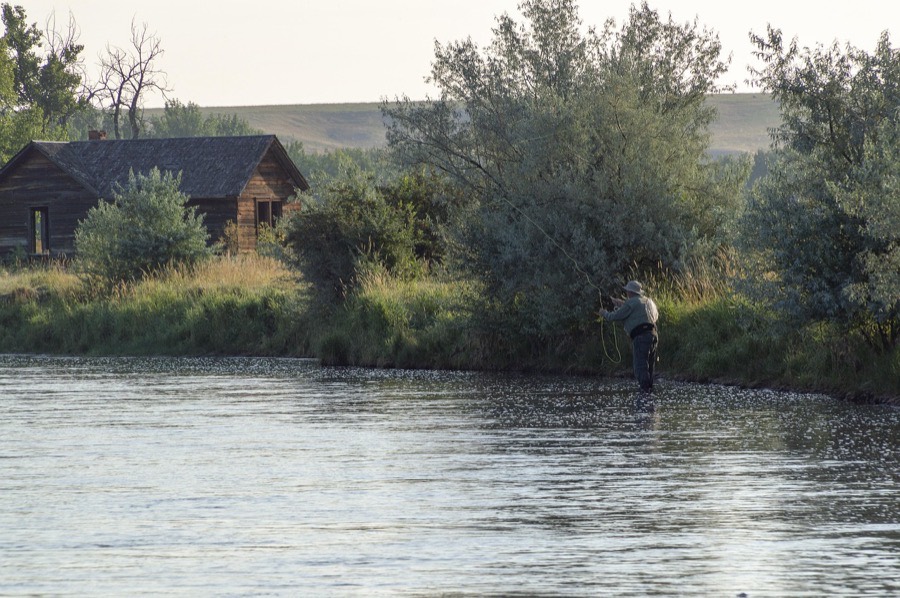
A false cast is any cast where the fly doesn’t touch the water. You keep the line moving back and forth to extend it to the right length, dry off a wet fly, or change the direction of the cast. One or two false casts is usually all you need; over-false-casting tires the arm and dries out leaders.
A haul is a sharp, short pull on the fly line with your non-casting hand during the stroke. Hauling increases line speed and tightens the loop. A double haul applies a haul on both the backcast and forward cast and is the primary technique for distance casting and casting in wind.
Mending, Roll Cast, and Reach Cast
Mending is repositioning the fly line on the water after the cast lands without moving the fly. You pick up a section of line and flip it upstream or downstream. An upstream mend slows the fly’s drift; a downstream mend speeds it up. Mending is the most important skill for achieving a dead drift on moving water.
The roll cast uses the water’s surface tension to load the rod without a backcast. It’s the go-to cast when trees or cliffs block the backcast. You lift the line so it forms a hanging loop behind the rod tip, then drive forward to roll the loop out over the water.
The reach cast adds an upstream or downstream reach at the end of the forward cast, placing the fly line upstream of the fly before it lands. This buys extra drift time before drag sets in and is one of the most effective presentation casts on technical spring creeks.

Our how to cast a fly rod guide walks through all of these with step-by-step instruction.
Reading Water Terms
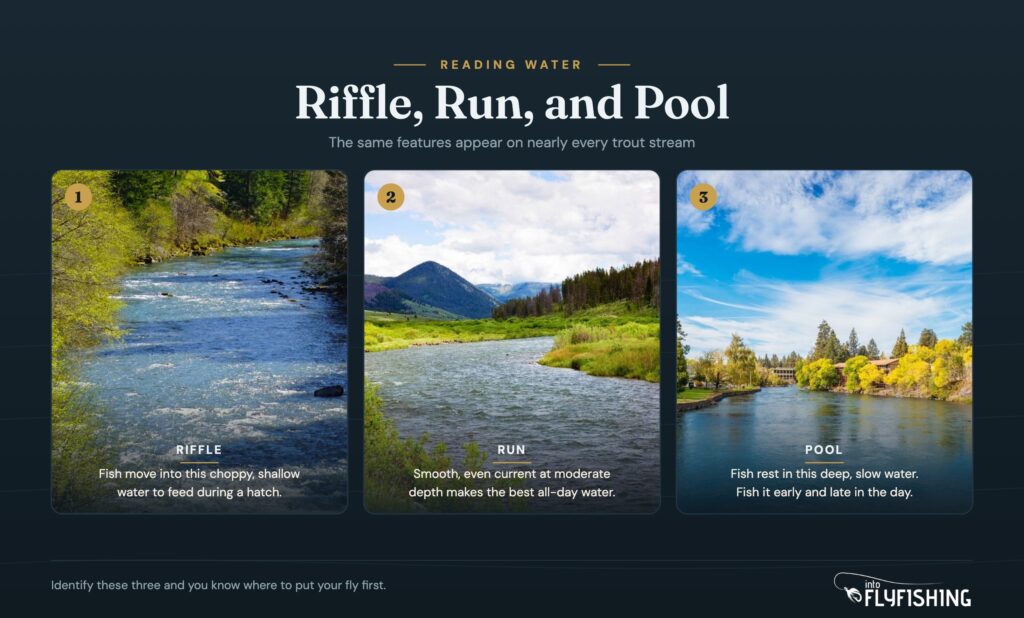
Reading water means looking at a river and identifying where fish are holding and feeding. The same current features appear on nearly every trout stream. Once you learn to see them, you stop fishing random stretches of water and start putting your fly in front of fish.
| Feature | What to Look For | Why Fish Hold Here |
|---|---|---|
| Riffle | Choppy, shallow water over rocks | Insect habitat; fish move in during hatches |
| Run | Smooth, even-flowing moderate depth | Steady food delivery; the best all-day water |
| Pool | Deep, slow water after a bend or drop | Resting water; productive at low-light hours |
| Seam | The edge between fast and slow current | Fish hold in slow side, dart into fast for food |
| Eddy | Reverse circular current behind an obstruction | Collects surface food; good dry fly water |
| Pocket water | Turbulent fast water with rock-sheltered pockets | Less pressured; productive if you can dead-drift it |
Runs, Riffles, and Pools
A riffle is shallow, fast water broken up by rocks on the bottom. The turbulence oxygenates the water and creates prime habitat for aquatic insects. Fish move up into riffles to feed during hatches.
A run is a moderately deep, smooth-flowing stretch of river between a riffle and a pool. The current is even and consistent. Runs hold feeding fish along the bottom and just under the surface during hatches. Most experienced anglers spend the most time fishing runs.
A pool is a deep, slow-moving section where the current decelerates, usually found where the river bends or where fast water dumps into a depression. Fish use pools to rest. Pools are productive at the beginning and end of the day or after fishing pressure pushes fish out of exposed water.
A tailout is the shallow, slow section at the downstream end of a pool, where water gradually speeds up before entering the next riffle. Trout often move into tailouts to feed on insects at last light.
Seams, Eddies, and Lanes
A seam is the boundary between fast water and slow water. Fish hold just inside the slow water, facing upstream, so they can dart into the fast water to grab food without fighting the full current. Seams are the single best place to put your fly on any river. You’ll find them along the edges of rocks, along the bank, and where tributaries enter the main channel.
An eddy is a circular reverse current that forms behind a large rock or other obstruction. Eddies collect surface food, and fish will park in them to feed on the surface debris that circulates past. The upstream edge of an eddy, where the main current and the eddy meet, is often the best position.
A feeding lane is the specific current path that delivers food to a holding fish. A rising trout will rise in almost the exact same spot every time. That’s its feeding lane. Your goal is to put the fly in that lane so it arrives exactly where the fish expects its food.
Pocket water is fast, turbulent water with large rocks creating pockets of calmer current behind and in front of them. Each pocket is a potential holding spot. Pocket water is often overlooked but can be extremely productive because it’s harder to fish and sees less pressure.
Presentation and Nymphing Terms
Presentation is how the fly arrives at the fish and how it behaves once it’s there. A technically good cast means nothing if the fly drags unnaturally or lands two feet from the target.
Dead Drift, Drag, and Strike
A dead drift is when the fly moves through the water at exactly the speed of the current, with no tension from the line controlling it. Fish expect their food to move this way. Any deviation is called drag.
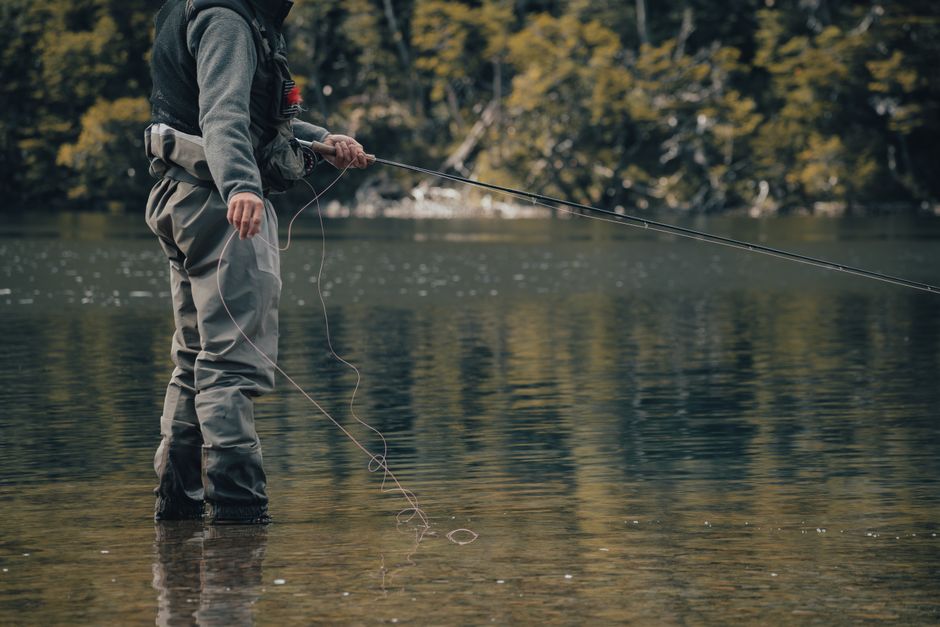
Drag occurs when the fly moves faster or slower than the current because the line is pulling it. Different sections of your leader and fly line catch different current speeds, bowing the line and pulling the fly off its natural drift. Drag is the most common reason fish refuse flies. Mending and reach casts are the primary tools for fighting it.
A strike is when a fish takes the fly. On a dry fly, you can see it. On a nymph, you feel it or see your strike indicator stop or twitch. The hook set is your response: lifting the rod tip to drive the hook point through the fish’s jaw. For trout on dry flies, a slight, controlled lift is all it takes. For streamer fishing with larger hooks, a strip strike is often more reliable.
Strike Indicators and Tight Line
A strike indicator is a small floating device attached to the leader above a nymph rig. It signals when a fish takes the fly underwater. You watch the indicator; when it pauses, dips, or darts sideways, you set the hook. Indicators are effective and beginner-friendly, but the float creates some drag on the rig.
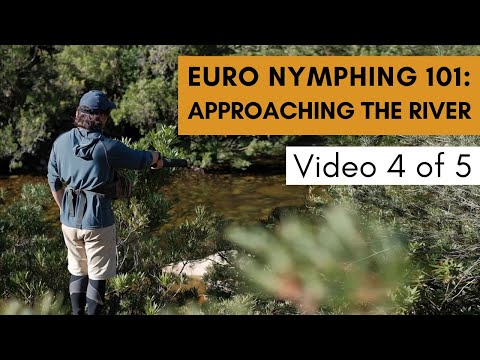
Tight line nymphing (also called euro nymphing) eliminates the indicator. You use a long, lightweight leader and hold the line off the water so you can feel or see takes directly through the rod and line. It requires more technique but offers superior sensitivity and drift control in fast or complex currents.
A dropper is a second fly tied off the bend of the first fly’s hook, or off a separate piece of tippet attached above the point fly. A two-fly rig lets you present different fly types or sizes at once. The lower fly is the point fly; the upper fly is the dropper.
Our fly fishing knots guide covers how to rig droppers and the knots for connecting tippet to the fly.
Fish Behavior and Hatch Terms
Understanding how fish respond to their environment makes you a better angler. The terms below describe the insect activity and fish behavior patterns that dictate when and what fish eat.
Hatches and Rise Forms
A hatch is when aquatic insects emerge from their pupal or larval stage, float to the surface, and fly away as adults. Hatches trigger feeding frenzies because large numbers of insects become available at the same moment. The best dry fly fishing happens during a hatch.
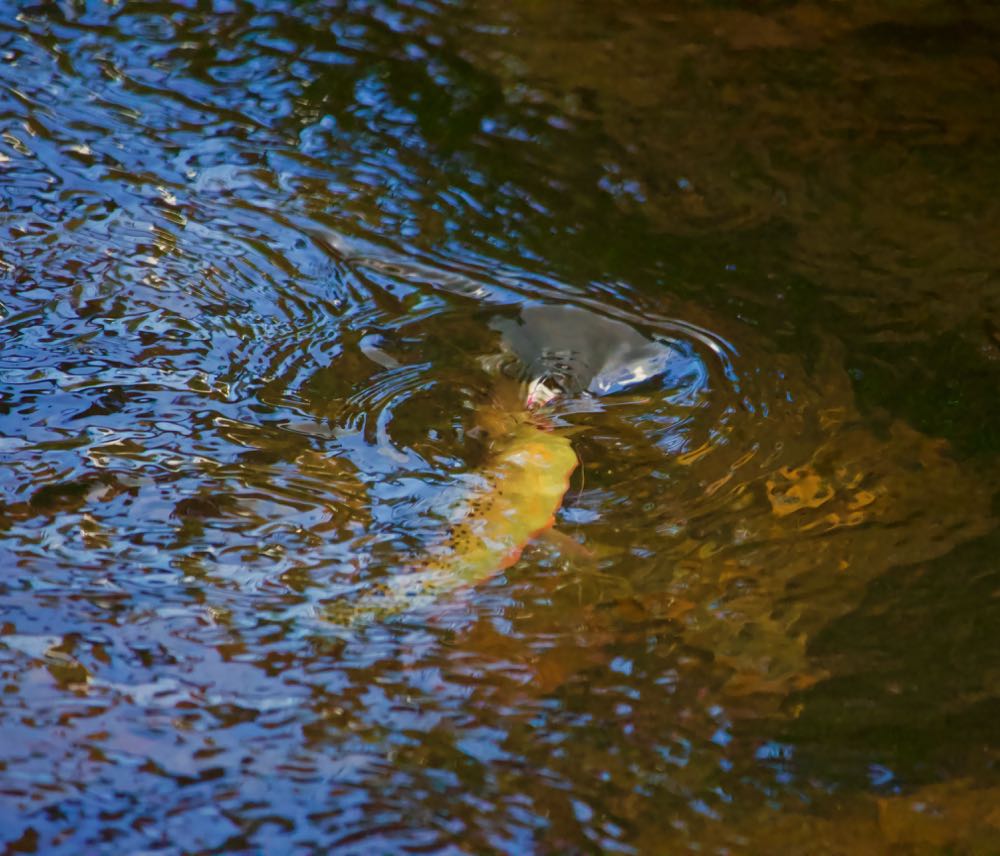
A rise is when a fish comes to the surface to eat. Rise forms tell you what the fish is eating:
- A sip rise is subtle, just a slight dimple on the surface. The fish is eating small flies in the surface film, often spinners or tiny emergers.
- A splash rise is aggressive, with the fish lunging out of the water to catch something moving quickly, often a caddis adult skittering across the surface.
- A head-and-tail rise is when you see the head and dorsal fin break the surface, then the tail, in a smooth rolling motion. The fish is eating emergers or pupae just below the film.
Reading rise forms correctly helps you pick the right fly. Our fly fishing for trout guide covers rise interpretation in detail.
A spinner fall is a late-stage hatch event where spent adult mayflies fall back to the water after mating. Spinners lie flush in the film with wings flat, and fish sipping during a spinner fall are among the toughest to fool. A hatch chart is a reference guide showing which insects emerge on a given river during each month.
Selectivity and Spooking
A selective fish is one that is keyed in on a specific stage of one specific insect and will refuse almost everything else. Selective fish force you to match the hatch precisely, down to the right size, profile, and drift.
Matching the hatch means identifying what insect is hatching and choosing a fly that closely resembles it in size, shape, and color. When fish are selective, the difference between a size 16 fly and a size 18 fly can mean the difference between getting strikes and getting refusals.
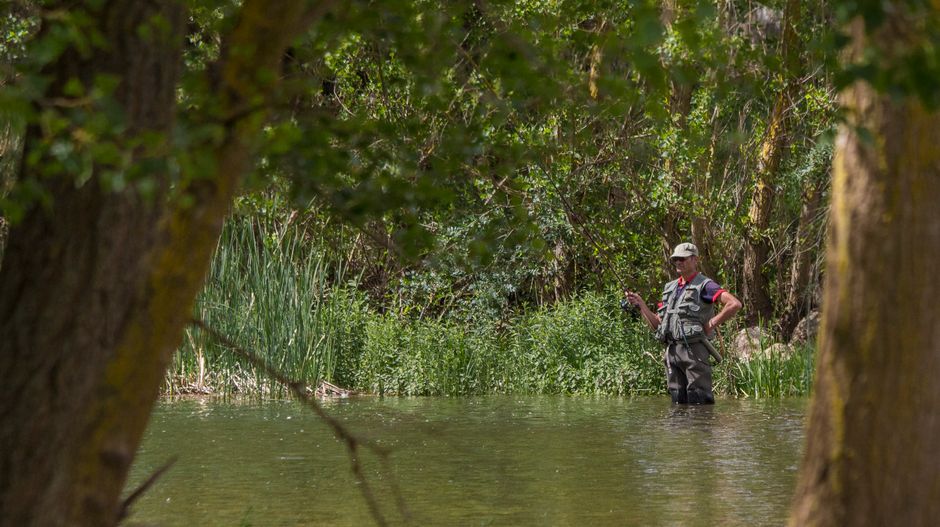
Spooking a fish means startling it into fleeing or stopping feeding. Trout are prey animals and spook from shadows, vibrations, heavy footsteps on the bank, or a fly line slapping the water near them. Moving slowly and keeping your shadow off the water are the basics of stream approach.
A refusal is when a fish comes up to inspect your fly and turns away without eating it. Refusals usually mean your fly is close but something is off: the size, the profile, the drag, or the tippet diameter. Dropping to a smaller fly or lighter tippet often fixes it.
Frequently Asked Questions About Fly Fishing Terms
What are some common fly fishing phrases a beginner should know first?
Start with the line system terms: backing, fly line, leader, and tippet. Then learn the three main fly types: dry fly, nymph, and streamer. After that, casting terms like backcast, load, and mend will make more sense once you’re on the water.
What is a slang term for trout in fly fishing?
Browns refers to brown trout, bows or rainbows refers to rainbow trout, and brookies refers to brook trout. Cutties is common for cutthroat trout. Fly fishers also use hog or pig loosely for any unusually large fish.
What does matching the hatch mean in fly fishing?
Matching the hatch means identifying which aquatic insect is actively hatching on the water and selecting a fly pattern that imitates it closely in size, shape, and color. When fish are selective during a hatch, they often refuse flies that are even slightly off.
What is the difference between a leader and a tippet?
The leader is the full tapered section of clear mono or fluorocarbon that connects the fly line to the fly. The tippet is the final, thinnest portion at the end where the fly attaches. When you buy a pre-made knotless tapered leader, the last foot or so is the tippet section. You add fresh tippet material as the leader shortens from fishing.
What does reading water mean in fly fishing?
Reading water means looking at a river and identifying where fish are likely to hold and feed based on current features. You’re looking for seams between fast and slow water, eddies behind rocks, runs with consistent current speed, and riffles with good insect habitat. Fish position themselves where food arrives with the least effort.
Start Using These Terms on the Water
That’s the core vocabulary of fly fishing. Gear terms, fly types, casting mechanics, water reading, and fish behavior cover the conversations you’ll have at a fly shop, on a guided trip, and on the water with other anglers.
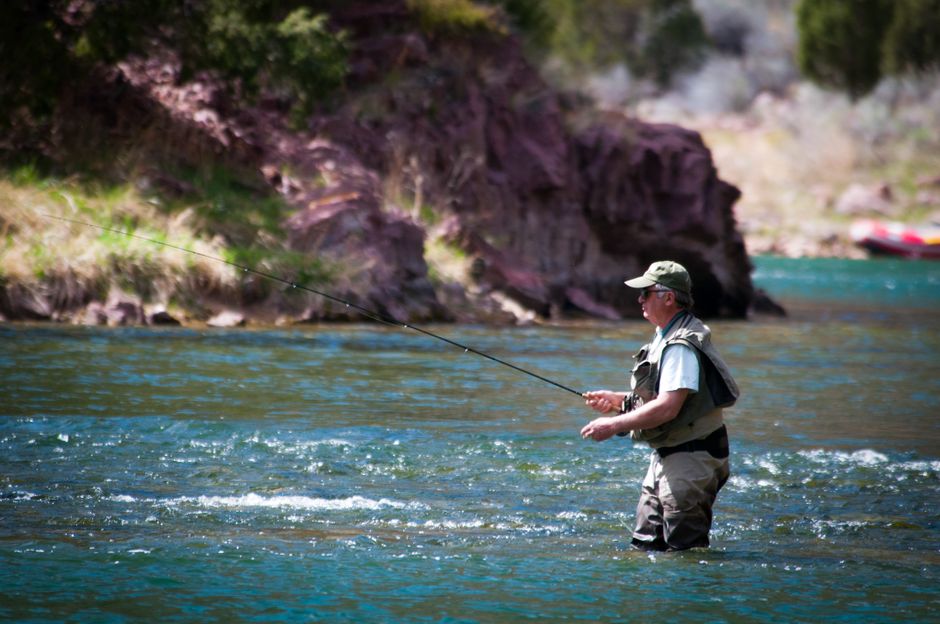
The best way to lock in these terms is to use them. Pick one section from this glossary, head to a river, and apply what you read. Dead drift and drag will click immediately once you watch your fly actually dragging across the surface. Rise forms make sense the first time you see a head-and-tail versus a splash. Seams become obvious once you start looking for the boundary between fast and slow water.
If you want to go deeper on any single area, our posts on fly fishing knots, leaders and tippet, and fly fishing for trout cover each topic with the same level of detail.
Amazon and the Amazon logo are trademarks of Amazon.com, Inc, or its affiliates.
As a part of the Amazon Associates Program and other affiliate programs, Into Fly Fishing® may receive a comission if you order products through links on this website.