As an Amazon Associate I earn from qualifying purchases.
Every week I get the same question on the water: what is the difference between the leader and the tippet? They both look like clear, light line, they come off similar spools, and nobody explains them clearly until you ask twice.
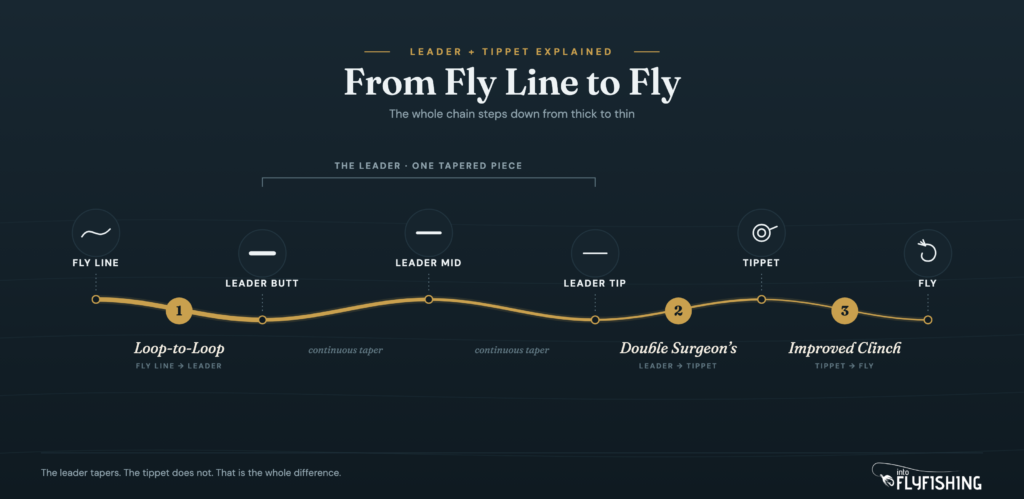
The short version: the leader is the long tapered section that connects your fly line to your fly. The tippet is the thin piece you tie to the end of the leader, right where the fly goes. Once you see what each one does and why it’s separate, setting up a rig takes about five minutes.
This guide covers what each one does, how to match the size to your fly, when to use fluorocarbon versus mono, and how to set the whole thing up so it actually fishes right.
Quick answer: A leader is the tapered monofilament connecting your fly line to your fly. Tippet is the thin, replaceable section tied to the end of the leader, where the fly attaches. The leader provides the casting taper; the tippet is what you replace when you change flies. You need both.
What Is a Fly Fishing Leader?
The leader is the part I spend the most time explaining on guide trips, because the engineering behind it isn’t obvious until you cast with the wrong one. It’s the tapered monofilament that bridges your heavy, colored fly line and your fly. Without it, the transition from thick fly line to tiny fly would be too abrupt and the fly would land hard and wrong.
The taper is the whole point. The leader starts thick at the butt end, where it meets the fly line, and graduates down in diameter toward the tip. That graduation lets the casting energy from your fly line transfer smoothly through progressively lighter material so the fly lands gently, leader coiled out on the water instead of crashing down. Our best fly lines guide covers the lines those leaders attach to.
The Three Parts of a Leader
A leader has three sections. The butt is the thickest part, right at the fly line end, and it’s roughly the same diameter as your fly line’s tip. The mid section carries most of the taper, stepping down in gradual stages. The tip section, sometimes called the tippet section, is the finest end and is where you add actual tippet material.
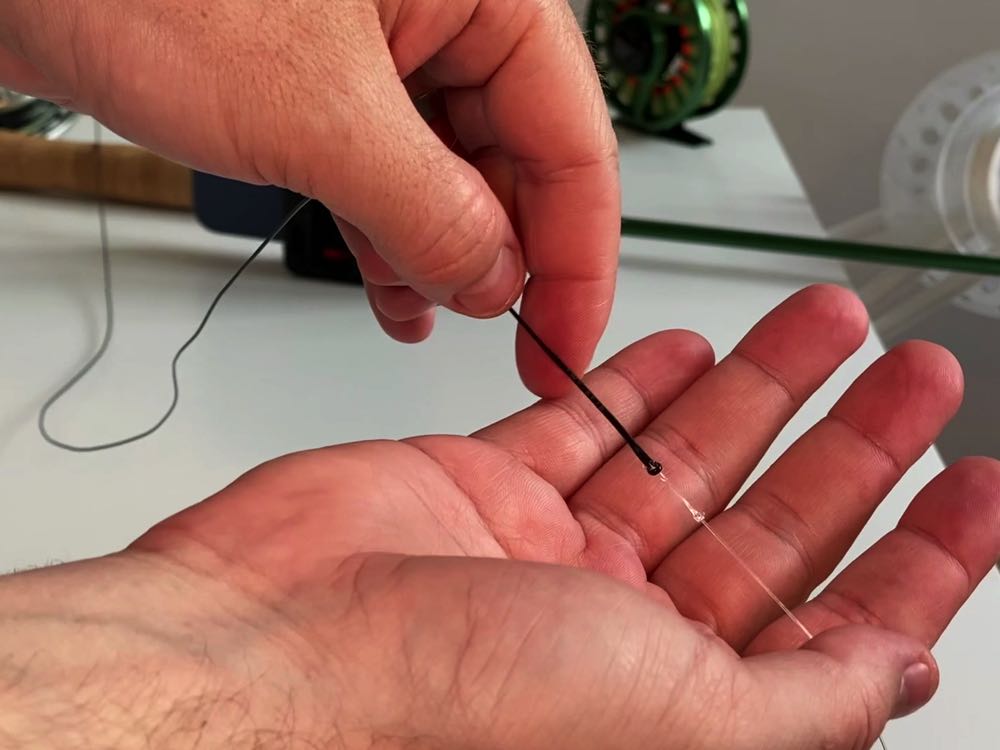
Pre-made knotless tapered leaders come labeled like “9′ 4X”: nine feet long, tipping out at 4X diameter. They’re worth using when you’re starting out instead of building your own. A 9-foot leader covers most trout situations.
What Is Tippet?
Tippet is the material I go through fastest on a full day on the water. It’s the thin, uniform-diameter section you add to the end of the leader and tie your fly to. You buy it on small spools at the fly shop, and you replace it throughout the day as you change flies and cut off knots.
The reason tippet exists as a separate spool is economic. Every time you change a fly, you trim the knot, and each retie uses up a small length. Add enough changes and you’d be cutting into the leader’s tapered section, which changes the way the whole thing turns over on the cast. Tippet protects the leader so you aren’t burning through a $9 leader every afternoon.
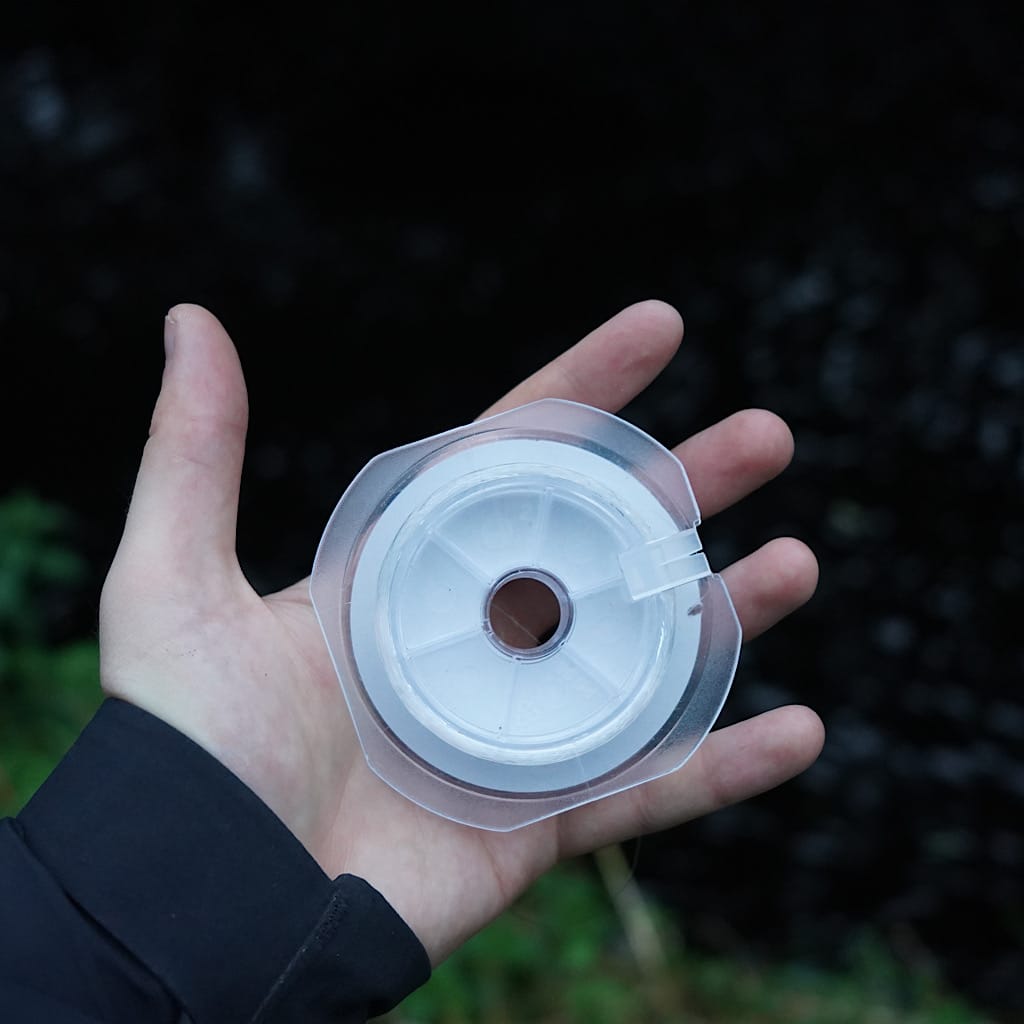
A starter kit is a spool of 4X and a spool of 5X. That covers most trout fishing in moving water.
Leader vs Tippet: The Key Difference
The leader tapers. The tippet does not. That is the whole difference. The leader needs to be tapered to transfer casting energy from the thick fly line down to a fine tip. The tippet is just a fixed-diameter length of material at the business end, and its job is to be thin enough to be inconspicuous and long enough to let the fly drift without the leader creating drag.
Leaders get replaced once or twice a season, when the butt section is beat up or the tip has been cut back past usefulness. Tippet gets replaced constantly: after every few fish, every hard snag, every wind knot you find in the section.
What the X Rating Means
The X number is a diameter rating, and it runs backward from what you might expect. The bigger the number, the thinner the material. 0X is heavy pike or saltwater tippet. 7X is what you use for midges in size 22 and smaller.
The quick rule for matching tippet to fly: divide the fly’s hook size by three to get the X. Fishing a size 12 fly means 4X. Size 18 means 6X. It’s not exact, but it gets you in the right neighborhood fast on the water.
| Rating | Diameter (in) | Approx. lb Test | Use It For |
|---|---|---|---|
| 0X | .011 | 15+ lb | Pike, bass, big streamers |
| 1X | .010 | 13 lb | Large streamers, bass bugs |
| 2X | .009 | 11 lb | Large nymphs, bass dries |
| 3X | .008 | 8.5 lb | Large nymphs, big dries |
| 4X | .007 | 6-7 lb | Standard trout (most common) |
| 5X | .006 | 4.75 lb | Small dries, dropper nymphs |
| 6X | .005 | 3.5 lb | Tiny dries, small nymphs |
| 7X | .004 | 2.5 lb | Midges, size 22 and smaller |
The X number doesn’t tell you the breaking strength, which varies by brand and material. Check the spool label. A 4X tippet from a good brand runs around 6 to 7 lb. For most trout fishing that’s plenty. On bigger fish in heavy cover, the difference between premium and budget brands starts to matter.
Fluorocarbon vs Monofilament Tippet
I fish fluorocarbon for nymphs and streamers, and standard monofilament for dries. That split covers most trout situations.
Fluorocarbon has a refractive index close to water, which makes it nearly invisible underwater. It’s also denser than mono, so it sinks, which helps a nymph get down faster and keeps tippet from creating surface drag on a wet fly. It’s more abrasion resistant, too, which matters when you’re bouncing off rocks in fast water. The tradeoff is cost: roughly twice what mono runs.
Monofilament floats better, which is what you want for dry fly fishing. It’s more supple, which can help a small dry drift naturally in slow currents. It also stretches more than fluorocarbon, which absorbs shock on the strike.

Dry fly on the surface: use mono. Nymphs, droppers, or streamers: use fluorocarbon. If you can only afford one spool to start, get 4X mono and you can fish both, though your nymphing rigs won’t sink as fast.
| Material | Visibility | Sinks or Floats | Best For | Cost |
|---|---|---|---|---|
| Fluorocarbon | Near-invisible underwater | Sinks | Nymphs, streamers, wet flies | $$ |
| Monofilament | Slightly more visible | Floats | Dry flies, small dries | $ |
How to Set Up Your Leader and Tippet
The thing I see go wrong most often is people adding way too little tippet. Eighteen to twenty-four inches is the right starting length. Short tippet puts the leader’s taper too close to the fly, and fish notice that.
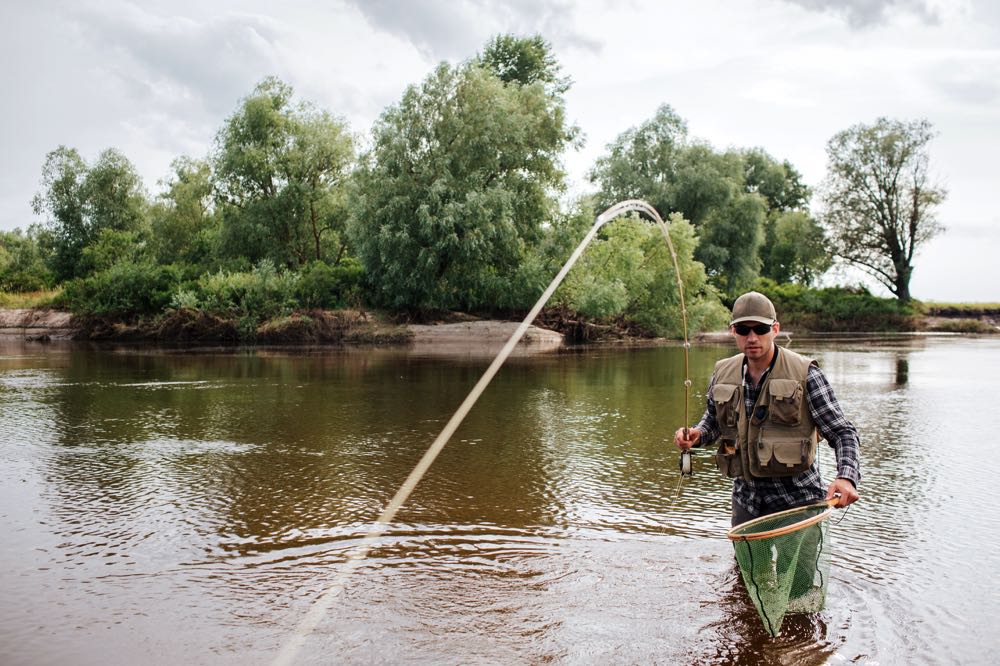
Here’s the setup in order. First, attach the leader to your fly line. Nearly all modern lines have a welded loop at the tip end. If yours does, it’s a loop-to-loop: push the fly line’s loop through the leader butt loop, then pass the whole leader through the fly line’s loop. The two loops should interlock like chain links, not choke around each other. My walkthrough on how to set up a fly reel covers the whole rigging sequence from reel to fly.
Second, add tippet. Take 18 to 24 inches of tippet at the same X as your leader’s tip section. Tie it on with a double surgeon’s knot: lay the lines alongside each other with a few inches of overlap, loop both through twice, then pull all four ends tight. Our fly fishing knots guide shows the surgeon’s knot step by step with photos.

Third, tie on your fly with an improved clinch knot.
If you’re still picking the rod and reel to build your first rig around, our guide to the best beginner fly rods covers the options worth starting with.
When to Replace Your Tippet (and Your Leader)
Retie your fly after every fish worth keeping, every serious snag, and every wind knot. Wind knots are those small overhand loops that appear mid-cast when your loop collapses on itself. They can cut the breaking strength of the tippet by half or more. Find one, cut it out, and add fresh tippet before the next drift.
After every few fish, run your fingers down the last foot of tippet. Rough texture means abrasion. Cut back past the rough section and retie. Abraded line breaks without warning, and there’s no recovering a tippet snap in the middle of a good hatch.
Replace the whole leader when: the tip section has been cut back so many times you’re into the taper, the butt loop or knot connection looks nicked, or you’ve been fishing the same one for more than a full season. A knotless tapered leader costs $7 to $10. It’s not the place to cut corners. For more on fishing trout and managing your terminal tackle, the fly fishing for trout guide covers it in full.
Leader and Tippet FAQs
Yes. The leader provides the tapered connection that transfers casting energy and lands the fly softly. The tippet is the replaceable terminal section where the fly ties on. Without the leader, you can’t cast effectively. Without tippet, you burn through an expensive leader every time you change flies.
4X is the better starting choice for most trout fishing. It covers standard nymphs and dries from size 10 to size 16. Move to 5X when flies get smaller, the water is clear and low, or fish are refusing. 4X has more breaking strength and is more forgiving on the hookset.
You can, but you’ll burn through leaders fast. Every fly change trims a knot and shortens the tip. Without a separate tippet section protecting the leader, you’ll cut into the taper within a few hours. A $3 tippet spool saves you from replacing an $8 leader every outing.
Not effectively. Tippet is uniform diameter with no taper, so it doesn’t transfer casting energy from the fly line the way a tapered leader does. Using only tippet produces a poor turnover and your fly lands in a pile instead of laying out straight. Use a proper tapered leader and add tippet to the end of it.
Set Up Right from the Start
Leaders and tippet are five minutes of rigging that shape the rest of the day. Get the X size in the right range for your fly size, add enough tippet length, swap to fluorocarbon when you go underwater, and retie after every fish. The leader and tippet system isn’t complicated. It’s just two different tools doing two different jobs on the same rig.
Amazon and the Amazon logo are trademarks of Amazon.com, Inc, or its affiliates.
As a part of the Amazon Associates Program and other affiliate programs, Into Fly Fishing® may receive a comission if you order products through links on this website.