As an Amazon Associate I earn from qualifying purchases.
The Taylor runs through the canyon to Almont, with a short catch-and-release section near the dam and public fishing access farther downstream. Those are different plans for a day out. The fishing rules change, and the flow reading near the dam isn’t the same as the reading at Almont.
I’ve fished the Taylor, and I’d allow a full day for the water below the reservoir. I started bringing a fly rod on my winter snowboarding trips to Colorado, fishing in the morning before the resorts opened.
This guide covers the Taylor below the reservoir. Use our Colorado river directory to compare it with other rivers, or my Colorado fly fishing guide for the wider trip.
Quick Answer: For Taylor River fly fishing, distinguish the short special-regulation section near Taylor Dam from the public fishing areas in Taylor Canyon. Read the exact CPW boundaries before fishing, check the gauge for your chosen reach, and use the current report to choose small flies and caddis patterns.
Other Rivers In Colorado
- Animas River
- Arkansas River
- Frying Pan River
- Rio Grande In Colorado
- Eagle River
- Roaring Fork River
- Yampa River
- Cache la Poudre River
- Gunnison River
- Colorado River
- South Platte River
- North Platte River (Colorado)
- Conejos River
Understand The Short Catch-And-Release Section
Fishing is prohibited from the top of Taylor Dam through the first 325 yards downstream. The catch-and-release reach starts below that closed section and ends at the lower boundary of Taylor State Wildlife Area.
The CPW fishing regulations identify the reach from 325 yards below Taylor Dam downstream to the lower boundary of Taylor State Wildlife Area. Within that approximately 0.4-mile section, fishing is by artificial flies and lures only, and all trout must be returned to the water immediately.
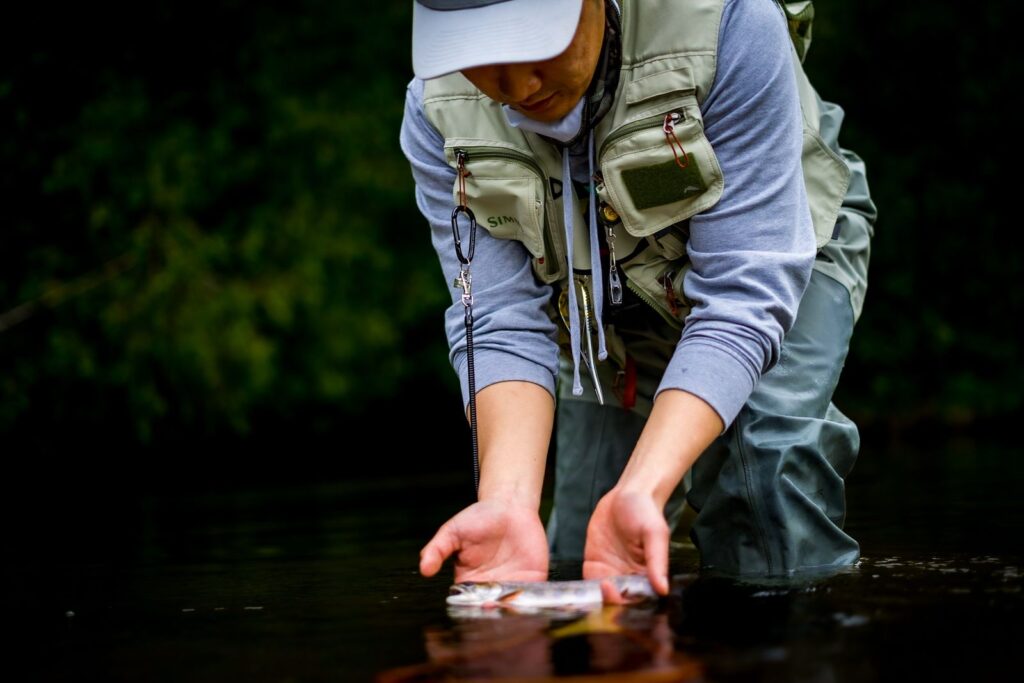
Read the Taylor River entry in full and find the boundary signs on arrival. The starting point is downstream of the dam; the special rule shouldn’t be stretched into a statement that every piece of water below the reservoir follows the same restrictions.
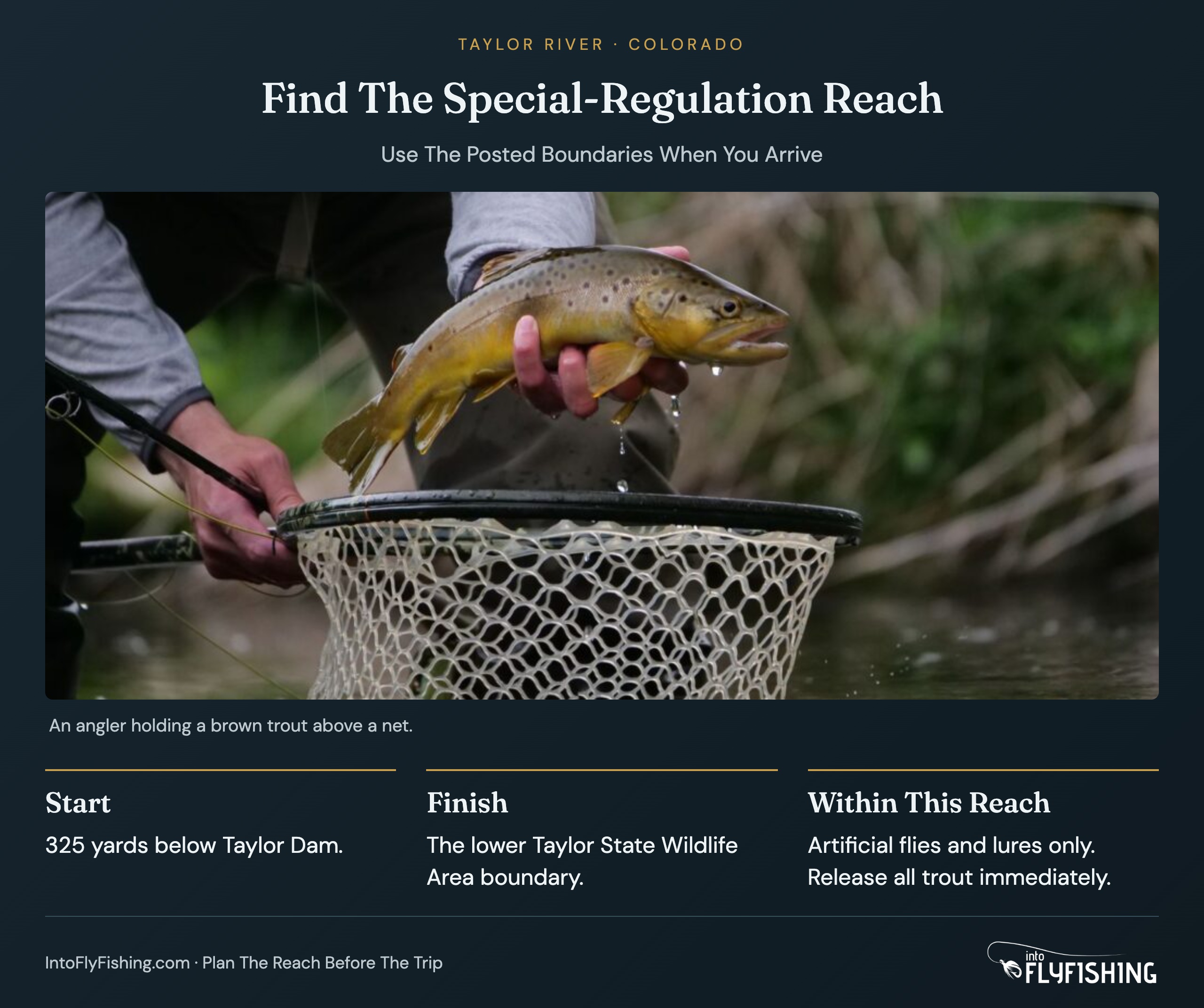
For flow information near this part of the river, open the Taylor River Below Taylor Park Reservoir gauge. Check the timestamp and the recent graph. Save the correct station on your phone so you don’t accidentally plan a below-dam visit using the Almont reading.
Brown, rainbow, and cutthroat trout are documented in the below-reservoir river. I’d give myself time to watch the water before casting here, without making a particular fish size the measure of the day.
Give Taylor Canyon A Place In The Day
For a first visit, I’d leave time for the canyon instead of spending the entire day at the short regulated section. The river below Taylor Park Reservoir continues about 20 miles to Almont. Public shore and wade-fishing access gives you other places to consider along that corridor.
Public access doesn’t mean every bank is open. Use the Taylor River access information to start planning, then confirm the land boundary and posted signs at the place you choose. A pullout beside water is not enough to establish permission to fish it.
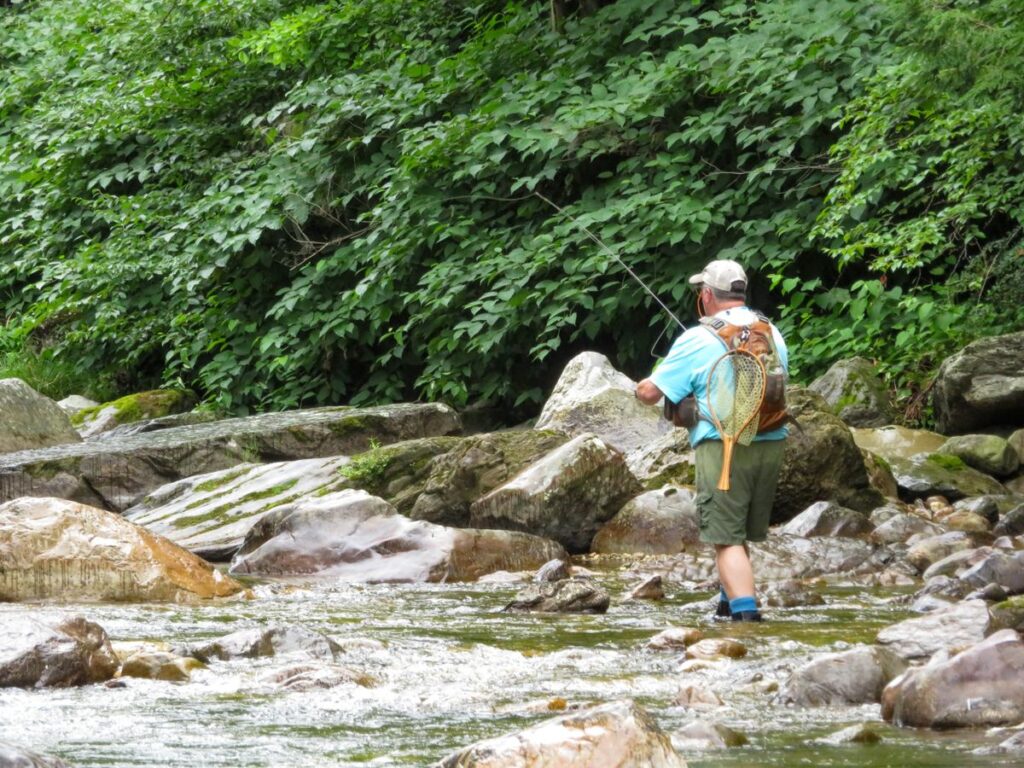
Keep the Taylor River At Almont gauge separate from the station below the reservoir. Almont is the downstream reference. If you’re asking a shop about conditions, name the stretch you intend to fish and the gauge you’re looking at so you’re discussing the same water.
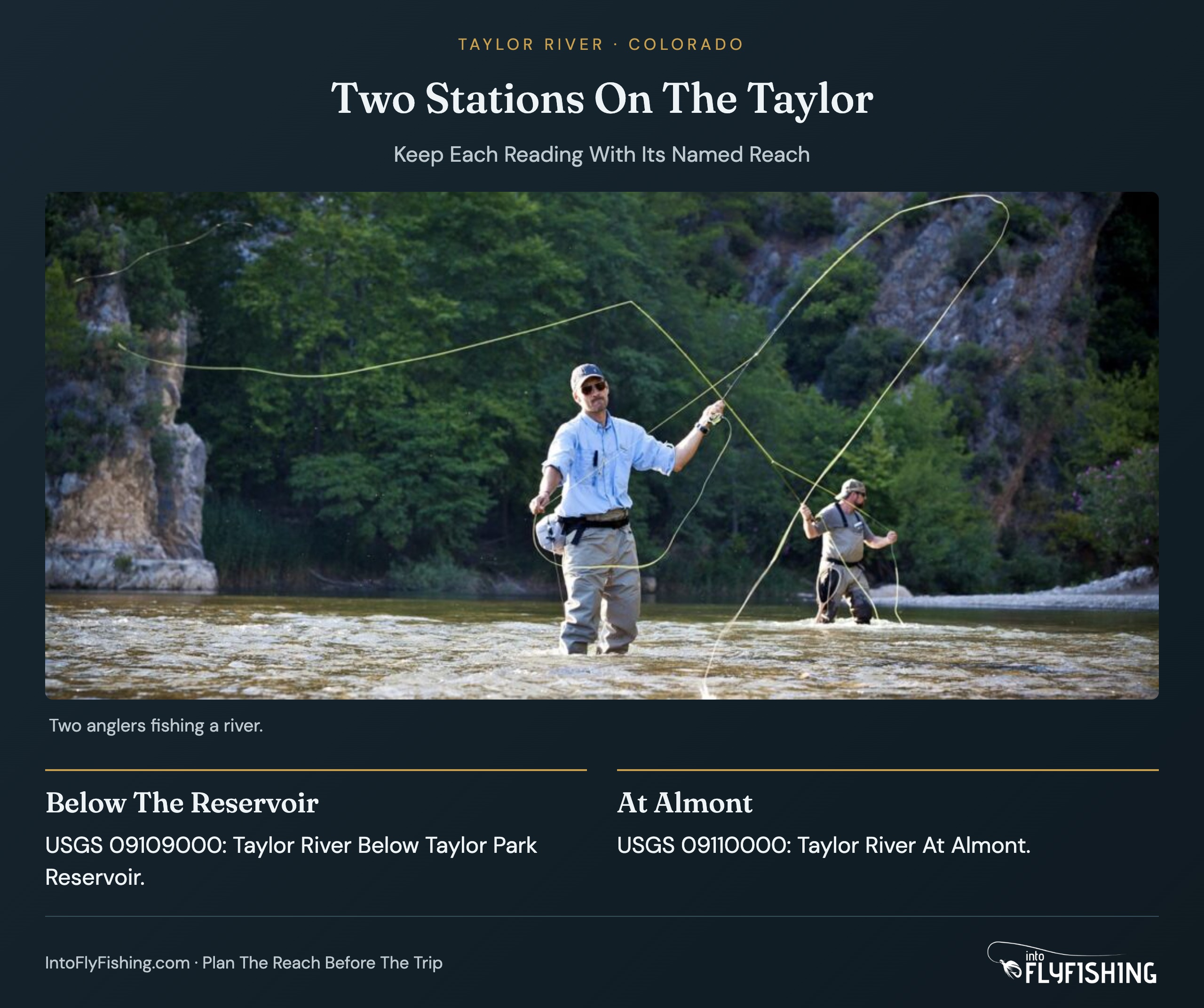
Neither reading tells you that a crossing is suitable. I’d start by looking for water I can fish from a comfortable position along the bank. Moving to another public access is a better use of the day than forcing a route through water that feels beyond your ability.
There are campgrounds near the Taylor if you want more than a day here. Check the Taylor River recreation information for the campground you have in mind before arranging the trip. Campsite availability and permission to fish a nearby parcel are separate questions.
Pack A Few Flies You Can Present Well
Zebra Midges and caddis patterns give you a useful starting selection for the Taylor. Leave room in the box to adjust the size and color for the stretch you’re fishing, rather than arriving with every slot filled.
The Willowfly report and Taylor River Anglers report are worth checking before you leave. Read the update date as well as the fly list. Then compare those suggestions with the fish activity you see at the river.

Small flies put more emphasis on a careful presentation. Watch where the fly lands and how it moves through the water before changing patterns. If the cast disturbs the spot you wanted to fish, a different fly won’t fix that cast.
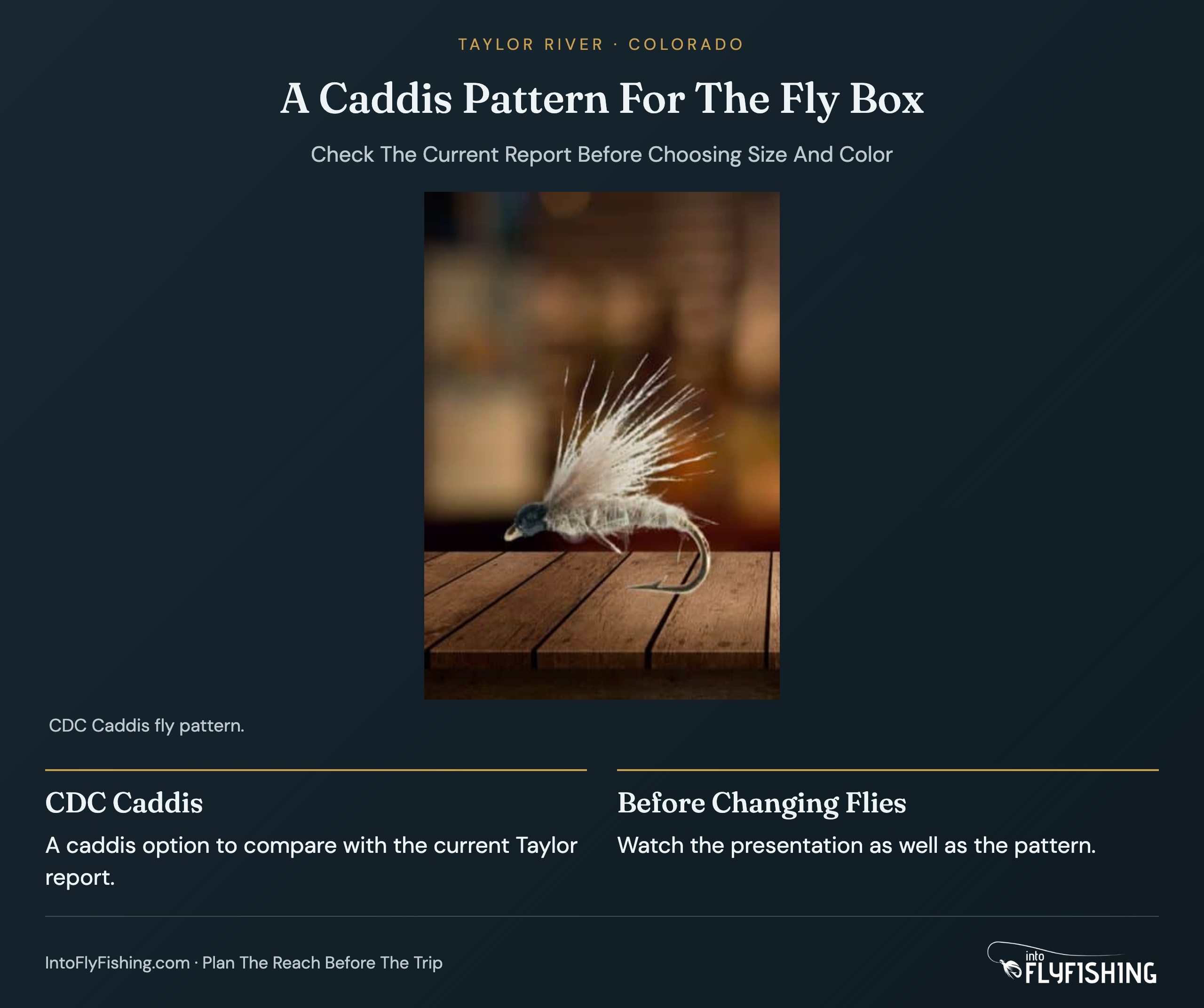
Keep the small patterns organized so you can find a replacement without sorting through the whole bag. The SF Slim Fly Box is one option if you need a compact box for that selection. Pick the flies first, then choose a box with room for them.
I wouldn’t buy a new rod just because the Taylor is on the itinerary. If you’re comparing tackle for the flies you plan to cast, our trout fly rod guide explains the options. A rod you can cast comfortably gives you something useful to work with while you learn a new stretch.
Get Ready Before Heading Into The Canyon
Pack for the time you’ll spend at the water, including the walk from the car. Save the access information before leaving, and check CPW’s current fishing information for notices that could change the trip.
For a day that includes wading, compare equipment for fit before the trip. The Frogg Toggs Canyon II is one option if you’re shopping for stockingfoot waders. Try them with the clothing and footwear you’ll actually take rather than finding out at the river that something doesn’t fit.

Sunglasses belong with the rod and fly box when you’re packing. The KastKing Skidaway is a polarized option to consider. Keep the smaller items together so you can move between public access areas without repeatedly unpacking everything.
If you’re booking a guide, explain which part of the Taylor interests you. Ask whether the trip will focus on the short regulated section or the canyon, what equipment is supplied, and where you’ll meet. That gives the guide a useful starting point and helps you pack for the actual day you’ve booked.
Taylor River Fishing Questions
The catch-and-release boundary and the two gauge locations are the main distinctions to settle for a first day below Taylor Park Reservoir.
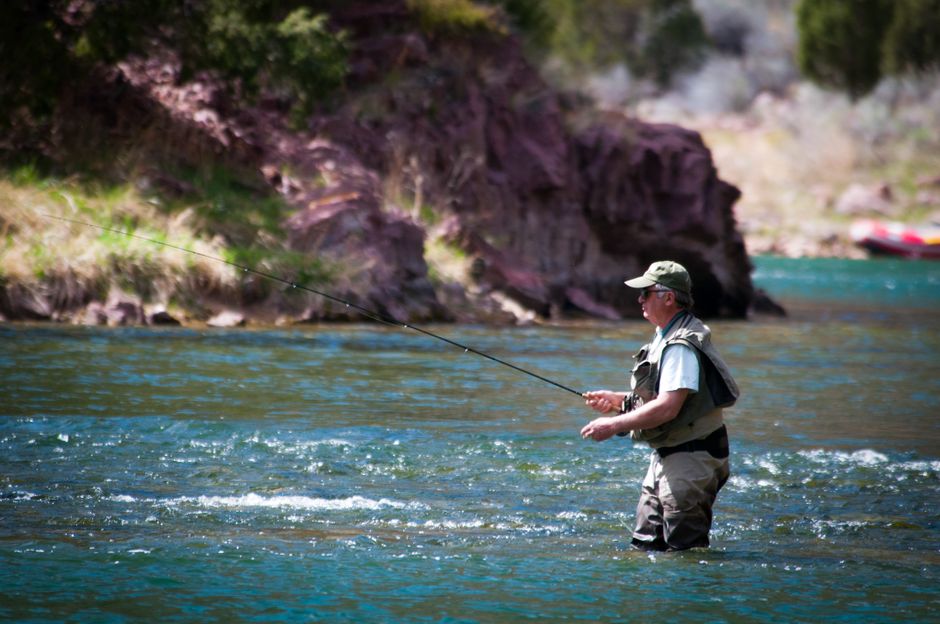
Use these answers while choosing between a visit near the dam and a day farther down Taylor Canyon. Both fit within the below-reservoir trip covered here.
No. The first 325 yards below Taylor Dam are closed to fishing. The CPW special-regulation reach begins below that closed section and ends at the lower boundary of Taylor State Wildlife Area. In that reach, artificial flies and lures are required and all trout must be released immediately. Read the full current Taylor River entry for the water you intend to fish.
Use Taylor River Below Taylor Park Reservoir for the named below-reservoir station and Taylor River At Almont for the downstream station. They are separate gauges. Keep the station name and timestamp with the reading when comparing it with a fishing report.
Public shore and wade-fishing access exists in the canyon. Confirm the property boundary and posted signs at your chosen access; the whole corridor is not a continuous public bank.
Zebra Midges and caddis patterns are useful choices to compare with the current report. Select the size and color for your intended stretch, and pay attention to presentation before changing patterns repeatedly.
Leave Time To Learn The Water
With one day on the Taylor, I’d visit the short regulated section with the boundaries already marked, then keep part of the day for a public stretch in the canyon. I wouldn’t try to fish every access. A place where I can watch the current and cast comfortably would be enough to start.
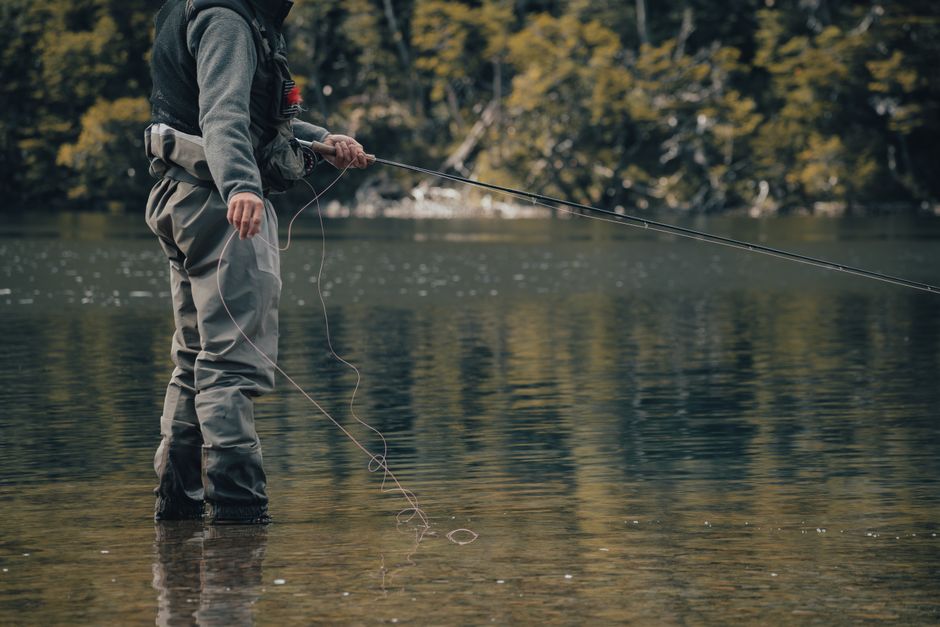
I’d take a small fly selection and spend more time watching each presentation than searching the box. The river gives you plenty to consider between the reservoir and Almont, so leave room to change the plan once you’re there. For another trip beyond Colorado, our U.S. fly fishing river guide has more places to explore.
Save This Fishing Guide For Later


Amazon and the Amazon logo are trademarks of Amazon.com, Inc, or its affiliates.
As a part of the Amazon Associates Program and other affiliate programs, Into Fly Fishing® may receive a comission if you order products through links on this website.