As an Amazon Associate I earn from qualifying purchases.
The Conejos River gives you open meadow water, a deep canyon at the Pinnacles, and walk-in fishing near Aspen Glade. Choose the stretch first. That decision will help you narrow down the access, the tackle rules, and the water you want to fish.
I’m a Billings native who has fished the Yellowstone for more than 35 years and worked as a professional fly fishing guide for 15 years. On a Conejos trip, I’d make the first decision about access: a walk-in stretch near Aspen Glade, or a day set aside for the Pinnacles hike.
For more options, compare our Colorado river guides. The broader Colorado fly fishing guide covers statewide trip planning, while our US river directory helps with a trip beyond Colorado.
Quick Answer: For Conejos River fly fishing, compare open meadow water, the demanding Pinnacles canyon approach, and walk-in fishing near Aspen Glade and Menkhaven. Bring dry flies and nymphs for brown and rainbow trout, check the correct DWR gauge, and match the tackle rules to your reach.
Other Rivers In Colorado
- Cache La Poudre River
- Yampa River
- Roaring Fork River
- Taylor River
- Eagle River
- Frying Pan River
- Rio Grande In Colorado
- Arkansas River
- Animas River
- Colorado River
- Gunnison River
- South Platte River
- North Platte River (Colorado)
From Platoro Meadows To The Pinnacles
Start by separating the headwaters above Platoro Reservoir from the water below it. Forest Road 250 provides the approach to the upper river, but reaching the headwaters requires a hike. If you want to explore above the reservoir, leave time for that part of the trip.
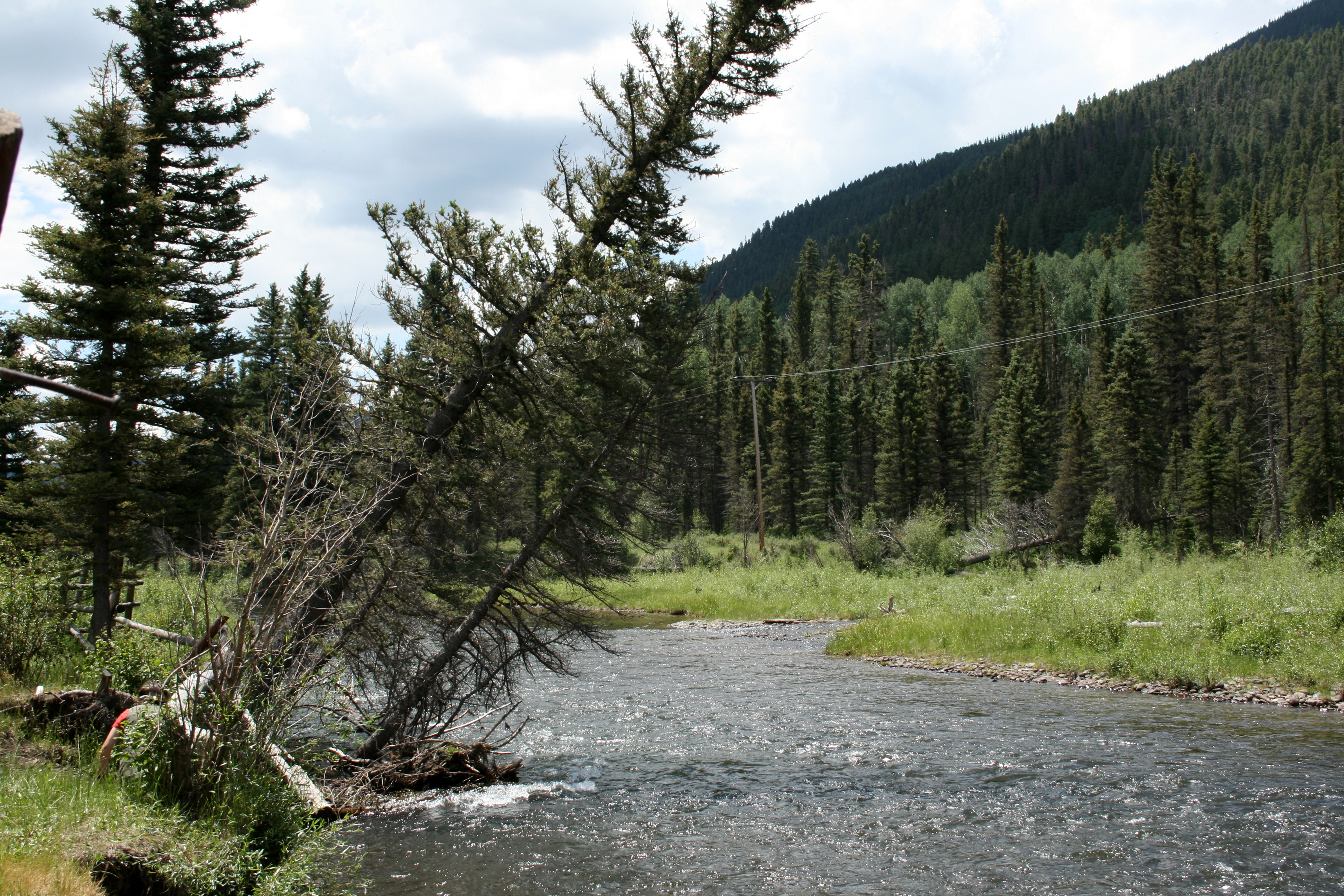
The open meadow sections and the Pinnacles offer different access choices. The Pinnacles involves a demanding hike into steep canyon water. Choose it when the canyon walk is part of the trip you want; for a walk-in fishing stop, start with the named public-access options near Aspen Glade.
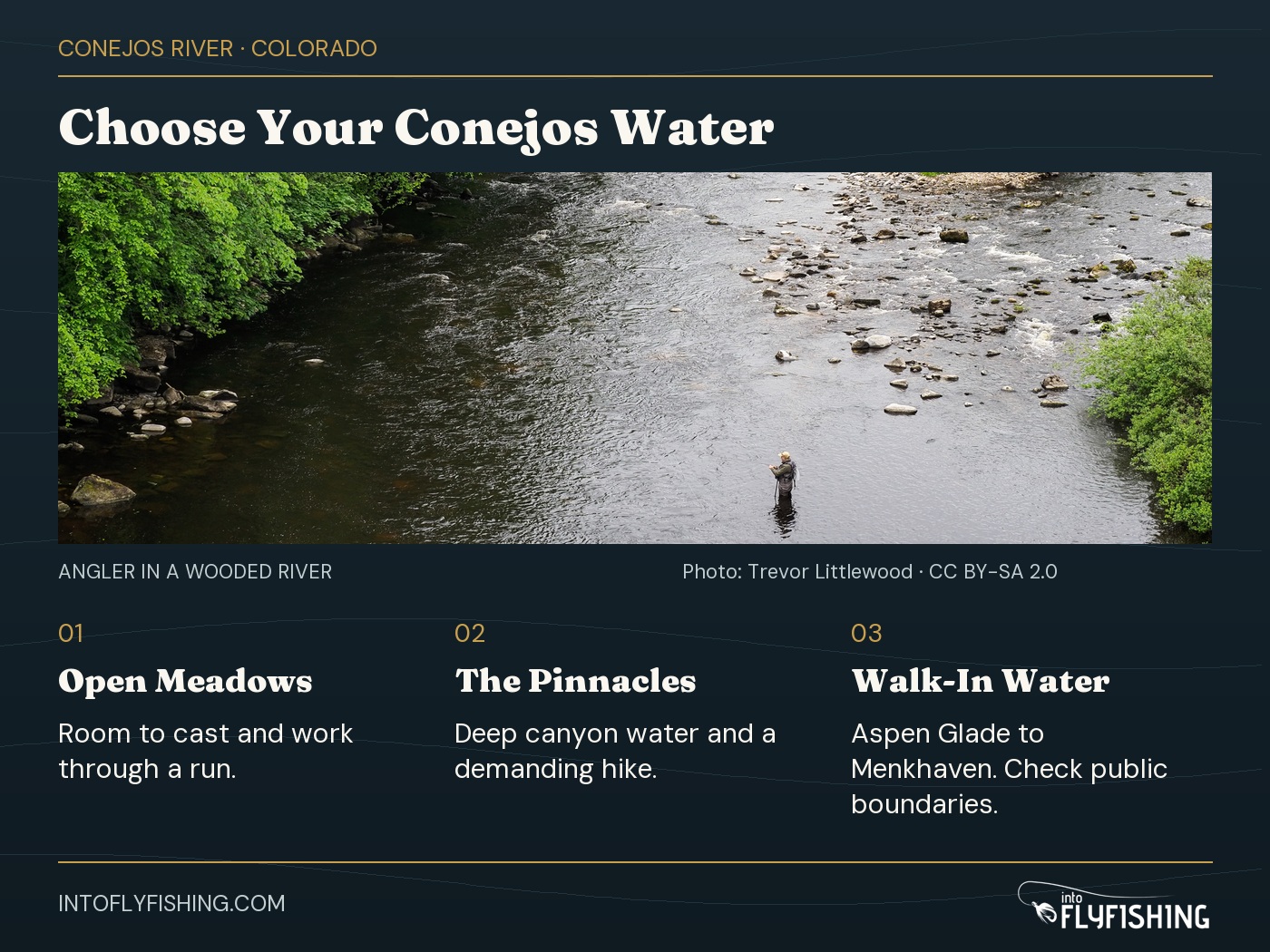
For a named walk-in option, look at the Conejos between Aspen Glade and Menkhaven. There is public fishing access in this area, alongside private property. Locate the public parcel or fishing easement you plan to use and follow its boundary as you move along the river.
Pack your walking and fishing gear for the access you choose. If you need stockingfoot waders, the Frogg Toggs Canyon II is one option to compare. Check the size and fit before the trip, especially if your day includes walking to the river.
Mogote Campground sits beside the Conejos and provides access to fishing water. It is a useful base if you want to camp on the river. Check the Mogote Campground booking page for the dates you plan to stay.
Match The Rules To The Reach
Two Conejos sections have different tackle rules. Under CPW’s fishing regulations, the stretch from the lower bridge at Platoro to the South Fork confluence allows artificial flies and lures only. From Menkhaven Resort to the upper boundary of Aspen Glade Campground, the rule is artificial flies only.
Use the regulation’s named endpoints when checking your access, and review the current limits before keeping fish. Keep that check separate from permission to enter the bank: the tackle rule describes how you may fish the reach, while the public-access boundary determines where you may enter and move.
Read The Season And The Release
For a trip focused on larger insects, June is a useful stonefly and salmonfly window on the Conejos. Hatch timing varies, so keep the dates flexible when you can. Ask about activity on the reach you intend to fish before deciding which patterns to pack.
Early July is a useful time to plan for drakes and dry-fly fishing. Keep nymphs with your drake patterns so you can also fish below the surface.
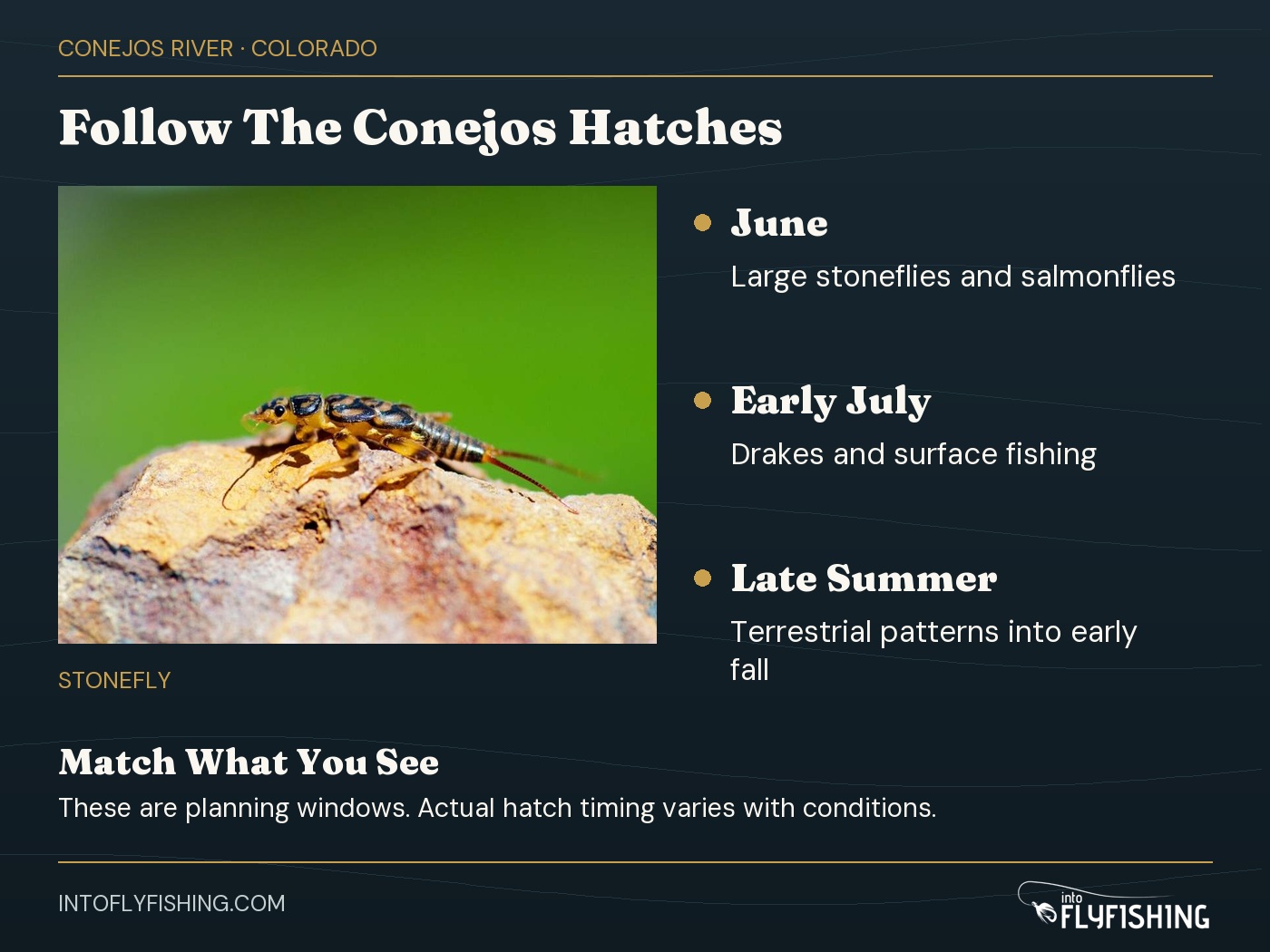
In late summer and early fall, terrestrial patterns become another useful option. Pack for that seasonal change instead of carrying exactly the same selection as a June stonefly trip. An SF slim fly box is a compact option for keeping your chosen flies together.
Check The Gauge For Your Reach
For the water below Platoro Reservoir, use the current DWR station CONPLACO. For the Conejos near Mogote, use CONMOGCO. Save the station link that matches your destination so you can find it again before leaving for the river.
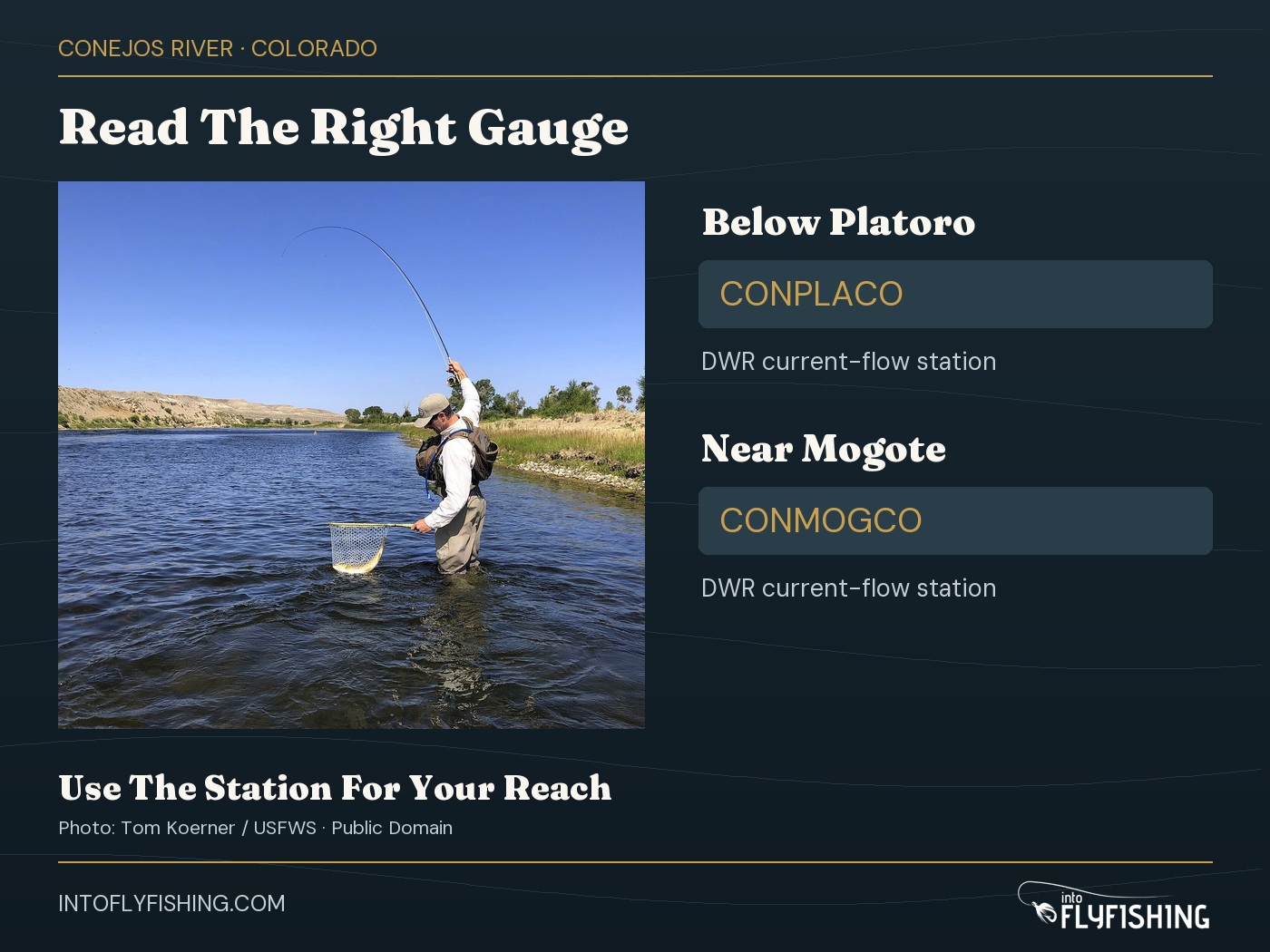
Check the reading’s time as well as its value, and follow the recent trend on the station page. Keep the gauge name attached to any number you discuss with a shop or guide. A useful question is how the water at your intended access has changed, followed by whether that affects the route or fishing plan.
Before fishing, also check CPW’s current fishing-closure table. Follow any restriction or voluntary closure affecting your stretch. Keep this alongside the reach-specific tackle rules when checking the day’s plan.
Put Your Flies In The Right Water
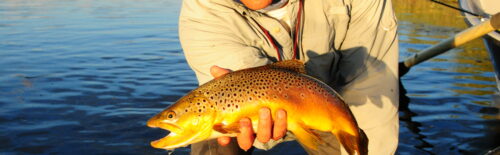
Brown and rainbow trout are the main quarry on the Conejos. Dry flies and nymphs are the core approaches, with streamers as another option. Start with a selection that lets you fish both the surface and below it, then put your attention on the water in front of you.

Nymphs are a practical choice for the Conejos riffles. Strong riffles can hold trout, so fish that water as part of your approach instead of walking past every faster stretch to reach a deep run. For pattern ideas, see our trout nymph guide.
When fishing a nymph near the bottom, adjust the weight to get the fly down to that water. Watch how the rig behaves through the drift. If it repeatedly hangs up on the bottom, reduce the weight and try again.
Bring replacement tippet for your nymph rig so you can rebuild the end as you change flies. The SF fluorocarbon tippet and leader combo is one option. Choose a size that suits the flies and rig you plan to fish.
If you are still choosing a rod for these approaches, compare our trout fly rod recommendations. Match your rod choice to the presentations you plan to fish.
Questions About Fishing The Conejos
The Aspen Glade-to-Menkhaven area offers walk-in access, and Mogote Campground sits beside fishing water. Above Platoro Reservoir, Forest Road 250 provides the approach, with a hike required to reach the headwaters.
June is a planning window for large stoneflies and salmonflies, and early July for drakes. Terrestrial patterns become relevant in late summer and early fall. Check the conditions on your intended reach before committing to a hatch-focused trip.
Brown and rainbow trout are the main quarry on the Conejos. Prepare dry flies and nymphs, with streamers as another option.
Use DWR station CONPLACO for below Platoro Reservoir and CONMOGCO for near Mogote. Open the station for your intended reach and check the reading’s time and recent trend.
Where I Would Start On The Conejos
With one day on the Conejos, I’d start with a public walk-in section near Aspen Glade and Menkhaven. It gives the day a clear destination, and I can bring dry flies and nymphs for the fishing. I’d check the public-access boundary and the applicable rules before settling on the exact entry point.
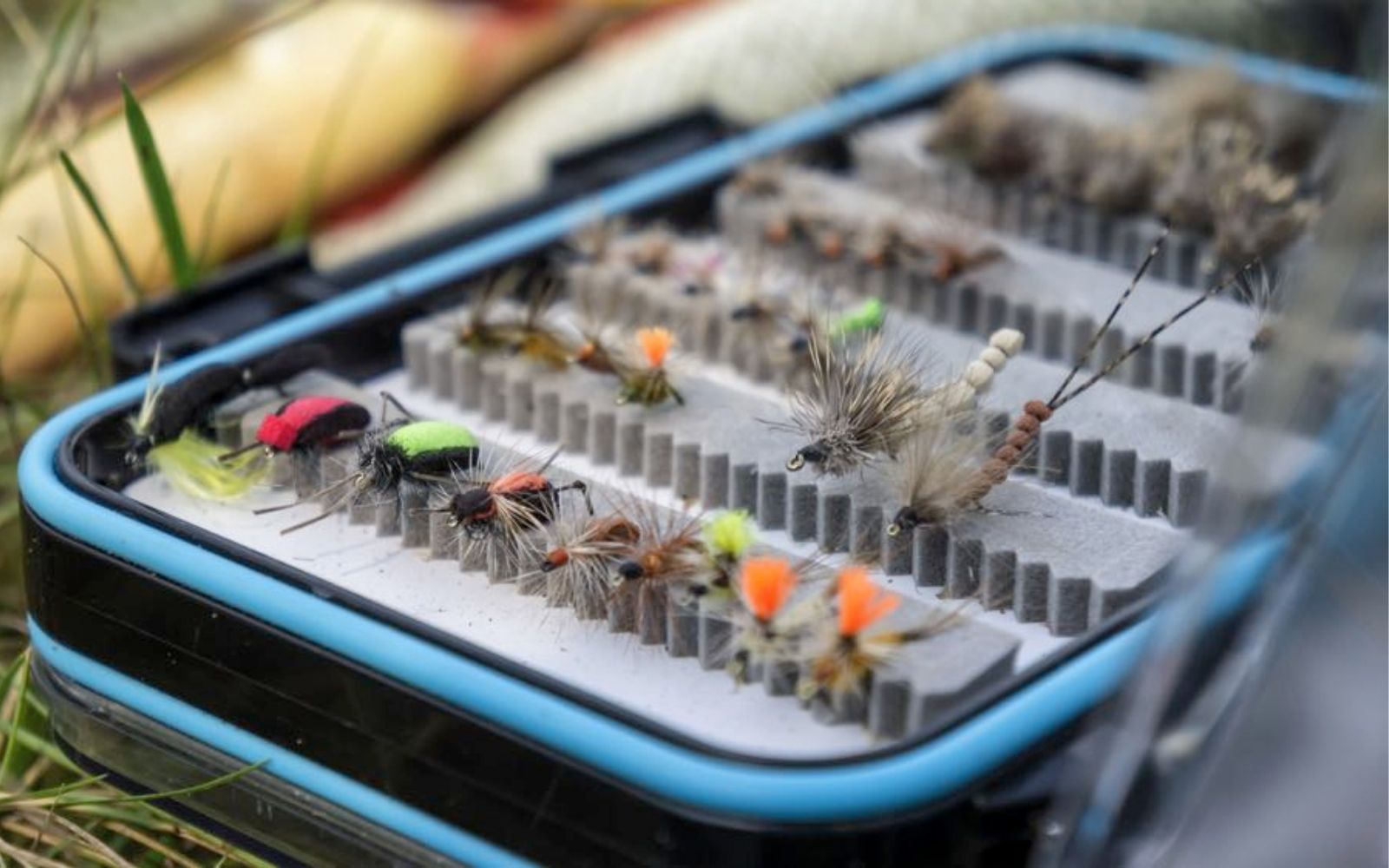
The rest of the day can go into fishing that stretch, including the riffles, with the season’s flies close at hand. Save the demanding Pinnacles hike for a separate canyon day. For a camping trip, check Mogote’s riverside sites first. Spend the fishing time on one stretch and leave room for another visit instead of turning the day into a tour of access points.
Featured photo: QKC / CC BY-SA 3.0.
Save This Fishing Guide For Later


Pin photos: Tom Koerner / USFWS and Tom Koerner / USFWS, public domain. Cropped with text added.
Amazon and the Amazon logo are trademarks of Amazon.com, Inc, or its affiliates.
As a part of the Amazon Associates Program and other affiliate programs, Into Fly Fishing® may receive a comission if you order products through links on this website.