As an Amazon Associate I earn from qualifying purchases.
A Dolores River trip starts with a choice at McPhee Reservoir. Above it, the small river near Rico suits a day with dry flies. Below the dam, the tailwater holds brown and rainbow trout, with remote access and fishing conditions tied to the release.
I’ve spent more than 35 years fishing the Yellowstone and 15 years working as a professional fly fishing guide. For a first Dolores trip, I’d lean toward the small upper river and a day spent fishing dry flies. The McPhee tailwater calls for its own access and water-release plan.
For nearby alternatives, browse the Colorado river directory. Our broader Colorado fly fishing guide helps with a statewide trip, and the US river guide covers waters beyond Colorado.
Quick Answer: Choose the upper Dolores near Rico for small-water fishing with dries or a dry-dropper. Below McPhee, prepare a separate tailwater trip around reservoir releases, remote access, and nymphing. Locate a public entry, check the current rules, and use the below-McPhee gauge for the tailwater.
Other Rivers In Colorado
- Cache La Poudre River
- Yampa River
- Roaring Fork River
- Taylor River
- Eagle River
- Frying Pan River
- Rio Grande In Colorado
- Arkansas River
- Animas River
Decide Which Side Of McPhee You Want To Fish
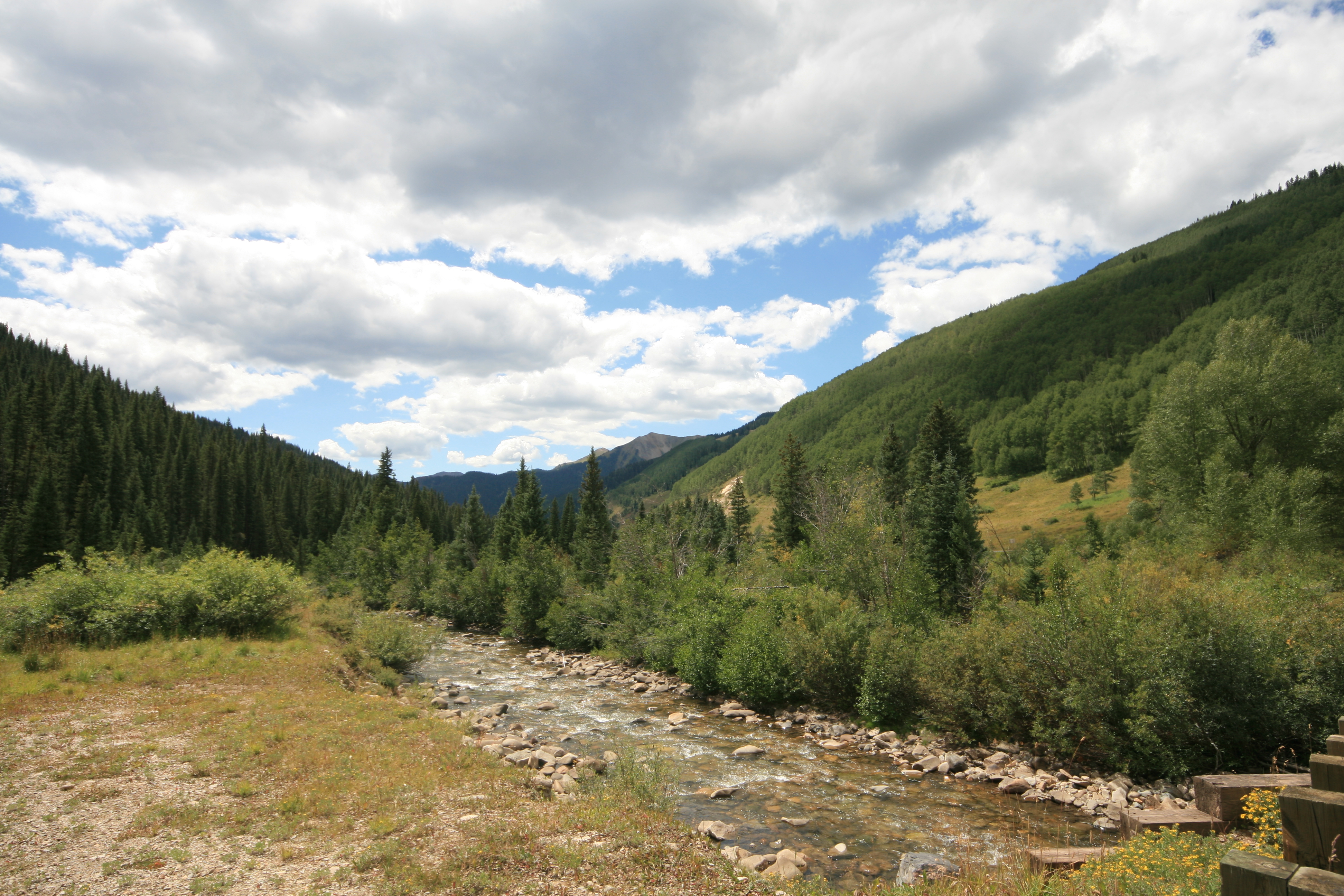
Keep the river above McPhee and the tailwater below it as separate destinations. The upper Dolores near Rico is small water. Between Rico and the town of Dolores, brown and rainbow trout are part of the fishery, with a patchwork of roadside public access along the river.
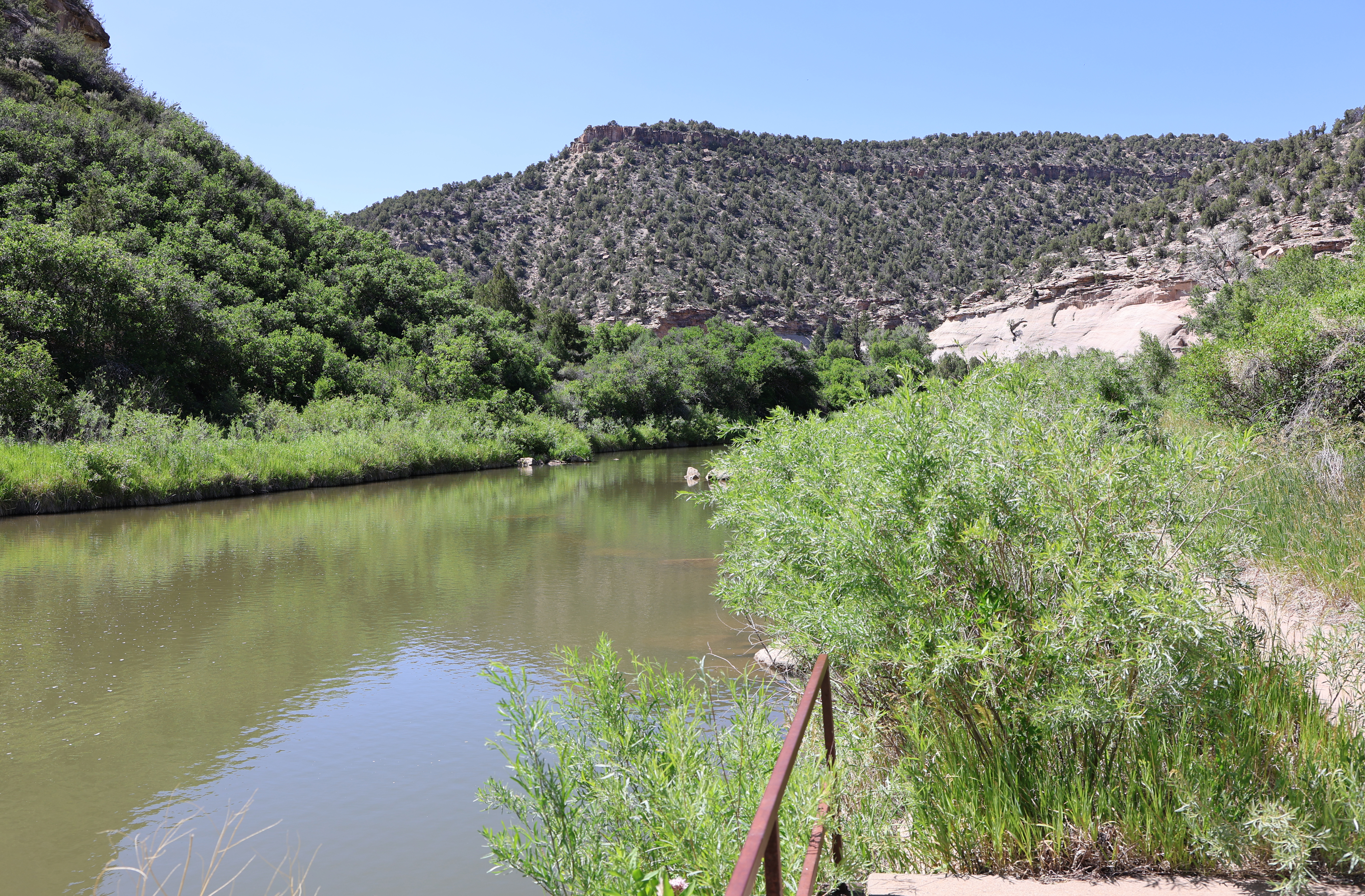
Choose a public parcel before choosing a roadside pull-off. The access is broken up, so follow the boundary of the land or fishing access you are using. A stretch of road beside the river gives you a route through the valley; it does not give you permission to enter every bank.
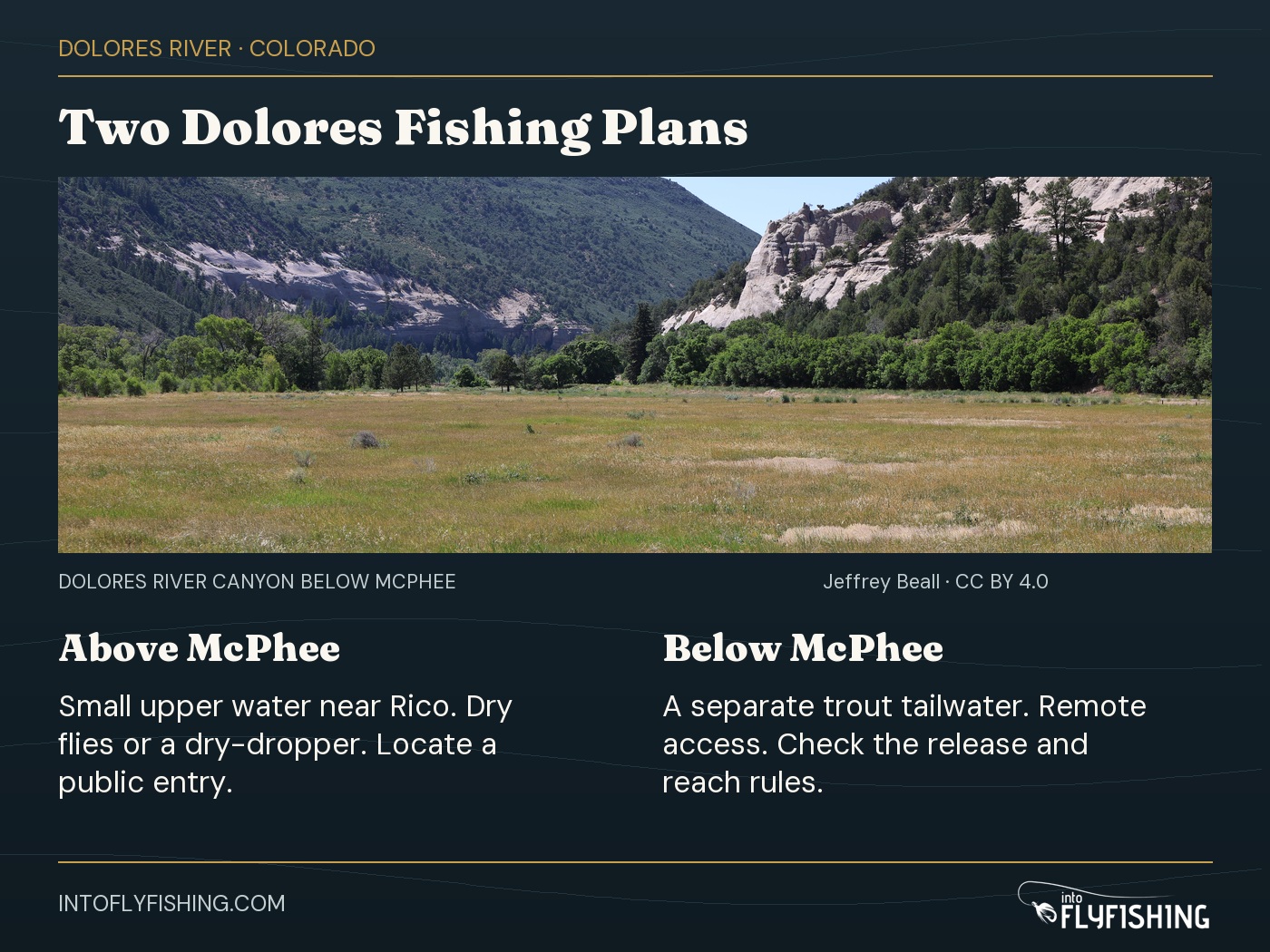
Bradfield Recreation Site is a named access point on the Dolores below McPhee. Use it as a reference when planning a tailwater outing. Keep the McPhee-to-Bradfield trout reach separate from the longer lower-river recreation corridor when choosing your map and checking the rules.
For a day of wading the upper river, pack gear that fits comfortably and leaves room for the walk back. If you need stockingfoot waders, compare the Frogg Toggs Canyon II with your usual fit and layering.
Make A Dry-Fly Day On The Upper Dolores
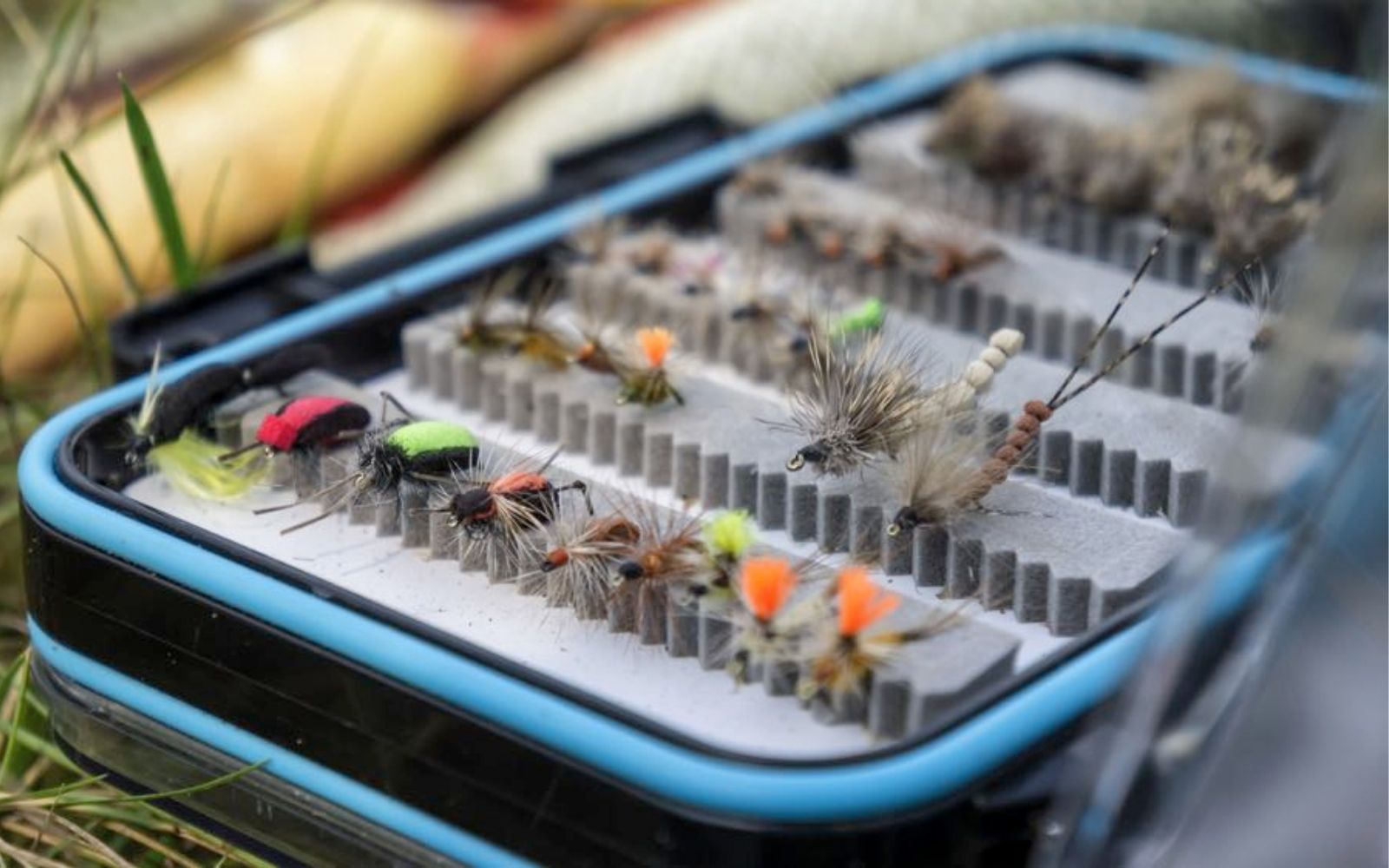
Dry-fly fishing suits the small upper Dolores, and a dry-dropper is another useful approach around Dolores and toward Rico. You can prepare both with a selection of floating dries and nymphs. Keep those flies in a box you can sort through easily; the SF slim fly box is one option.
A dry-dropper lets you fish a floating dry with a nymph below it. The dry also acts as your strike indicator. You have a fly on the surface to watch while the second fly fishes underneath.
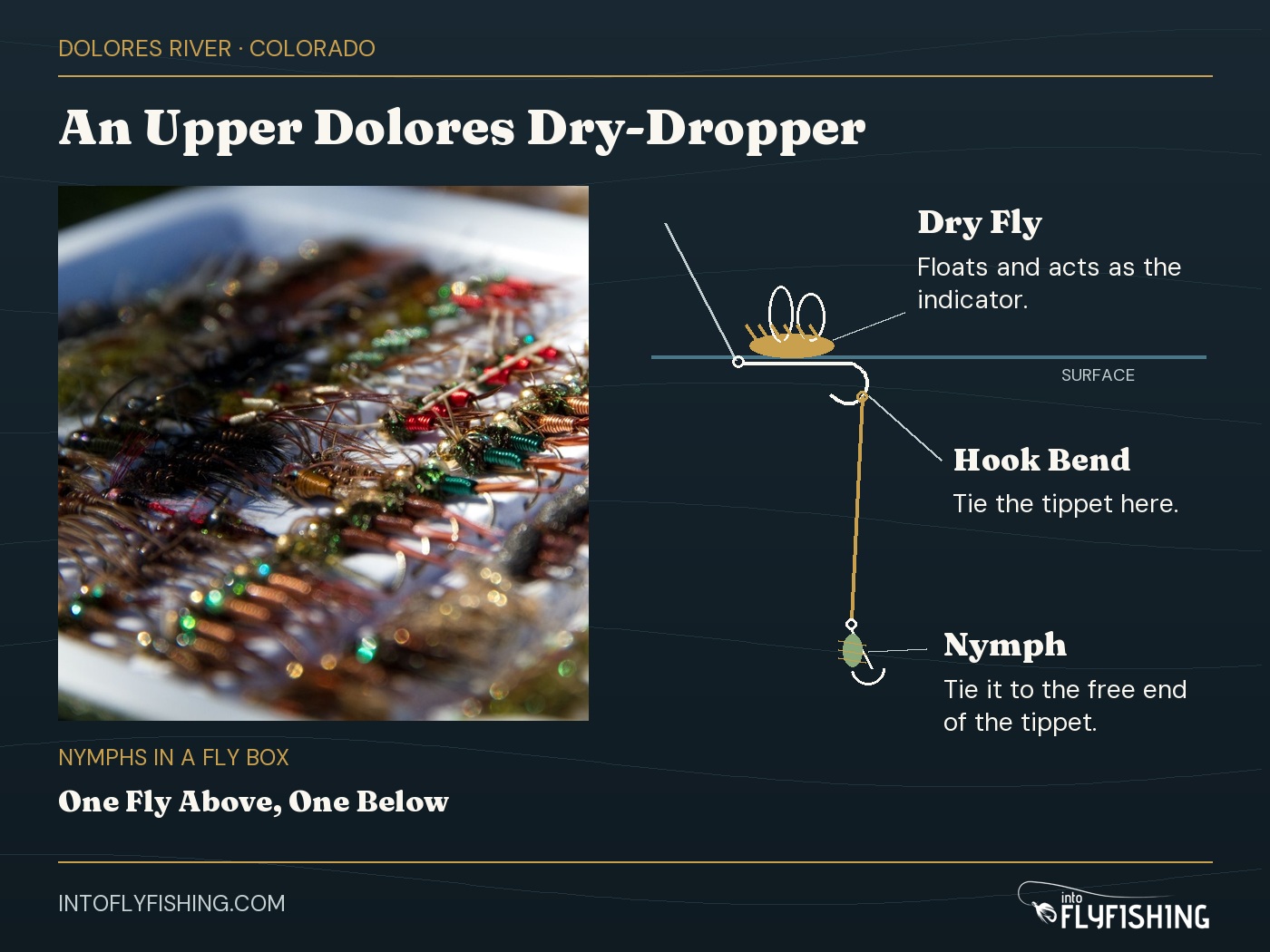
Tie the dry fly to your leader, then tie a length of tippet to the bend of its hook. Tie the nymph to the free end of that tippet. Follow the floating fly through the drift as the indicator for the nymph below. Our nymph fishing guide explains more about fishing below the surface.
Carry replacement tippet for that lower connection so you can change a nymph or rebuild the rig. The SF fluorocarbon tippet and leader combo is one option for your kit. Choose the size for the flies you plan to fish.
Choose Dates For The Upper River
Late May through early October is a useful period to consider for the upper Dolores, with runoff and current conditions shaping the trip. Use that as a broad planning window, then check the upper river as your dates approach.
For more help with fishing smaller water, read our small-stream fly fishing guide. If you are choosing tackle for the trip, our trout fly rod recommendations can help you compare options for the fishing you want to do.
Plan The Tailwater Around The Release
Brown and rainbow trout also live in the McPhee tailwater. Here, dam releases and the available water supply shape the fishery. Treat the below-dam conditions as a separate check from the upper Dolores near Rico or the town of Dolores.

Look for deep pools and undercut banks as you work through the tailwater. Nymphing is one approach to prepare for here. Bring that setup for fishing below the surface, and give each piece of water time before moving along.
Use The Below-McPhee Station
For the tailwater, open DWR’s DOLBMCCO station, labeled Dolores River Below McPhee Reservoir. Check the timestamp on the reading and the recent trend before discussing conditions or setting out. Keep the station name with any flow figure you note.
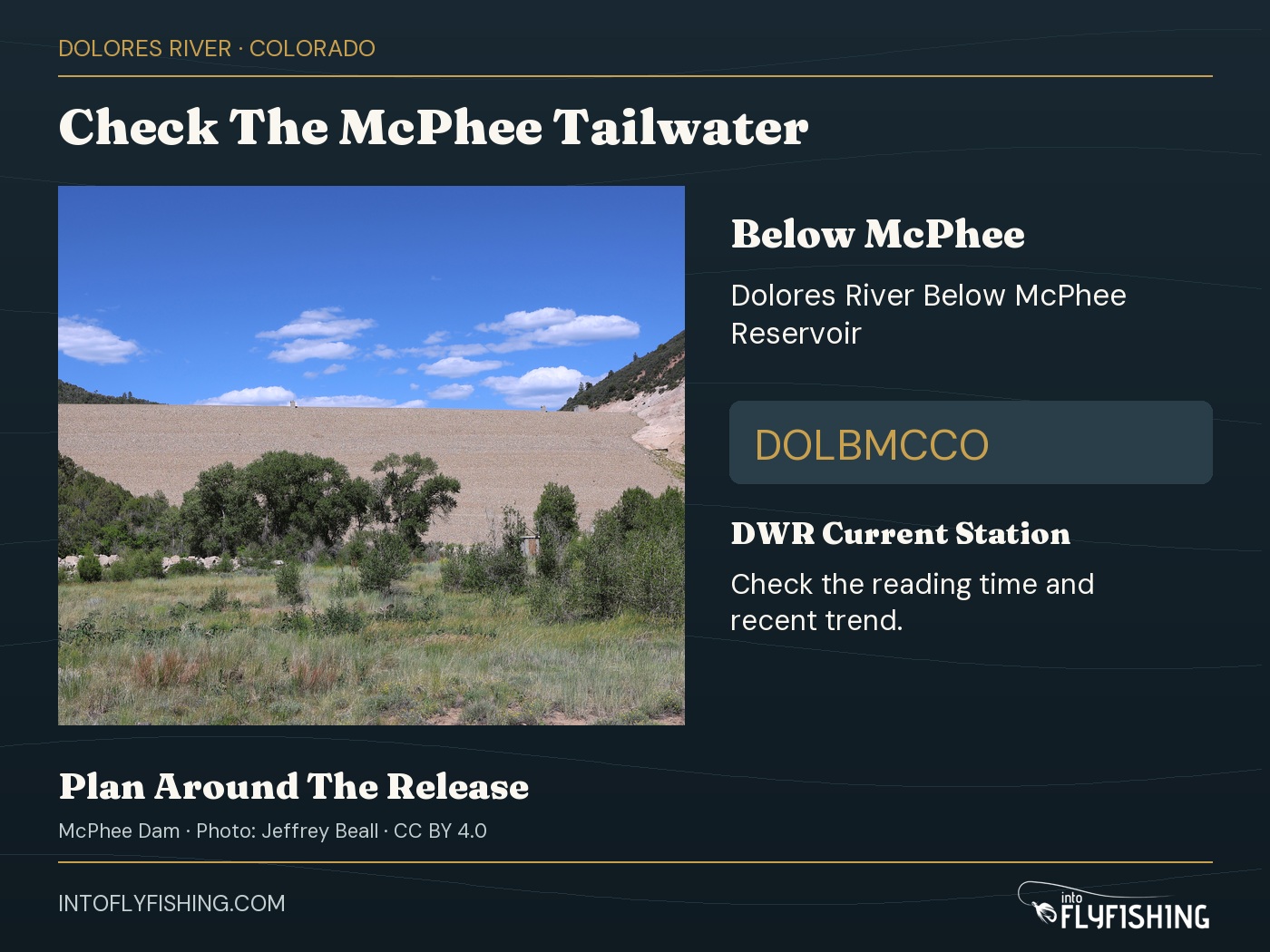
Use that information with your planned entry and exit. The McPhee tailwater is a remote-access trip, so work out the route before leaving for the river. Check the current information for Bradfield and the lower Dolores recreation area as part of that preparation.
Check Today’s Rules
Under CPW’s current fishing regulations, the reach from McPhee Dam to Bradfield Bridge is restricted to artificial flies and lures. All trout must be returned to the water immediately after catching them. Use those named endpoints when checking your fishing plan.
Check CPW’s live fishing-closure table before the trip as well. Follow any restriction or voluntary closure affecting your chosen stretch. Save the official page with your access information so you can check it again before fishing.
Questions About The Dolores
Choose the upper Dolores near Rico for small-water fishing with dry flies or a dry-dropper. The tailwater below McPhee is a separate, release-dependent choice with remote access and brown and rainbow trout.
The upper river between Rico and Dolores has a patchwork of roadside public access. Check the public parcel or fishing-access boundary before entering. Bradfield Recreation Site is a named access point below McPhee.
Dry flies and dry-dropper rigs are options on the upper Dolores. Prepare for nymphing on the McPhee tailwater. Choose the individual patterns for the insects and conditions on the reach you will fish.
From McPhee Dam to Bradfield Bridge, CPW’s current rule requires all trout to be returned to the water immediately. Fishing in this reach is restricted to artificial flies and lures.
My Choice For A First Dolores Trip
For a first visit, I’d choose the upper Dolores and plan a day with dry flies and a dry-dropper rig. Start with a legal public entry between Rico and Dolores, then leave time to fish that stretch. I’d give that smaller piece of water my attention for the day.
Keep the tailwater for a trip built around its own release, route, and rules. If that is the water you want most, begin with Bradfield as an access reference and check the below-McPhee station. Either choice gives the day a clear focus: upper-river dries and a nymph below, or a separate plan for the reservoir-fed trout water.
Featured photo: Jeffrey Beall / CC BY 4.0.
Save This Fishing Guide For Later


Pin photos: Tom Koerner / USFWS and Tom Koerner / USFWS, public domain. Cropped with text added.
Amazon and the Amazon logo are trademarks of Amazon.com, Inc, or its affiliates.
As a part of the Amazon Associates Program and other affiliate programs, Into Fly Fishing® may receive a comission if you order products through links on this website.