As an Amazon Associate I earn from qualifying purchases.
Lake Estes is the useful dividing point for Big Thompson River fly fishing. Above it, you can plan a day on the meadow river in Rocky Mountain National Park. Below Olympus Dam, the tailwater leads into the canyon along Highway 34. Decide which of those outings you want before choosing an access point.
I’ve spent 35 years fly fishing and 15 years guiding in Southwest Montana, including teaching people who had never held a fly rod. For a first Big Thompson trip, my preference would be a public canyon access and time to work the rocky water with dry flies and nymphs. You can give the park meadows their own day.
Use our Colorado river directory to compare nearby waters, and the Colorado fly fishing guide for broader trip planning. The US rivers guide connects the state guides if your trip crosses a state line.
Quick Answer: For Big Thompson River fly fishing, choose the upper park water around Moraine Park or a public access in the Highway 34 canyon below Lake Estes. Prepare dry flies, dry-dropper rigs, and nymphs. Check the reach-specific rules, current gauge, and any seasonal park-access restrictions before the trip.
Other Rivers In Colorado
- Cache La Poudre River
- Yampa River
- Roaring Fork River
- Taylor River
- Eagle River
- Frying Pan River
- Rio Grande In Colorado
- Arkansas River
- Animas River
- Colorado River In Colorado
- Gunnison River
- South Platte River
- North Platte River In Colorado
- Conejos River
- Dolores River
Choose Between Moraine Park And The Canyon
The Big Thompson passes through Estes Park before entering Lake Estes. Keep that town stretch, the upper park water, and the river below the dam separate in your planning. A report from one of them is most useful when you know which reach it describes.
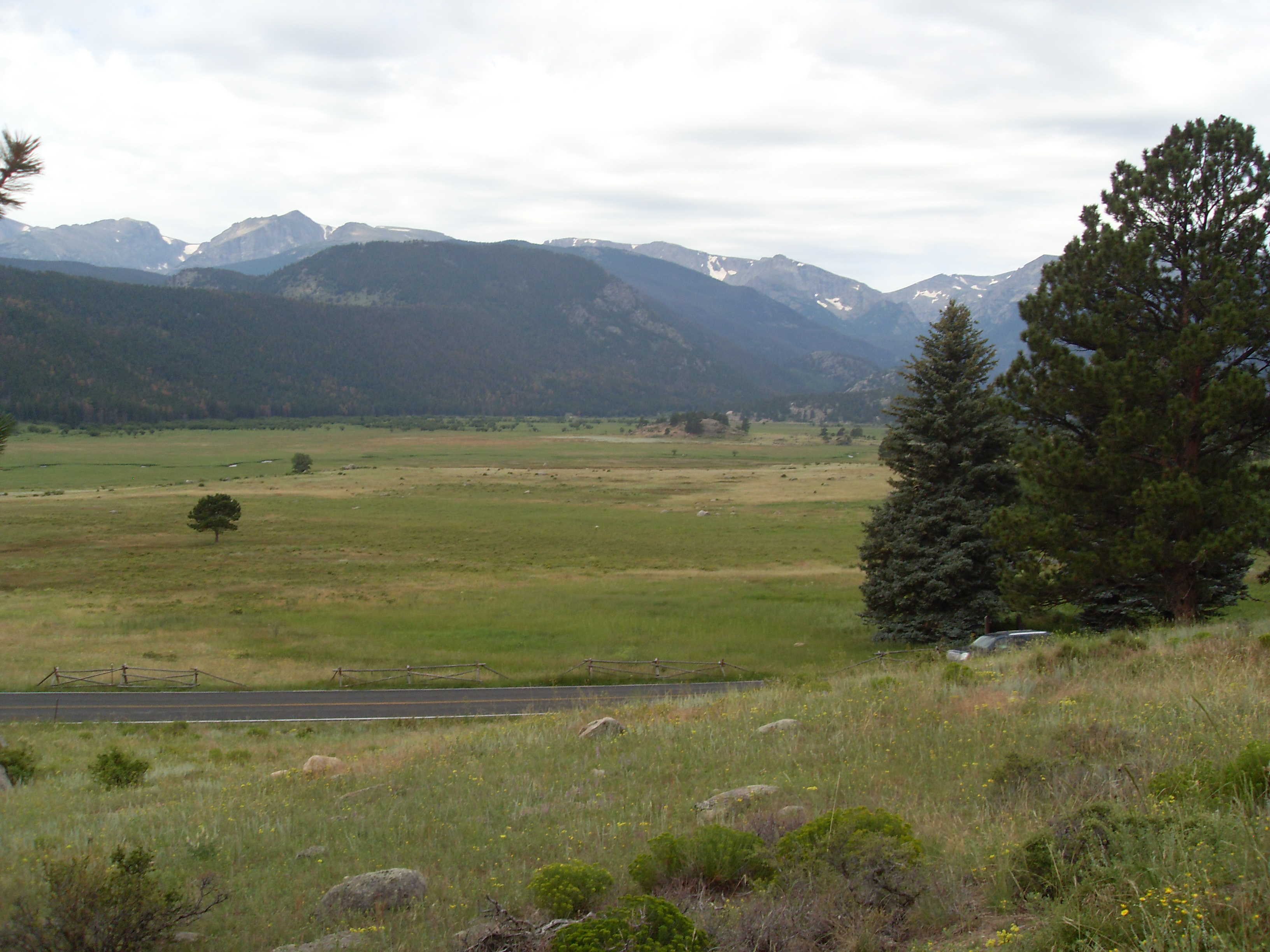
Moraine Park offers a road-and-trail approach to the upper river. The Bear Lake Road corridor is another useful access reference. Check the current park information before setting off, then choose a permitted entry that lets you spend your time fishing rather than searching for a way to the bank.
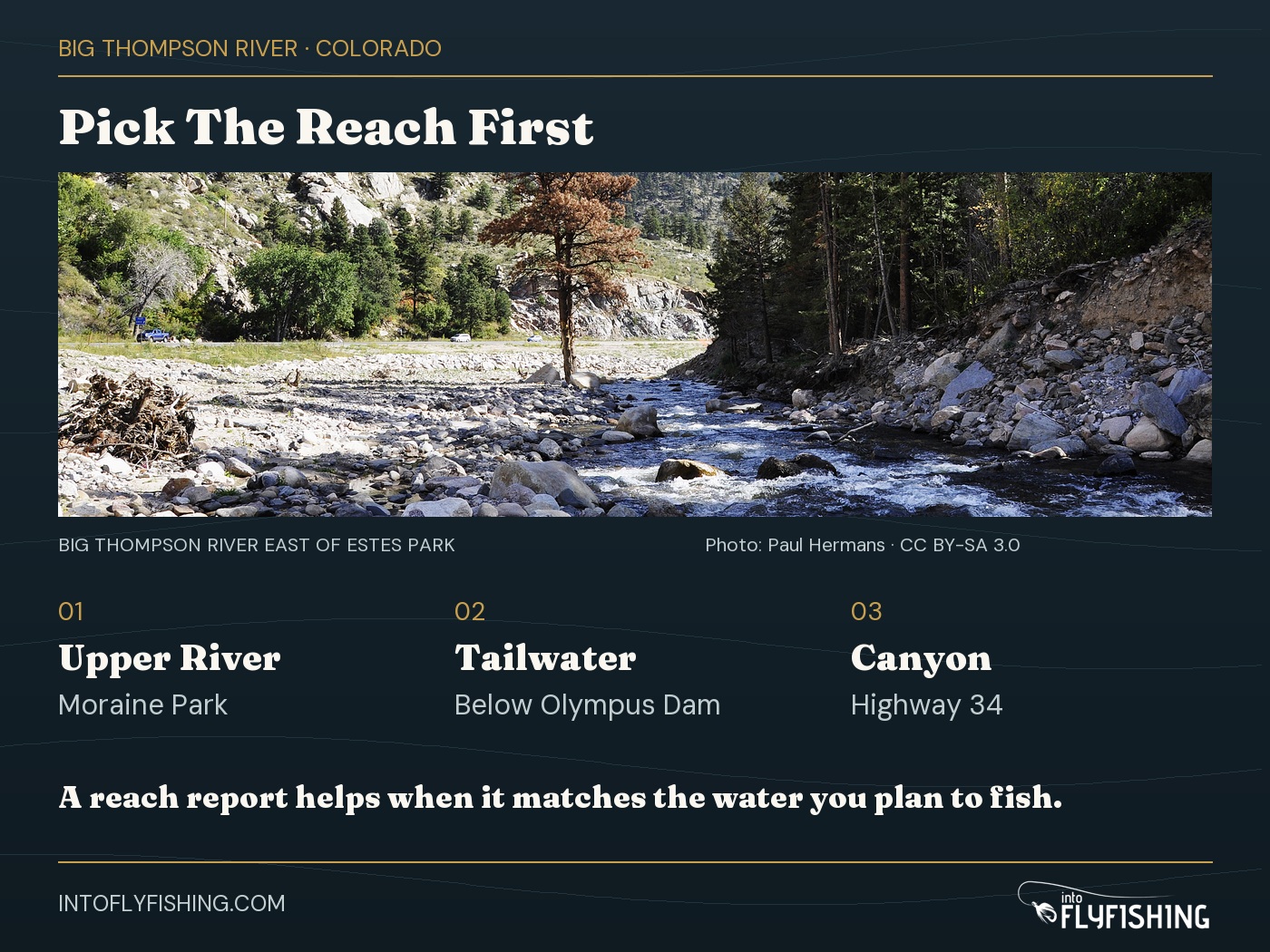
Below Lake Estes, the river enters its tailwater and canyon setting. Highway 34 follows the canyon, where public pullouts and county parks provide fishing access. Follow the signs at the access you choose and respect private frontage as you move along the river.
For a concrete starting point, open Larimer County’s Big Thompson Parks page. It lists Glade, Narrows, Forks, and Sleepy Hollow, with each park’s location. These parks operate seasonally, from sunrise to sunset when open. Confirm that your chosen park is open before setting off.
Fall Access In Moraine Park
The NPS fall meadow closures matter if you are planning an early or late session. From September 1 through October 31, fishing in the affected Big Thompson sections within Moraine Park closes from 5 p.m. to 7 a.m. This restriction applies to the affected park water, not the entire river downstream.
There is a separate walking restriction. In the listed meadow areas, the NPS closes off-road and off-trail foot travel from 5 p.m. to 10 a.m. during the same period. That later morning end time matters when your route to the river crosses a meadow. Use the current closure description and permitted routes when choosing your start.
Late May through early fall is a useful main planning window for the upper river. Choose dates for the outing you want, then check access and conditions for that visit. For fishing inside the national park, read the current NPS fishing rules as well as the access information.
Rules Below Olympus Dam
Under Colorado’s fishing regulations, the reach from the base of Olympus Dam at Lake Estes to the bridge at Waltonia allows artificial flies and lures only, and all trout must be released. Use those named endpoints when checking where the special rule applies.
Three Useful Flow References
For the park water, use the USGS station below Moraine Park. For the tailwater, open DWR station BTBLESCO below Lake Estes. Farther down the canyon, BTABCMCO at Cedar Cove is the appropriate named reference near the canyon’s lower end.
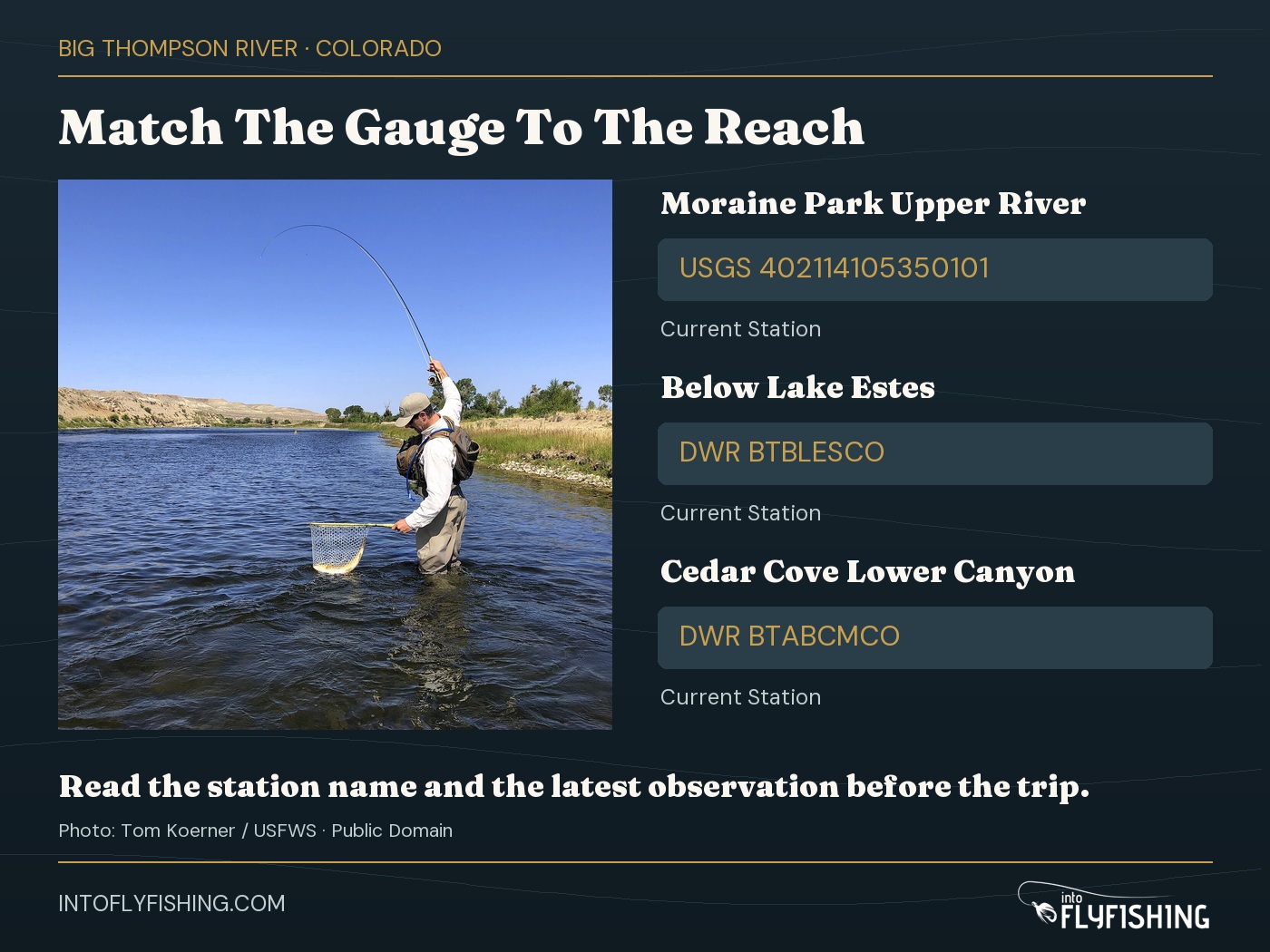
Read the station name and the time of the latest observation before using a flow number. Keep the reach attached to the number when you discuss conditions with a local shop. The next question is how the water looks at your intended entry point and whether that changes your fishing plan.
Fish The Water In Front Of You
Brown and rainbow trout are the main quarry in the Big Thompson reaches covered here. Dry flies, dry-dropper rigs, and nymphs give you useful approaches for the tailwater and canyon. Start with the method you can present well, then change it when the water calls for a different approach.

Make room in the fly box for stonefly, mayfly, and caddis imitations. These are useful Big Thompson insect families, but the family names alone do not choose your fly for the day. Look at what is active at the water and ask about the reach you are fishing before filling the box with one pattern.
If you need a small box for your nymph selection, the SF slim fly box is one option to compare. Keep your selection organized so changing flies takes less of your fishing time.
A Simple Dry-Dropper Connection
A dry-dropper lets a floating dry fly act as the indicator for a nymph below it. One straightforward connection is a length of tippet tied to the bend of the dry-fly hook, with the nymph tied to the free end. That gives you a clear starting setup for practicing the method.
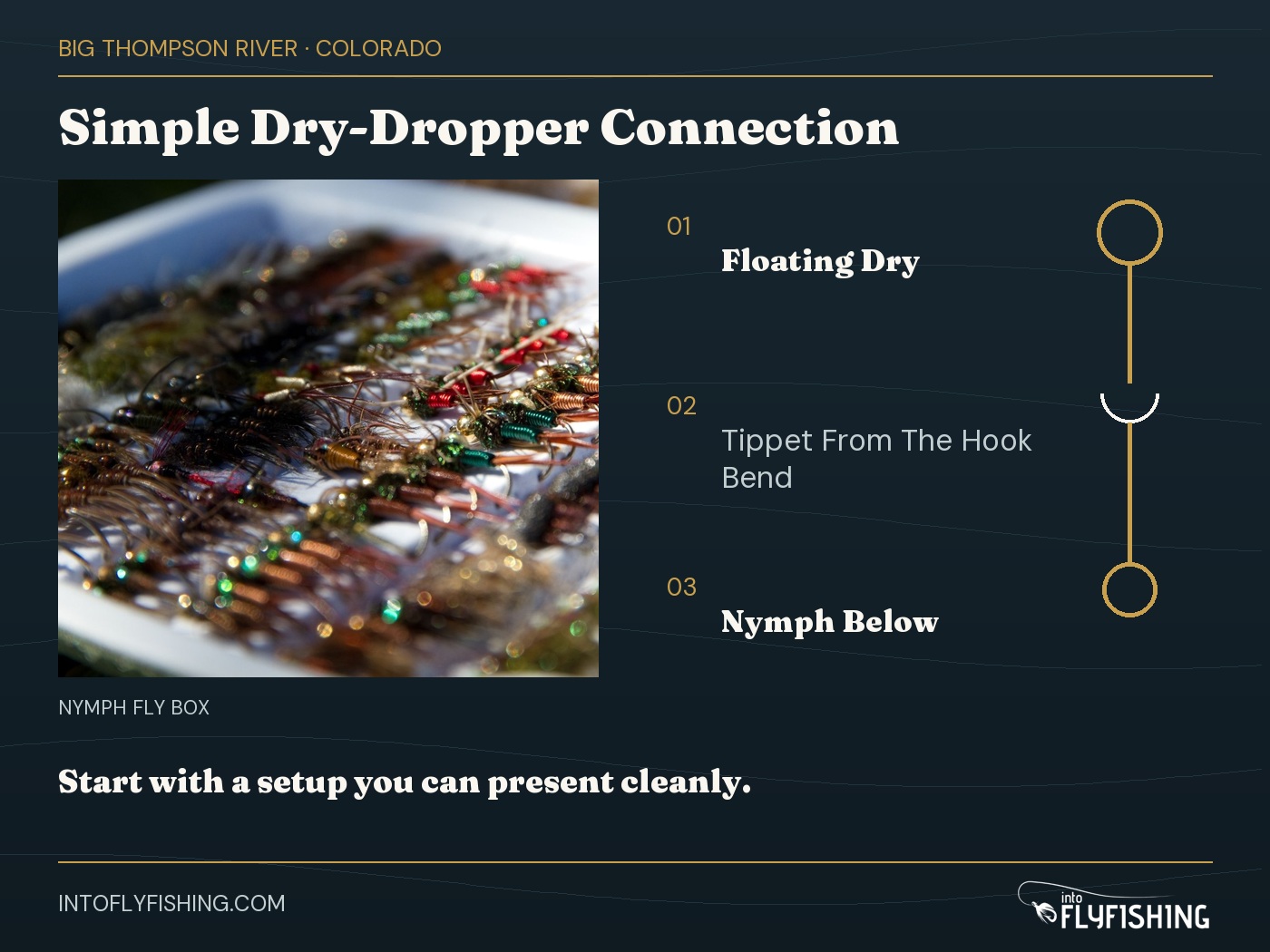
On the Big Thompson, give the rocky structure attention when fishing dries and nymphs. Pick a piece of water you can work carefully and concentrate on the presentation there before moving on. The fly casting guide is useful if controlling the cast is the part you want to practice first.
When you switch to fishing a nymph near the bottom, adjust its weight for that part of the river. Repeated bottom hangups are a reason to reduce the weight and try again. Watch the next drift before making another change so you can judge what the adjustment did.
Bring replacement tippet for nymph-rig changes. The SF fluorocarbon tippet and leader combo is an option if you are restocking. Match the size to the flies and rig you are using.
For walk-in fishing, compare the fit of your wading gear before the trip. The Frogg Toggs Canyon II stockingfoot waders are one choice. Our trout fly rod guide can help with the rod decision once you know which presentations you want to fish.
Big Thompson Fishing Questions
Moraine Park has road-and-trail access to the upper river. Downstream, the Highway 34 canyon has public pullouts and county parks. Check the current land-manager information and signs for the specific access you choose.
The special-regulation reach from the base of Olympus Dam at Lake Estes to the bridge at Waltonia requires artificial flies and lures and release of all trout. Other reaches have their own rules, including the national park water. Check the rules for your exact destination.
Prepare dry flies and nymphs, including stonefly, mayfly, and caddis imitations. Dry-dropper rigs are another useful canyon approach. Match your selection to the water and insect activity on the day.
From September 1 through October 31, the affected river sections close to fishing from 5 p.m. to 7 a.m. The NPS also restricts off-road and off-trail foot travel in the listed meadow areas until 10 a.m. Check both restrictions and your route before planning a morning session.
My First Stop On The Big Thompson
For a first visit, I’d choose a signed public fishing access in the Highway 34 canyon and keep the day focused on that stretch. I’d bring dry flies and nymphs, check the matching current gauge, and look over the rocky water before setting up. The county parks page is a useful place to choose that initial stop.
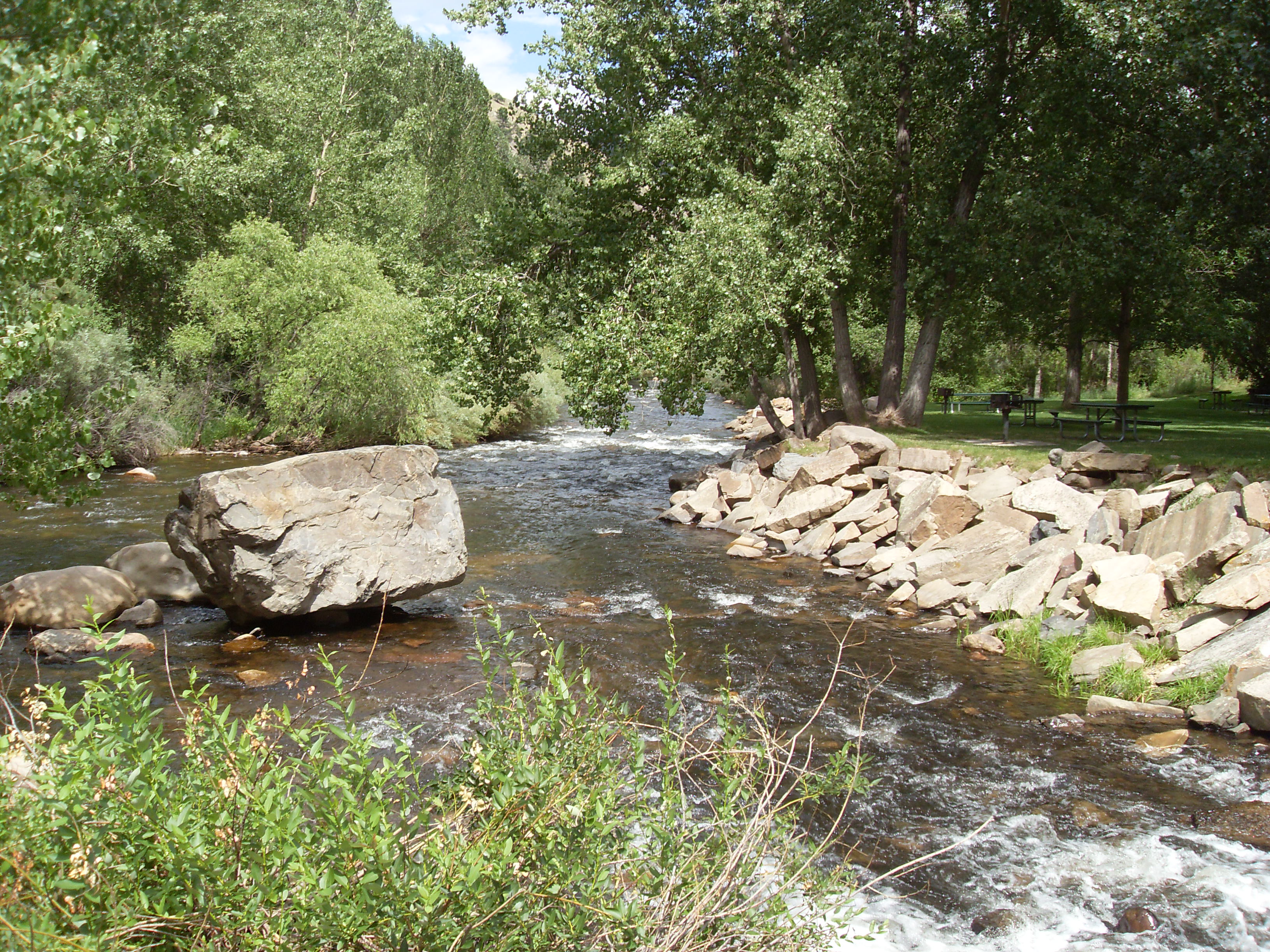
Once there, I’d spend the available time learning how my flies behave through the water I can reach. A separate Moraine Park outing would start with the NPS access and fishing information, particularly during the fall meadow closures. That gives each day a clear destination and enough time to fish it properly.
Featured photo: Dough4872 / CC BY-SA 4.0.
Save This Big Thompson River Guide For Later


Pin photos: Tom Koerner / USFWS and Tom Koerner / USFWS, public domain. Cropped with text added.
Amazon and the Amazon logo are trademarks of Amazon.com, Inc, or its affiliates.
As a part of the Amazon Associates Program and other affiliate programs, Into Fly Fishing® may receive a comission if you order products through links on this website.