
As an Amazon Associate I earn from qualifying purchases.
When looking for the best fly fishing boots you should be looking for items that work the best for you. Think about how often you plan on going and where you plan on wearing them.
Quick-Look: 5 Best Fly Fishing Boots
- Best Fly Fishing Boots Overall: Korkers Chrome Lite
- Best Budget Fly Fishing Boots: Frogg Toggs Hellbender
- Best Midrange Fly Fishing Boots: Orvis Clearwater Wading Boots
- Best Value Fly Fishing Boots: Simms Freestone
Knowing when and how you plan on using them is going to help you make the correct decision and will make you safer and more comfortable when you’re out on the water.
That’s why below we’ve got five different boots you can wear for fly fishing. These are going to help grip the bottom, and cover more water. Which is going to result in you catching more fish.
See also: 10 Best Wading Boots – 2026 Buyer’s Guide
5 Best Fly Fishing Boots of 2026
Below, we have five different boots that you can use on your next fishing trip. We’re going to cover them in detail so that you can have the most information possible and can make the best decision for you.
1. Korkers Chrome Lite Wading Boots
- Price – $199.99
- Pros – Boa M4 fit system. Kling-On sticky rubber outsole. Takes screw-in cleats. Dries fast
- Cons – The sole is fixed, so you cannot swap it the way you can on other Korkers boots
Fly fishing boots can be a pain to put on and take off, especially over neoprene or when your hands are cold. The Chrome Lite solves that with a dial instead of laces.
You turn the dial to tighten and pull it to release, one-handed, in a couple of seconds. That gets you into the water faster and back on the road faster at the end of the day.

The Boa lacing system has no laces to freeze in winter, and you can loosen or tighten it with one hand without putting your rod down. Korkers runs the M4 version here with a sequence lacing pattern, so the boot pulls tight across the whole foot rather than just at the ankle.
The Korkers Chrome Lite runs a Kling-On sticky rubber outsole that holds on wet rock, and it takes Xtra-Bite screw-in cleats if you want more bite. Exo-Tec wraps the boot in molded abrasion protection without much weight, and the hydrophobic materials dry fast, which matters for keeping invasive species off your next river.
2. Orvis Clearwater Wading Boot
- Price – $198.00
- Pros – Felt bottom for grip on slick rock. Scratch rubber toe, vamp and heel counter. Synthetic leather upper with very few seams
- Cons – Costs a lot more than the Encounter it replaces. A few states restrict felt soles
The Orvis Clearwater is the boot to buy now that Orvis has retired the Encounter. Scratch rubber runs across the toe, the vamp and the heel counter, which is where boots give out first. A heavy rubber bumper over the toe takes the rest of the abuse.
The upper is full synthetic leather with very few seams, so there is less stitching to split and nothing to shrink on you between trips. Felt holds water and dries slowly, so rinse and dry these wading boots before you fish a different river.

Felt swells once it is wet and grips sand, gravel and slick rock better than rubber does. That is the whole reason to buy felt. Check your state regulations before you order, because a handful of states ban felt soles to slow the spread of invasive species.
Inside there is an EVA foam footbed over a Phylon midsole with an ESS plate. The plate is what keeps screw-in studs from pulling out, so add studs if you fish steep freestone bottoms. Orvis also builds the Clearwater with a rubber sole for anglers who hike a long way in.
 3. Frogg Toggs Hellbender (Felt)

- Price – $106.17
- Pros – Cheapest way into a felt sole. Mesh and PVC upper drains fast. Replaceable outsole. Sold and shipped by Amazon, so it stays in stock
- Cons – Heavy once wet. Studs are not included
The Frogg Toggs Hellbender is the budget boot in this list. It gets you on the water for around a hundred dollars with felt underneath, which is what you want on slick freestone rock. Size up if you plan to wear neoprene booties inside them.
The upper is mesh with a PVC outer skin, so it drains instead of holding half the river. Toe and heel caps take the knocks. Underneath sits a polyurethane midsole and a wide wading last, which is what gives the boot its footing in current.
The felt outsole is replaceable. Felt wears down faster than rubber, so being able to swap the sole rather than the whole boot is worth real money over a few seasons of hard wading.
A padded ankle collar and a riveted speed-lacing system with a locking lace clip round it out. Frogg Toggs also sells the Hellbender with a cleated sole, which is the one to order if your state restricts felt.
4. Korkers Greenback Wading Boots
- Price – $149.99
- pros – Comes with both felt and Kling-On rubber soles. Swaps in seconds. Drains out through the midsole
- Cons – The sole system adds weight over a fixed-sole boot, and it is one more part to lose
The Greenback comes with two soles in the box, felt and Kling-On rubber, and the OmniTrax system lets you swap between them at the truck. One pair of boots covers the felt-restricted river and the long hike in.

The Korkers Greenback drains through internal channels that run out of ports in the midsole, so water leaves the boot instead of riding along with you. Hydrophobic materials dry it out faster between trips, which is what keeps you from carrying invasive species into your next river.
Quick Cinch laces pull the whole boot tight in one movement. That is worth more than it sounds at six in the morning when your hands are cold and wet.
Korkers builds the upper from abrasion-resistant panels and puts the seams away from the points where the boot flexes and rubs. Seams are where wading boots usually fail, so that placement is the difference between one season and several.
5. Simms Freestone Wading Boots
- Price – $229.95
- pros – Has a scratch-resistant upper and a very comfortable midsole
- Cons – These can run small and have difficulty draining
Simms Freestone Wading Boots is made of waterproof synthetic leather. That also features a scratch-resistant upper. Giving the wearer a strong defense against boulders and sunken trees while also maintaining a strong and durable boot.
The internal neoprene lining allows you to easily take the boots on and off. No longer do you need to stand truck side and stomp your feet into the boots while wiggling side to side like a squirmy worms drifting in the current.

The midsole, combined with neoprene lining, will give you extra comfort, support as well as warmth. Simms even added an extra layer of the midsole to give the boots extra cushioning and shock absorption.
These boots can be worn in saltwater but proper care must be taken after wearing them. Removing the laces and cleaning with a brush to remove sand and then rinsing with fresh water from a hose or your sink.
What Makes the Best Fly Fishing Boots
Below we’re going to go over exactly what makes a fly fishing boot great. There are a number of things and some are more important to others. But this all depends on what type of fishing you plan on doing.
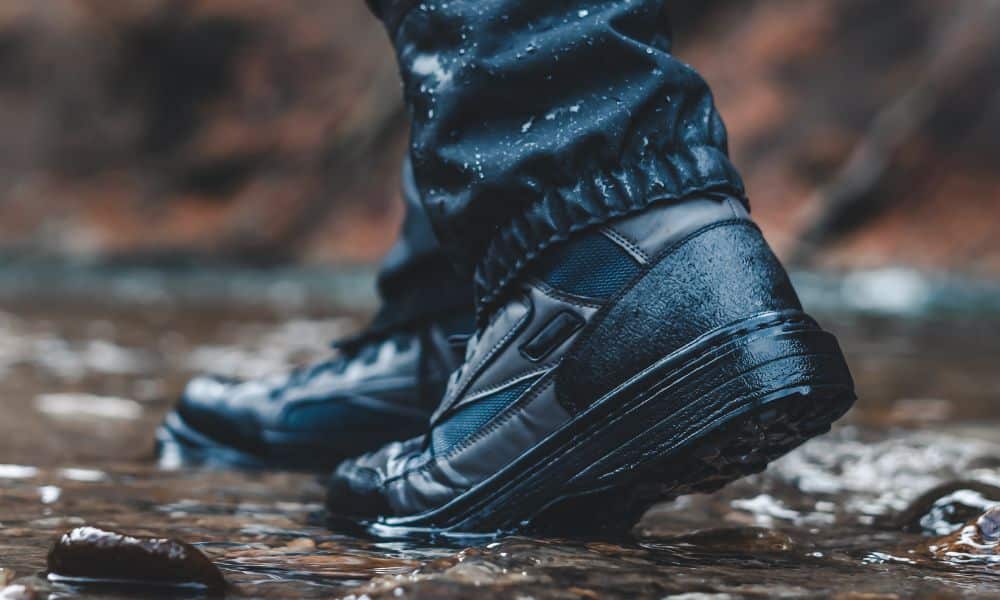
Comfort
If you’re not comfortable wearing your boots then your not going to be fishing for long. In fly fishing, you will most likely be on your feet for the majority of the day.
So, anything that rubs, and gives you blisters is going to be a no go. The same goes for any boots that don’t have cushioning or shock absorption. You need something that will allow you to be out there for hours at a time.
Durability
When thinking of durability you should keep in mind exactly how often you go fishing and how rough you are on gear. If you only go out a few times a year then an expensive, strong durable boot is not needed.
The opposite goes for the weekend warrior or the fishing guide. If you’re out on the water 200 days a year then it’s very important you choose something that will last. Otherwise, you’ll be changing your boots out every couple of months.
Bottom Sole
Felt, rubber, studs? Which ones do you need and why. Felt is going to give the maximum about of traction when inside the water. It won’t slip very much, but if you plan on hiking long distances to the river of your choice then it might not be the best option.
Rubber is great for all-around hiking and wading. It’s going to give you traction for the tree stump you need to hike over on the trail while being grippy enough to hold you in place in a river with the current.
Studs can be screwed into both soles as long as the boot permits it. Using studs gives you an extra boost grip and traction. If the boots you’re wearing allow for them then its best to use them. These are suggested for wear on drift boats though.
Support
When wading in river filled with loose and slippery rocks its important to have something to hold your foot an ankle in place. A strong upper that gives you support will do this.
You don’t want to be in the middle of a river and roll an ankle thanks to a flimsy upper and or loose boot. For your safety its best to find a boot with great support.
Review This Post
Conclusion
With all of the information above its time to go out hunting for some great fly fishing boots. Any of the boots above would be a great choice or use the info above as a springboard for your own search.
Amazon and the Amazon logo are trademarks of Amazon.com, Inc, or its affiliates.
As a part of the Amazon Associates Program and other affiliate programs, Into Fly Fishing® may receive a comission if you order products through links on this website.


