As an Amazon Associate I earn from qualifying purchases.
On a Lake Fork of the Gunnison fly fishing trip, you can walk to a fishing pier where Henson Creek meets the river in Lake City, or head for the lower river’s roughly 14 miles of public bank and wade access. Those are different outings. I would choose between a short town session and a longer day exploring the lower public water before planning the rest of the trip.
I’ve fished Colorado’s rivers, streams, and lakes on many trips to the state. The Lake Fork plan I’d put together starts with that access choice, a 9-foot 5-weight, and a box of dries and nymphs. Summer gives you dry-fly opportunities, while brown and rainbow trout are both present in the lower river.
Below, I cover the public-water choices, flies and setup, seasonal planning, and the rules that change along the river. Our Colorado river guide will help you compare it with other waters if you are still planning the trip.
Quick Answer: For a short Lake Fork outing, start at Lake Fork Memorial Park in Lake City. For a full bank-and-wade day, plan a lower-river public section. Bring a 9-foot 5-weight, caddis and stonefly dries, and nymphs such as a Two Bit Hooker. Check the rules for the exact reach you choose.
Other Rivers In Colorado
- Gunnison River
- Cache La Poudre River
- Yampa River
- Roaring Fork River
- Taylor River
- Eagle River
- Frying Pan River
- Rio Grande In Colorado
- Arkansas River
- Animas River
- Colorado River
- South Platte River
- North Platte River
- Conejos River
- Dolores River
- Big Thompson River
- White River
- San Miguel River
- Elk River
- Crystal River
- Fraser River
- Williams Fork River
Choose Lake City Or The Lower Public River
Lake Fork Memorial Park makes sense if you are staying in Lake City and want a straightforward walk to the river. The lower public corridor is the choice I would investigate for a day built around moving between bank and wading spots. The upper-water sections near Sherman and Lake San Cristobal need a separate access plan, with their own tackle and trout restrictions.
- A short town visit: Lake Fork Memorial Park, the fishing pier, and the riverbank trail at the Henson Creek confluence.
- A lower-river fishing day: Start with the public-water information around The Gate and Red Bridge, then choose one stretch to fish thoroughly.
- An upper-river outing: Treat the headwaters-to-Sherman section and the inlet above Lake San Cristobal separately. Their special rules are different.
Walk To The Water In Lake City
At Lake Fork Memorial Park, Henson Creek joins the Lake Fork beside a public fishing pier and pedestrian trails. I would use this for a shorter session, particularly when the rest of the day includes something in town. You can look at the river before deciding how much tackle to carry.

The pier is also worth considering if easy access to a fishing position matters more than covering a long stretch. Check its condition and any posted instructions when you arrive. Leave room for other people using the pier and trail, and look behind you before casting.
Make The Lower Corridor A Separate Day
The lower river has about 14 miles of public bank and wade access, with brown and rainbow trout. Two public entrances are The Gate Campground and Red Bridge Campground, both north of Lake City.
For The Gate, head north from Lake City on Highway 149 to the signed campground entrance on the left. I would start here if I wanted an entrance directly off the highway. For Red Bridge, continue north on Highway 149 to County Road 25, turn left at the mailboxes, and follow the road to the campground. I would choose Red Bridge when I wanted to spend the session around that lower reach instead of making it an extra stop after The Gate.
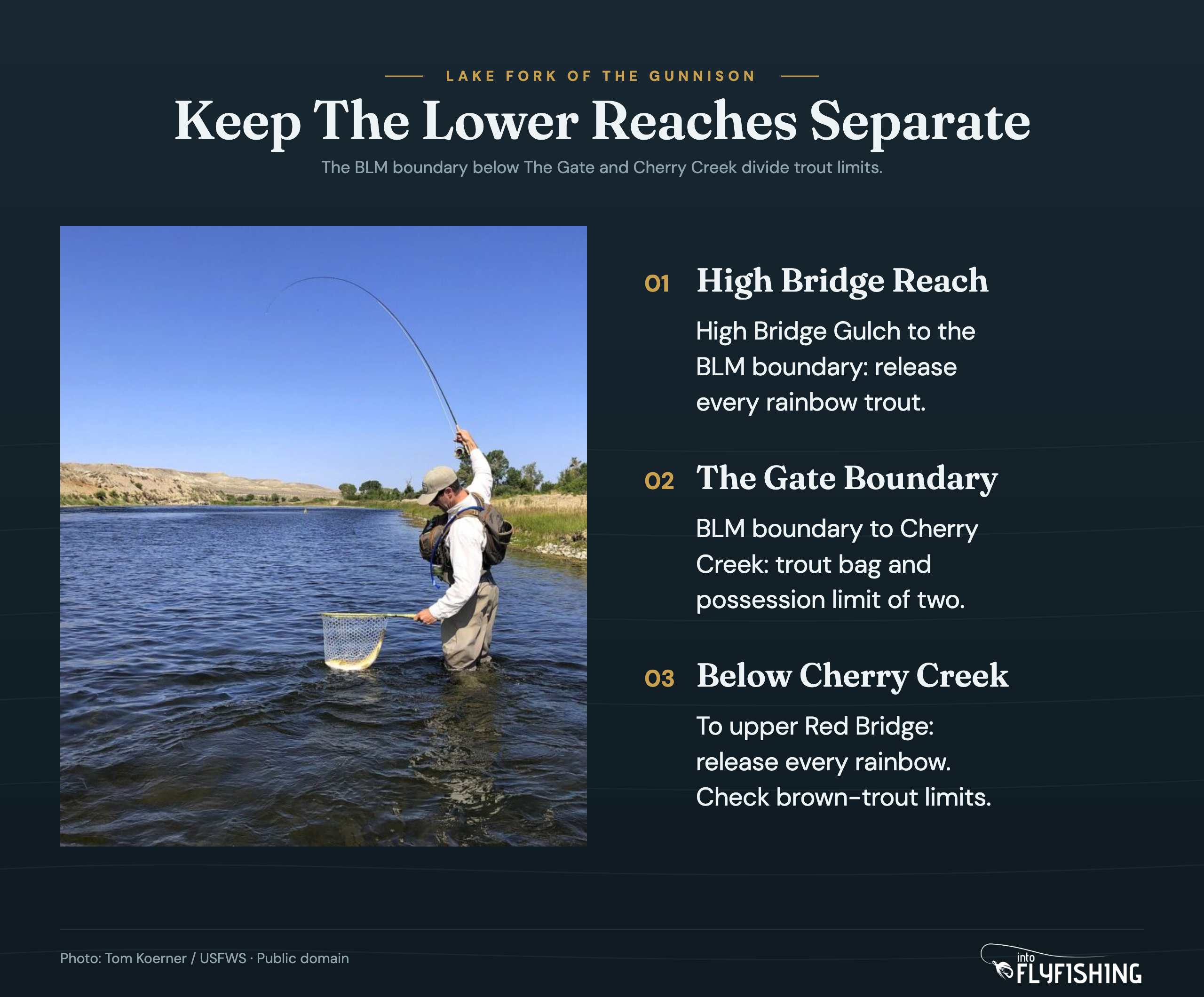
The Gate campground name and the BLM boundary below it are not interchangeable. Likewise, the upper Red Bridge campground boundary is a specific point in the fishing regulations. The stretch between the BLM boundary below The Gate and Cherry Creek has a two-trout bag and possession limit; the neighboring sections have separate brown-trout limits and rainbow-release rules.
At a new entrance, I would fish the water I can reach from the bank before wading farther out. Work the nearest useful drift first, then move a little at a time. If you need waders, compare the Frogg Toggs Canyon II stockingfoot waders with the fit and layers you intend to wear.
For the State Wildlife Area, visitors age 16 or older need a valid hunting or fishing license or an SWA pass for entry. An entry pass does not replace a required fishing license. Keep that property’s boundaries with your route.
If the trip also includes the main river, use our separate Gunnison River guide. I would plan it as another fishing day, rather than spend the middle of this one driving between waters.
Build A Small Fly Selection You Can Fish Well
A 9-foot 5-weight is a practical Lake Fork setup. I would use that as the starting point for both dries and nymphs, then keep the fly selection small enough to work through. Our trout fly rod guide compares outfits if you still need one.
Pack Caddis, Stoneflies, And A Few Nymphs
Caddis and stoneflies both belong on the Lake Fork packing list. For a summer outing, I would carry a few dry imitations of each and choose the size after seeing what is on the water. Include a Two Bit Hooker and a San Juan Worm among the subsurface options. Treat those as patterns to try, with sizes and colors chosen for the conditions, rather than a fixed recipe.

Summer dry-fly fishing is one of the reasons to visit, but I would still pack nymphs. If fish are rising steadily, stay with the surface presentation and watch where each rise occurs. If a run stays quiet, start below the surface and give that approach time before leaving.
Use A Short Drift In Pocket Water
When you reach a small pocket behind a rock, I would shorten the cast and work one current lane at a time. Keep as much unnecessary line off the water as you comfortably can, and follow the fly with the rod tip. A short, controlled drift is a better starting point than casting across several currents and trying to fix everything afterward.
With a dry, look for the fly suddenly speeding up or skidding away from the bubbles beside it. Reposition or shorten the next cast if that happens. I would make those changes before reaching for another pattern. The same fly deserves another chance when the first drift was poor.
Let A Nymph Reach The Feeding Depth
In a longer run, give the nymph time to sink before it reaches the water you want to cover. Cast farther upstream if necessary. If the rig keeps catching the bottom, reduce the depth or weight; if it races above the holding water, try a little more depth or weight. Change one of those things at a time so you can see the effect.
A dry-dropper is useful when you want a surface fly and a nymph on the same rig. Tie on a visible dry, attach tippet to its hook bend, and tie the nymph below it. The dry also serves as your indicator. Choose a combination you can cast and follow easily, then adjust the nymph’s depth for the water in front of you.
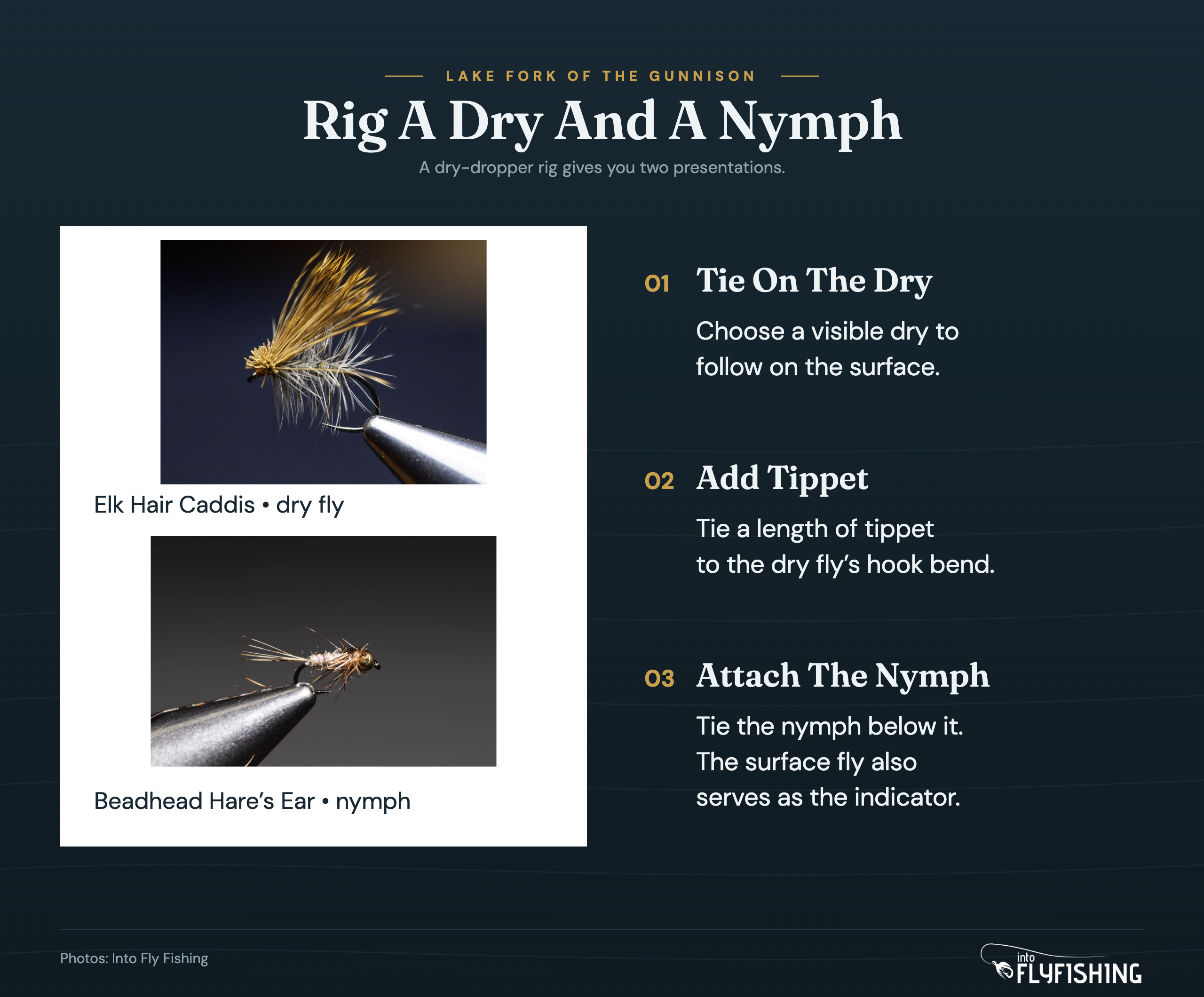
Try the rig close to you before casting across the run. If the dry will not stay on top, lighten the nymph or choose a more buoyant dry. I would start with a short, manageable dropper and lengthen it when I need more depth, rather than begin with a long rig that tangles repeatedly.
Keep Changes Easy Beside The River
Separate the dries and nymphs in the box and keep replacements beside the patterns you expect to fish. The SF Slim Fly Box is one option for organizing them. Leave enough space to pick out a small nymph without dislodging everything around it.
Carry spare tippet for the nymph or dropper section of your rig. The SF 3X to 5X fluorocarbon tippet combo gives you several diameters; choose one that suits the fly and rig. Check the last section of tippet after a snag before tying on another fly.
If managing the drift is still new, our trout fly fishing guide explains the broader approach. On this trip, I would make the casting and depth adjustments first, then change the fly if the presentation looks right but still gets no interest.
Plan For The Season And Your Exact Reach
Summer is a sensible starting point if dry-fly fishing is a priority. I would leave the exact fly choice until closer to the outing, then check a recent local report. A useful report names the water and gives a date; a hatch described in a previous summer helps with packing, but it does not tell you what is happening this morning.
Use Gateview For The Lower River
For lower-river flow context, use USGS Lake Fork at Gateview, station 09124500. Read the observation time and recent trend. This is the Gateview station, so do not use its reading as a measurement of the water at Lake City or in the headwaters.
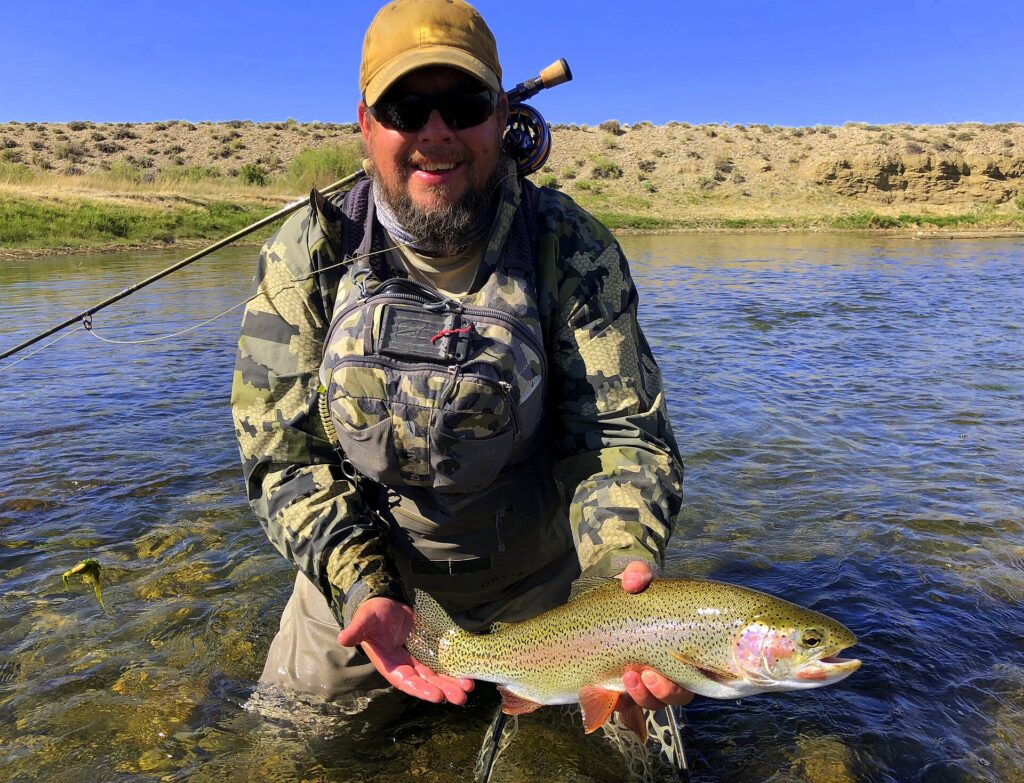
The historical Gateview record has its highest monthly mean in June, at 939.0 cubic feet per second. May and July also stand above the later-summer averages. I would leave more room to change a spring or early-summer plan, then compare the current reading with the actual entrance. The chart shows the long-term seasonal pattern, not the flow you will find on a particular date.
Before stepping in, compare the information with the water at your entrance. I would look at the route back to the bank as carefully as the route out. Flow data can help you notice a change, but it cannot tell you whether you have secure footing at a particular crossing.
Match The Regulation To The Water
The Colorado Chapter W-1 regulations separate the Lake Fork into named reaches. Read the current version before the trip, and keep the relevant section with your access map. These are the distinctions to look for:
Headwaters to the waterfall at Sherman: Artificial flies and lures only, with immediate release of all cutthroat trout.
First bridge above Lake San Cristobal to the lake: Artificial flies only. This is a different tackle restriction from artificial flies and lures.
High Bridge Gulch to the BLM boundary below The Gate campground: Artificial flies and lures only. The brown trout bag and possession limit is two, with a 16-inch minimum. Release every rainbow immediately.
BLM boundary below The Gate to Cherry Creek: The trout bag and possession limit is two. Do not substitute the neighboring section’s brown-trout-only limit for this rule.
Cherry Creek to the upper Red Bridge campground boundary: Artificial flies and lures only. The brown trout bag and possession limit is two, with a 16-inch minimum, and every rainbow must be released immediately.
Upper Red Bridge campground boundary to Blue Mesa: The special regulation permits kokanee snagging September 1 through December 31. It applies to kokanee in that reach; it does not replace the trout rules elsewhere.
Check posted notices and current closure information before fishing. If you move to another reach during the day, check its rule before the next cast. Releasing your catch does not remove tackle restrictions or open a closed area.
Lake Fork Of The Gunnison Fly Fishing FAQs
Brown and rainbow trout are present in the lower Lake Fork. Several lower reaches require immediate release of rainbow trout while allowing a limited brown trout harvest, so identify the reach before keeping a fish.
A 9-foot 5-weight is a practical starting choice. Bring dry flies and nymphs so you can fish the surface or below it as conditions and feeding behavior change.
Summer offers dry-fly opportunities on the Lake Fork. Check a recent local report near your travel date, then choose the fly from the insects and feeding activity you observe. A seasonal window is useful for planning, but a hatch is not guaranteed.
The rules differ by reach and species. Some lower sections require rainbow trout to be released and permit two brown trout of at least 16 inches. The BLM boundary below The Gate to Cherry Creek has a separate two-trout bag and possession limit. Check the current rule for your reach.
Give The First Stretch A Proper Session
For a day based in Lake City, I would start with Memorial Park if the goal is an easy town session. For a full day devoted to fishing, I would choose a lower public stretch and take the 5-weight, caddis and stonefly dries, and a few nymphs. Work the short pockets carefully, give the deeper runs a different rig, and keep enough time to revisit water with a better presentation.
Take a note of the entrance, the flow, and what you saw feeding. Those details make the next visit easier to plan. For a longer Colorado trip, our Colorado fly fishing overview covers the wider state, while the US river guide connects the other state directories.
Featured photo: Jeffrey Beall / CC BY 4.0. Resized for display.


Amazon and the Amazon logo are trademarks of Amazon.com, Inc, or its affiliates.
As a part of the Amazon Associates Program and other affiliate programs, Into Fly Fishing® may receive a comission if you order products through links on this website.