As an Amazon Associate I earn from qualifying purchases.
Florida Fishing Guide
Fly Fishing Rivers
In Florida
Plan a freshwater fishing trip on the Suwannee, with public launches, bass flies, and advice for changing river conditions.
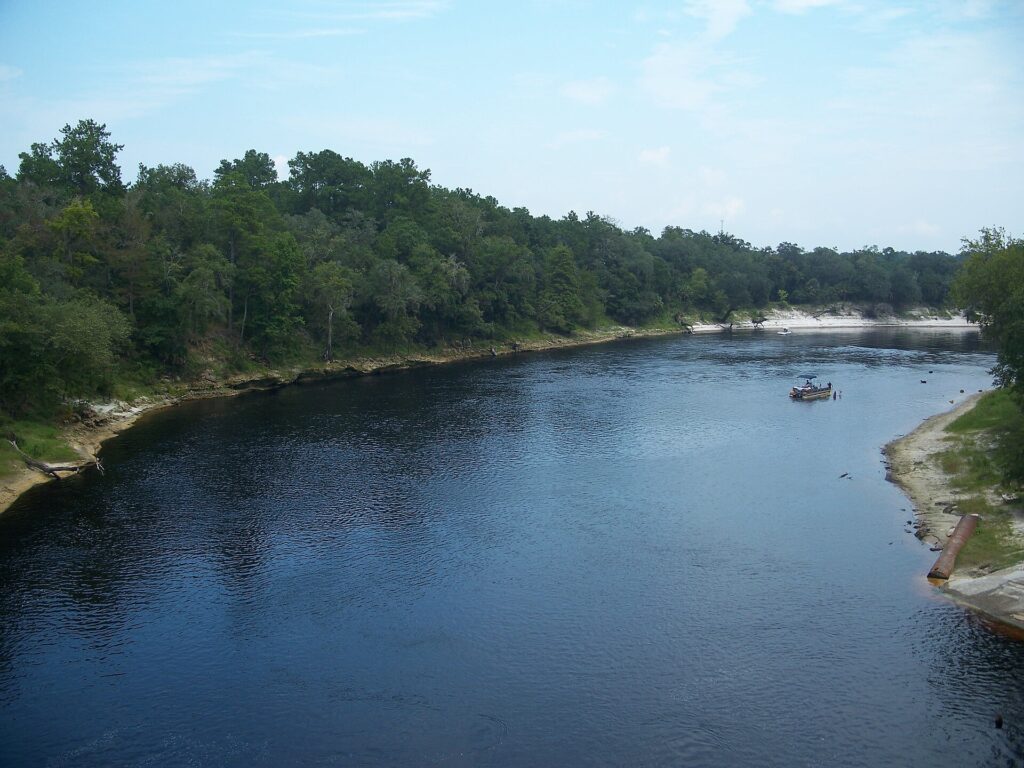
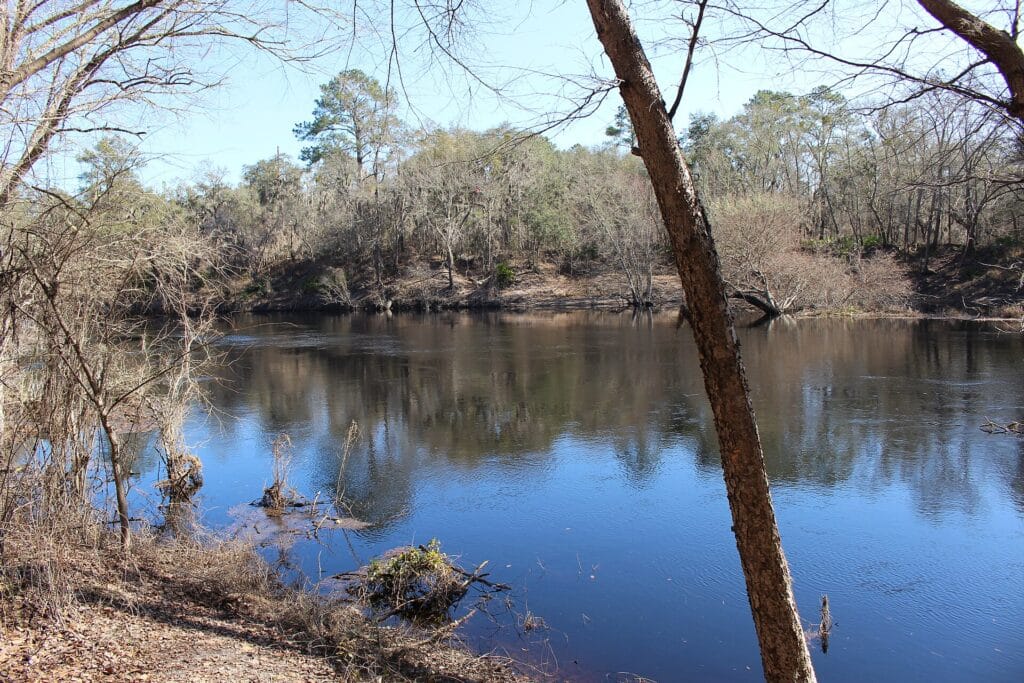
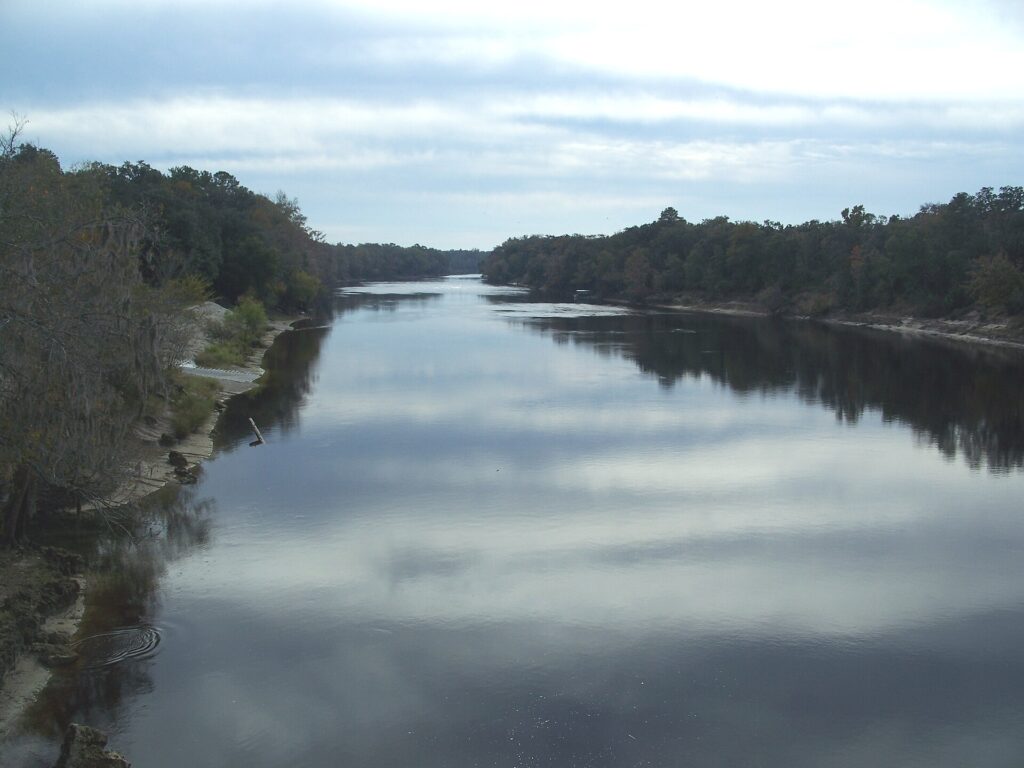
The Suwannee River at Dowling Park, Florida. Photo: Ebyabe / CC BY-SA 3.0. Resized for display.
For a freshwater fly fishing trip in Florida, start with the Suwannee. Wood and rock give you places to look for bass, and the river changes from narrower shoal water upstream to broader stretches downstream. There is plenty to work with once you choose a manageable section.
I’ve caught countless bass on the St. Croix River near the border between Minnesota and Wisconsin. Poppers and baitfish streamers are useful bass choices here, too. The Suwannee’s crayfish-eating bass give you a good reason to bring a few crayfish patterns as well.
This guide concentrates on the Suwannee, with a short Santa Fe comparison to help you decide whether to add another river. For coastal fishing and a wider look at the state, see our Florida fly fishing guide.
For your first day: Consider Dowling Park’s paved ramp if you are bringing a boat, or Suwannee Springs for a canoe or kayak launch. Fish wood and rock with a small selection of bass flies, and let the river level determine how much water you tackle.
Florida River Guides
North Florida • Freshwater Bass
Suwannee River
The Suwannee rewards a more specific plan than “fish the river.” Upstream, rock shoals and shallower, narrower water affect where a boat can go. Farther down, the river broadens. Pick a stretch that suits your boat and experience instead of planning a long float simply because two ramps look close on a map.
Where To Start On The Suwannee
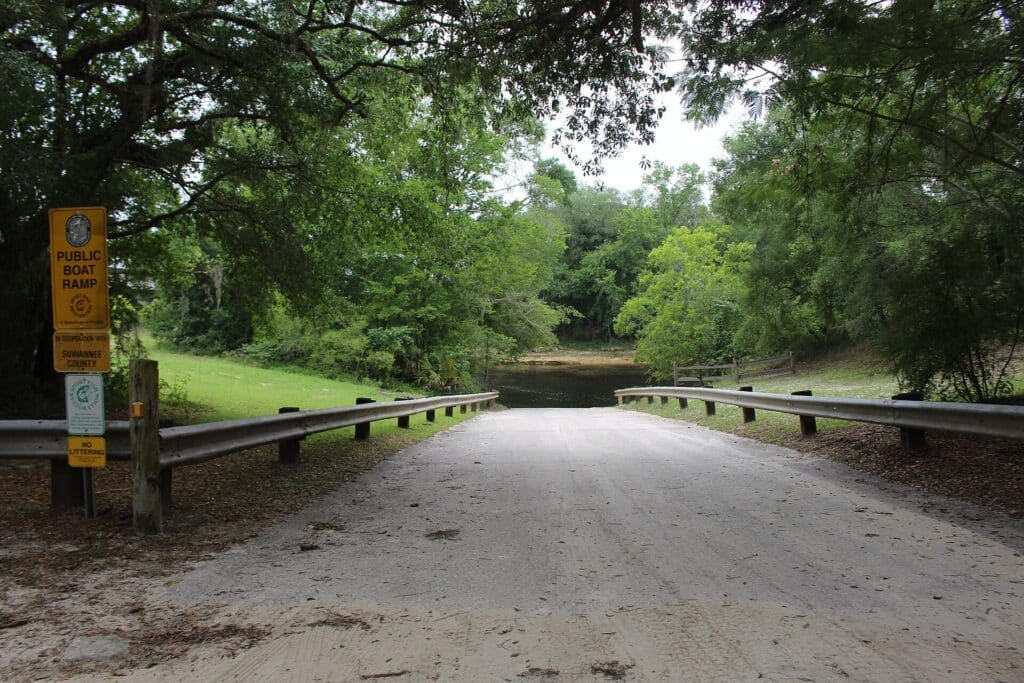
Dowling Park Boat Ramp: This paved launch sits at the CR 250 bridge. Suwannee Parks & Recreation places it on the north side of CR 250, just east of the bridge, and describes a single-lane concrete ramp with shaded trailer parking. Confirm the ramp’s status before making the drive.
Suwannee Springs: This is another named canoe and kayak launch. Visit Suwannee’s fishing guide also identifies fishing and parking here. If you arrive without a boat, look for suitable footing and backcast space before unpacking your fly rod. Water levels affect the space available.
Choose Your Starting Point
Launching A Trailered Boat
Start with Dowling Park’s paved ramp at the CR 250 bridge. Arrange your return before committing to a downstream route.
Launching A Canoe Or Kayak
Suwannee Springs is a named paddle launch. Keep your first route short enough to leave time for fishing and the return journey.
Give Wood And Rock Your Attention
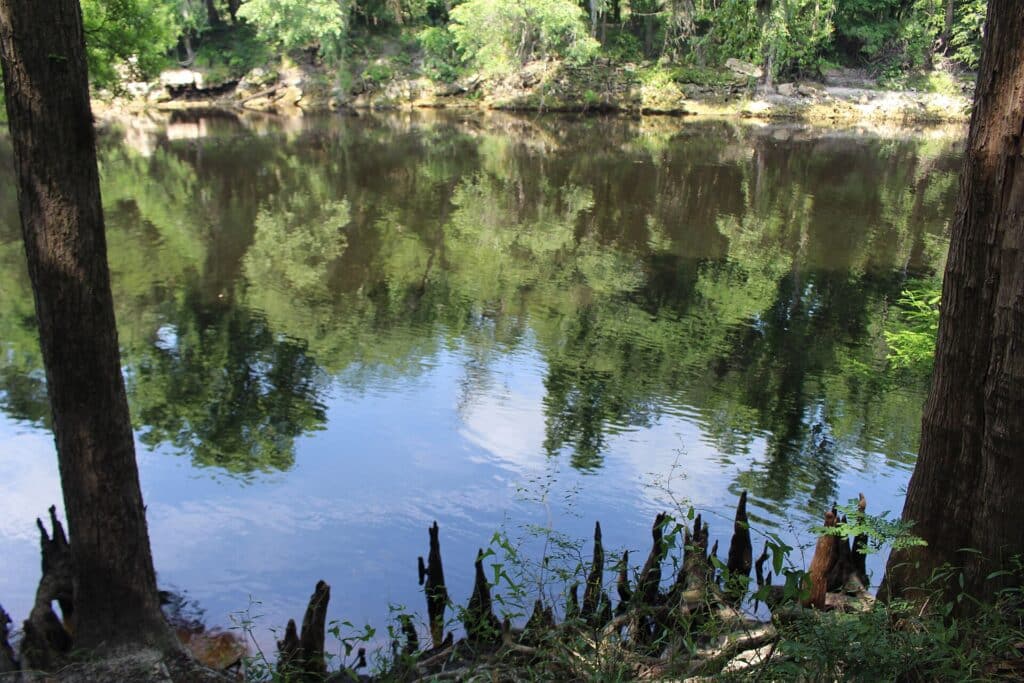
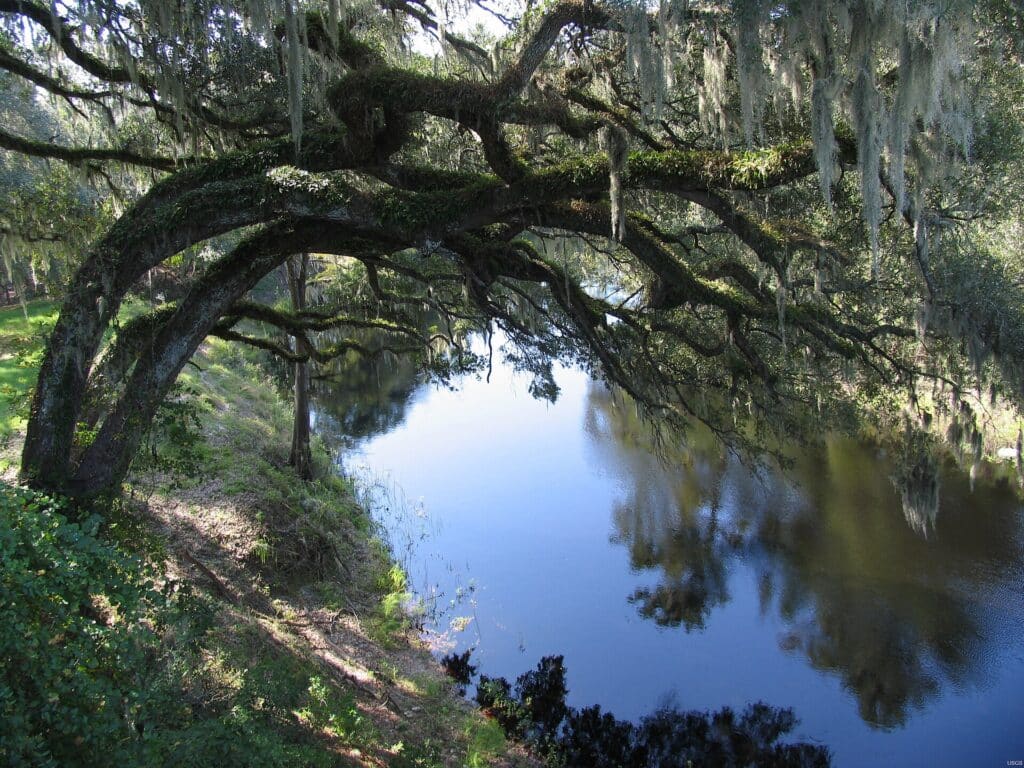
Suwannee bass use structural cover. Look for wood and rock that you can approach and fish carefully, rather than scattering casts across open water. The FWC’s Suwannee bass profile specifically associates these fish with moderate to swift current near limestone or wood.
A sensible starting approach is to work one piece of cover with a streamer, then change the fly or presentation before abandoning it. Give yourself casting room and avoid placing the boat where you need to fish. Our guide to fly fishing for bass explains the broader techniques behind fishing poppers, streamers, and cover.
Build A Small Bass Fly Box
For A Surface Presentation
Bring a popper. It gives you a different presentation from a subsurface fly without requiring a large collection of patterns.
For Fishing Below The Surface
Bring a baitfish streamer and use it to work reachable wood or rock. Concentrate on where the fly travels, not just how far you can cast.
For Another Food Imitation
Add a crayfish-style fly. Crayfish are a major Suwannee bass food, which makes this a reasonable pattern to try.
For a closer look at the river, continue with our Suwannee River fly fishing guide.
Plan Your Florida River Trip
Pack a small selection that you can cast comfortably and change easily on the water. Our best bass flies guide is the place to compare patterns before filling the box.
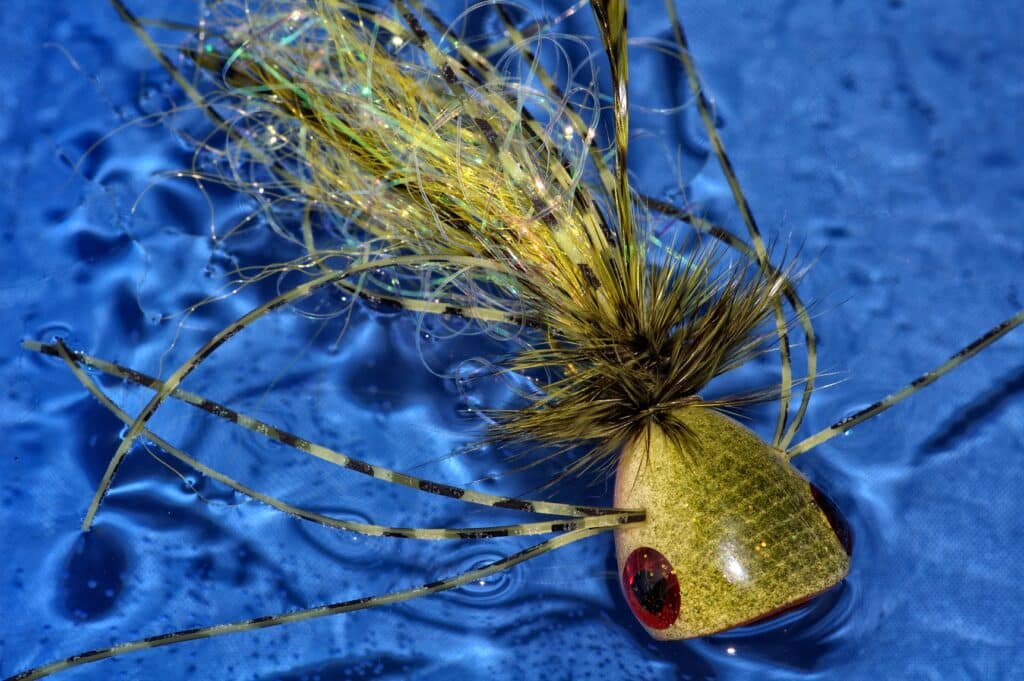
If you need a starting selection of surface flies, the YAZHIDA bass poppers are one option covered in that guide. Choose the flies you can comfortably cast with your existing outfit. For advice on matching a rod to larger flies, see our bass fly rod guide.
Separate bulky poppers from smaller flies when packing. The SF slim fly box is an option for a compact selection; check the room under its lid against the flies you plan to carry. Our fly box guide covers other sizes if your patterns need more space.
Pack your glasses with the flies so they are not left in the car. The KastKing Skidaway polarized sunglasses are one option in our fly fishing sunglasses guide. Fit matters when you are wearing them for a whole fishing day.
Seasons And Water Levels
There is no need to rule out the Suwannee just because your trip falls in the cooler months. Bass fishing continues then, and the FWC’s winter forecast points anglers toward submerged wood, rock, deeper bends, and current around cover. Make those places the focus of a winter outing instead of expecting the fish to be spread evenly through the river.
Rainfall can change river levels quickly. Low water can also alter the route by exposing shoals and obstacles. Use the water management district’s river information with a gauge that represents your planned reach. Its White Springs level guidance describes upper-river paddling conditions; it is not a wading rule for the whole Suwannee.
When you find clearer, slower water, the FWC river forecast suggests a more deliberate presentation. Treat that as a reason to experiment with the pace of your fly, not a promise that one retrieve will work all day.
Match The Day To The Water
After Rainfall
Read the current level before launching. If the river has changed, shorten or change the planned route rather than relying on an earlier report.
At Low Water
Allow for shoals and obstacles when choosing the boat and route. A launch on the map does not guarantee an easy passage between accesses.
During The Cooler Months
Give submerged wood and rock a careful look. Winter remains a fishing option; the cover is more useful to your plan than a single “best month.”
When To Consider The Santa Fe
The Santa Fe offers vegetated water to explore. Submerged vegetation is a feature of the river, giving you a contrast to a Suwannee day organized around wood and rock. Consider it if fishing vegetated water interests you, rather than adding a second river just to cover more ground.
For a short trip, give the Suwannee enough time first. Learning one accessible stretch is a more useful goal than spending half the day driving between unfamiliar launches. The FWC’s Suwannee and Santa Fe page describes the two rivers and their habitats.
Licenses And Fishing Rules
For this bass-focused trip, review Florida’s freshwater license requirements. The FWC licensing FAQ bases the license category on the species you are targeting, with exemptions for qualifying anglers. Do not assume a saltwater license covers a freshwater bass outing.
Before keeping fish, check the current freshwater regulations and any rules for your particular water. Suwannee bass have their own minimum-size restriction. Identify the fish before deciding whether it can go in the cooler.
Florida River Questions
For a freshwater bass trip, the Suwannee is a useful starting point. Dowling Park has a paved ramp at the CR 250 bridge, and Suwannee Springs is a named canoe and kayak launch. Choose the access that fits your boat and check conditions before heading out.
Bring a small selection of poppers and streamers, plus a few crayfish-style flies. Poppers and streamers are established bass fly families; crayfish patterns are a sensible choice to try because crayfish are a major Suwannee bass food.
Yes, cooler-month bass fishing remains an option. The FWC winter forecast points to submerged wood, rock, deeper bends, and current around cover. River conditions should still guide your route and launch choice.
Florida bases the license category on the species you target, subject to exemptions. For a freshwater bass outing, check the freshwater requirements in the FWC licensing FAQ and the current rules for your chosen water.
Give The Suwannee A Full Fishing Day
Start with one access, a manageable stretch of river, and enough time to fish it carefully. Dowling Park and Suwannee Springs give you two named places to build that plan around. Once you are on the water, focus on reachable wood and rock rather than racing to the next bend.
Bring the poppers and streamers, leave room for a crayfish pattern, and be willing to change the day’s route if the water calls for it. You do not need to fit every Florida river into one trip. A day spent working a few good pieces of bass cover is a worthwhile place to begin.
Featured photo: Porsche997SBS / CC BY-SA 4.0.
Save This Florida Fishing Guide For Later


Pin 1 photo: Ebyabe / CC BY-SA 3.0; cropped and overlaid with guide text. Pin 2 photo: Curtis Fry / CC BY 2.0; cropped and overlaid with guide text.
Amazon and the Amazon logo are trademarks of Amazon.com, Inc, or its affiliates.
As a part of the Amazon Associates Program and other affiliate programs, Into Fly Fishing® may receive a comission if you order products through links on this website.