As an Amazon Associate I earn from qualifying purchases.
Connecticut Fishing Guide
Fly Fishing Rivers
In Connecticut
Compare Farmington trout water with the Housatonic’s trout and smallmouth fishing, then find the reach that suits your day.
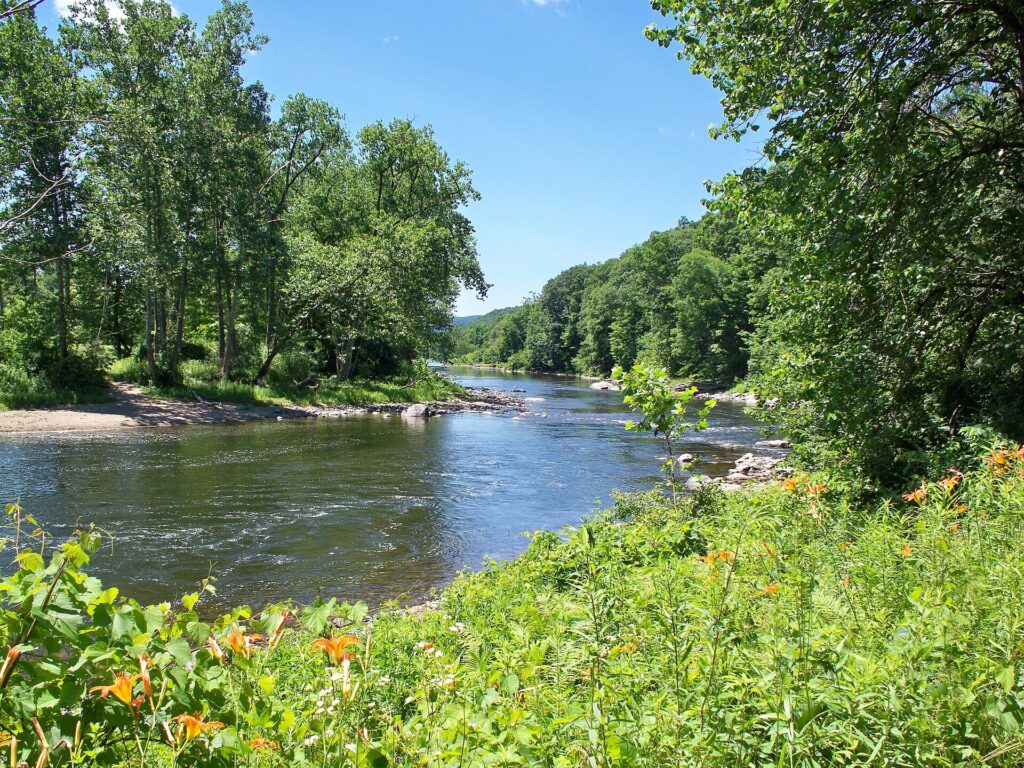
Housatonic River beside the Appalachian Trail near Kent, Connecticut. Photo: Copperhead7, CC BY 3.0. Resized for display.
The choice between fly fishing rivers in Connecticut often starts with two names: the Farmington and the Housatonic. Both offer trout fishing, but the Farmington’s cold tailwater and the Housatonic’s seasonal trout and smallmouth options call for different plans.
I fish for trout and bass on my local waters in Virginia. For Connecticut, settle on the target first: a Farmington hatch, a cooler-weather Housatonic trout session, or a summer bass day. That choice changes the flies to pack and the reach worth investigating.
Farmington or Housatonic? Start with the Farmington for a cold-tailwater trout trip around Riverton and Barkhamsted. Consider the Housatonic for Cornwall trout fishing or a separate smallmouth outing. On either river, identify the exact management area before carrying a rule from one access to another.
Compare The Two Connecticut Rivers
The fish you want to target and the time of year make this comparison more useful than a simple ranking. Use the named starting areas below, then read the reach details before heading out.
Water
Consider It For
Plan Around
Cold-tailwater trout around Riverton and Peoples State Forest.
Three adjoining TMA segments have different seasonal and hook rules.
Cornwall trout water, with smallmouth as a distinct fishing option.
Identify the fly-only subsection and respect posted summer trout refuges.
Riverton And Barkhamsted Trout Water
Farmington River
Cold bottom releases below Goodwin Dam support the West Branch Farmington trout fishery. Riverton and Peoples State Forest give a first visit a manageable geographic focus. Start here if trout are the main reason for the trip and you want to work through the dry-fly and nymph options.
Riverton And Peoples State Forest
Riverton Park has a named parking lot off Connecticut Route 20, giving the first visit a specific starting point. Peoples State Forest offers another public fishing area along the West Branch. Pick the entry that fits the reach you want to fish, then follow the designated access to the river.
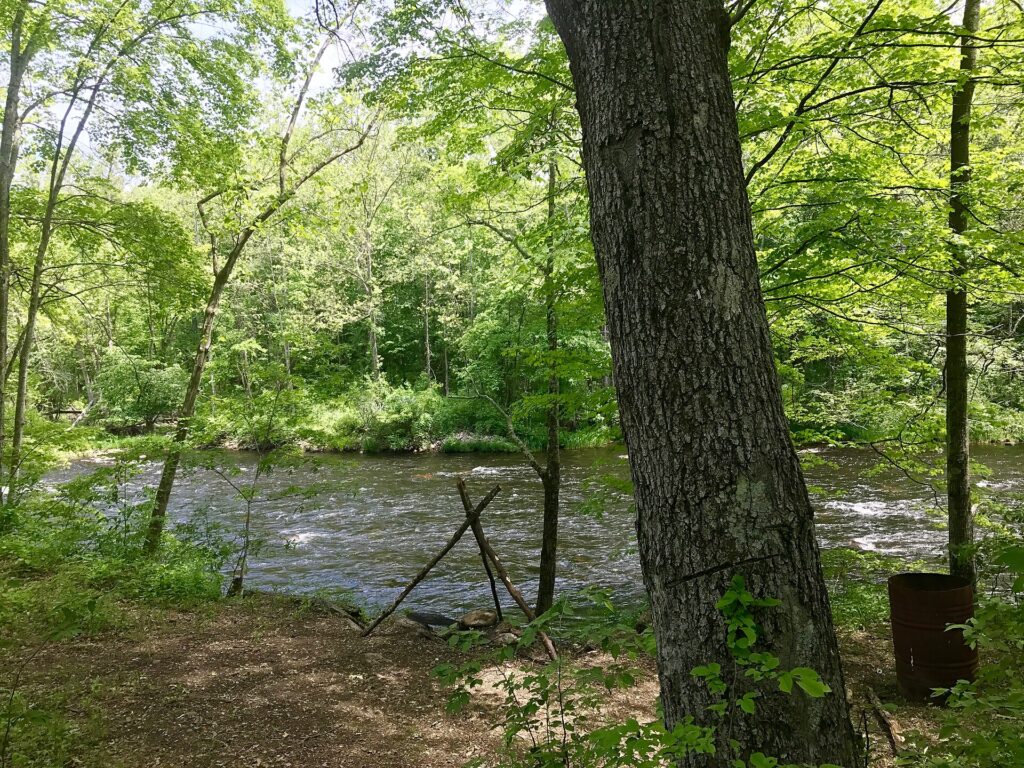
At Peoples State Forest, the river is part of a recreation area also used for paddling and tubing. Give yourself time to find the fishing access and settle on a piece of water before rigging. A short, well-defined session here is a useful introduction to the West Branch.
Hendricksons, Sulphurs, And A Fall Fly Box
For a late-April or May visit, include Hendrickson imitations. This is a useful spring dry-fly window on the Farmington, though the hatch moves with conditions and does not arrive everywhere at once. Watch for insects and rising fish before making the switch to a dry.
In late spring and June, add sulphur dries. A box packed for an April visit needs a different emphasis by June. Keep nymphs available as well, so the absence of surface feeding does not leave you waiting with only one method ready.
For early fall, blue-winged olive and caddis imitations give you two local options to consider. Observe what is actually hatching rather than treating the month as a fly prescription. These seasonal changes are a good reason to revisit the Farmington with a different selection.
Keep the first outing focused on one access and its nearby water. Our Farmington River fishing guide goes farther into the river itself; the comparison here helps you decide whether it is the better fit for your Connecticut trip.
Three Farmington Management Areas
The Farmington’s trout rules change at named boundaries. The middle area is catch-and-release all year and requires barbless hooks. The areas above and below it have seasonal catch-and-release periods. Knowing which segment contains your access is more useful than remembering a single rule for the whole river.
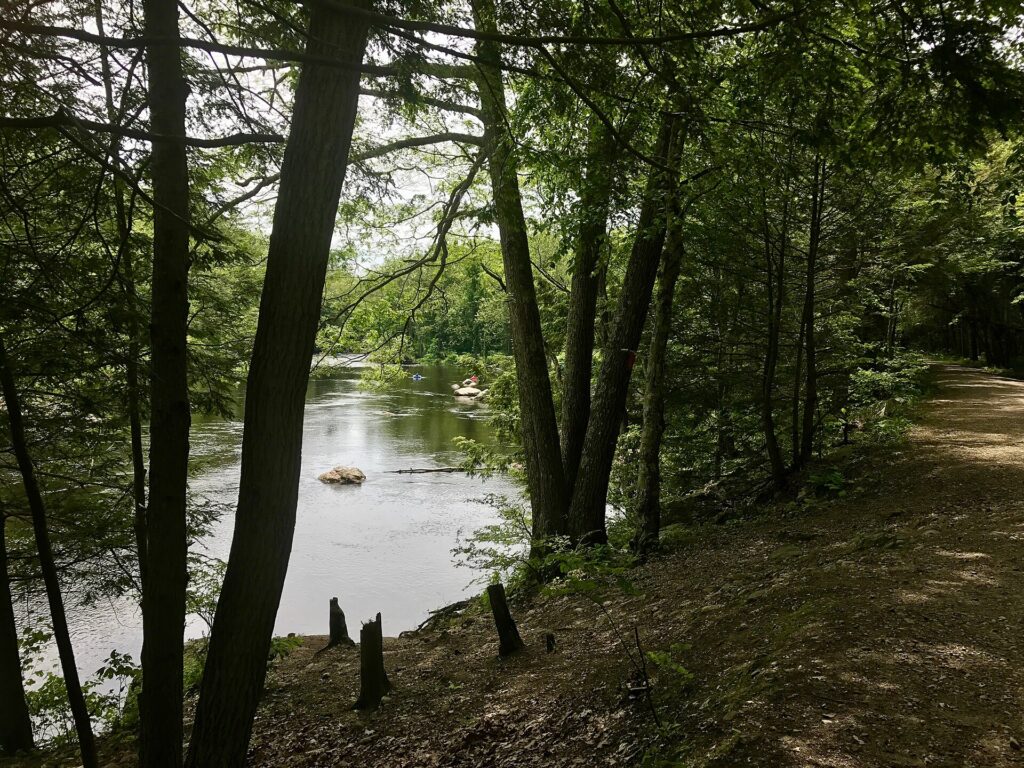
Know Your Farmington Segment
Upper: Hogback Dam To Old Abutments
Catch-and-release from September 1 until 6 a.m. on April’s second Saturday. The remaining season allows two trout, with a 12-inch minimum.
Middle: Old Abutments To Route 219
Release trout all year. Barbless hooks are required in this Barkhamsted-to-New Hartford section.
Lower: Route 219 To Route 177
A separate seasonal catch-and-release area, with the same September-to-April release period and two-trout, 12-inch rule in the remaining season.
The old bridge abutments are the Barkhamsted boundary named in the guidebook; Route 219 is at New Hartford and Route 177 is farther downstream at Farmington. Below Route 177, another set of trout rules applies. Use Connecticut’s current river regulations to match your chosen entry to its section.
Cornwall Trout And Smallmouth Choices
Housatonic River
The Housatonic gives this two-river comparison another dimension: trout fishing around Cornwall and smallmouth fishing as a separate option. Warm summer water can make a trout session inappropriate, so the target species is part of the decision before you leave for the river.
Begin Around Cornwall And Housatonic Meadows
Housatonic Meadows State Park and the West Cornwall covered-bridge corridor are useful places to orient a first visit. The Route 7 corridor puts you near the upper trout area. Use the park or another designated public entry, with the access for your actual session agreed before heading to the water.
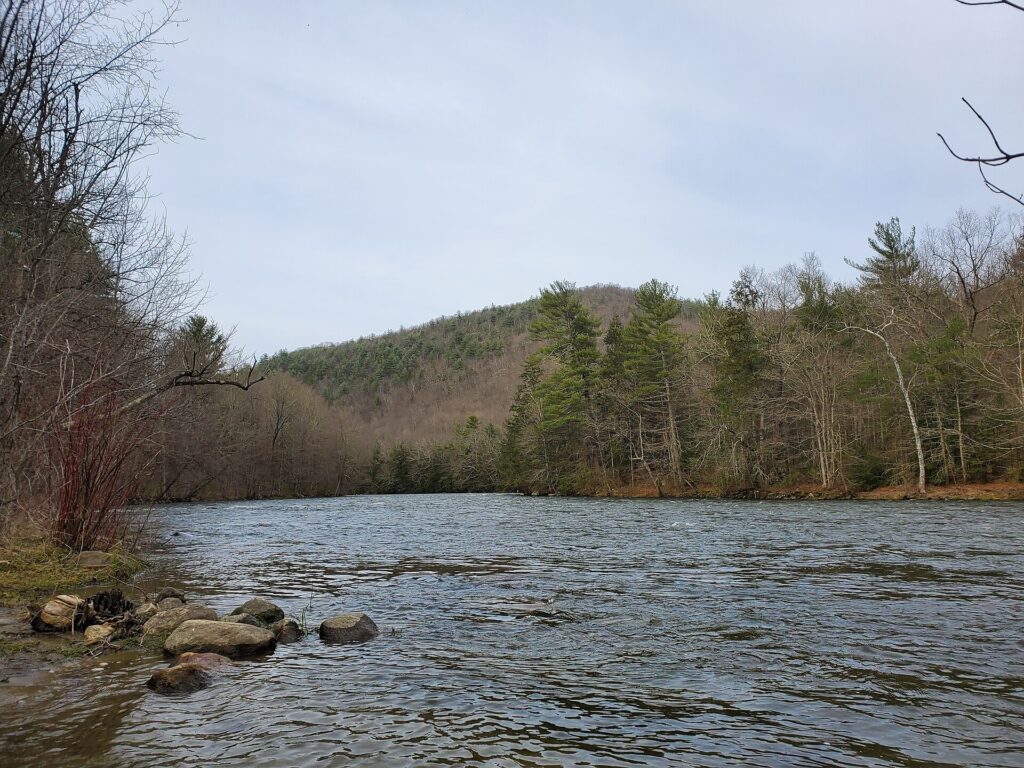
For more detail on the river, use our Housatonic River fly fishing guide. Keep the current management-area boundaries alongside it. A named pool or familiar bridge can help you find the river, but the signed section determines which fishing rules apply.
The Fly-Only Section Is Part Of A Larger Trout Area
The upper trout management area runs from Route 112 in Sharon to the Route 4/Route 7 crossing at Cornwall. Trout must be released throughout it. Fly-fishing-only gear applies to the posted three miles immediately upstream of the Route 4/7 bridge, including when you are targeting fish other than trout.
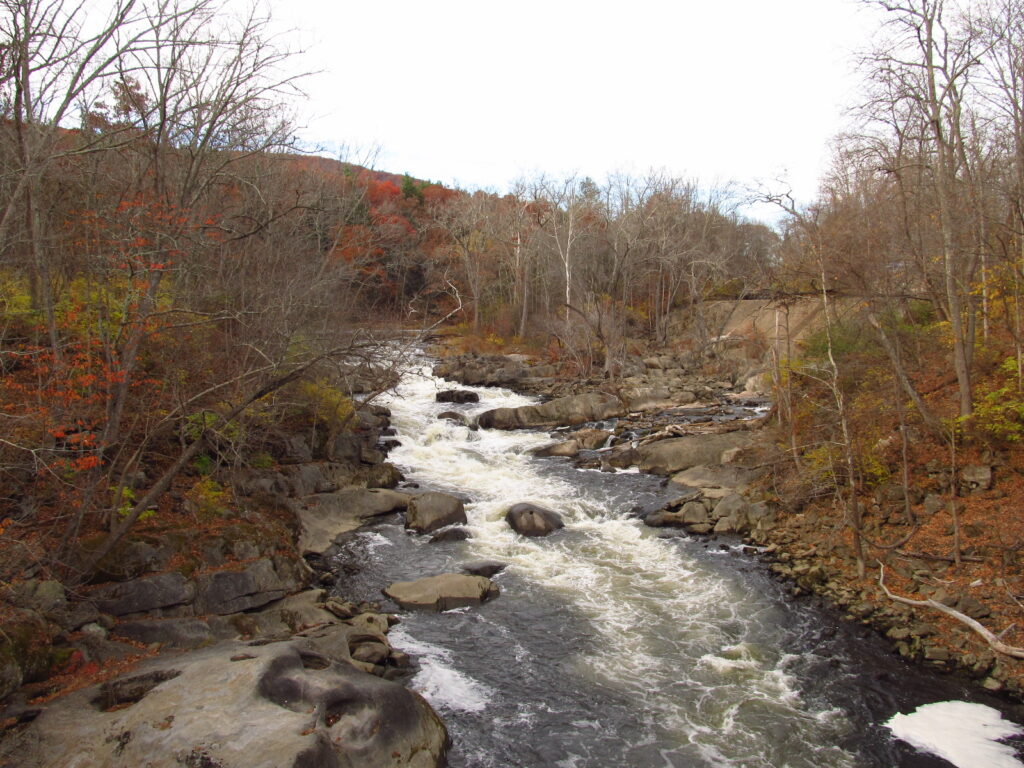
Separate The Housatonic Boundaries
Upper Trout Management Area
Route 112 to the Route 4/7 crossing: trout catch-and-release throughout the year.
Posted Fly-Only Subsection
The three miles upstream of the Route 4/7 bridge require fly-fishing gear, regardless of target species.
Posted Summer Refuges
From June 15 through September 15, fishing is prohibited within 100 feet of the signed thermal refuges.
Bulls Bridge Dam at Kent to the Route 7 bridge at New Milford is a separate year-round trout catch-and-release area. It also has posted summer refuge closures. Do not treat that downstream section as an extension of the Cornwall fly-only water.
Leave Warm-Water Trout Alone
The Housatonic can become too warm for trout during summer. A shaded pool or cool tributary mouth may look inviting, but posted thermal refuges are closed to all fishing during the specified period. Give those fish space; changing the target species does not allow fishing inside a closed refuge.
Smallmouth are another reason to fish the Housatonic. Arrange that as a bass outing on suitable open water, with its own fly selection. The current bass management rule requires immediate release from the Connecticut state line to Bleachery Dam in New Milford.
Fish A Summer Bass Day Or Return For Fall Trout
For a Housatonic smallmouth trip in warm weather, bring a topwater popper and a streamer. These give the session a surface fly and a subsurface option, with patterns to compare in our smallmouth bass fly guide. Fish that as a bass day while giving heat-stressed trout a break.
Cooler fall conditions can bring the Housatonic back into consideration for trout. Dry flies, nymphs, and streamers all have a place in that seasonal selection. If a trout visit is the priority, a cooler-weather return offers a different outing from the summer bass day.
Match The Season To Your Fishing Day
The contrast between these rivers becomes particularly useful when summer arrives. The Farmington’s cold dam releases are central to its trout fishery; the Housatonic can become too warm for trout. Neither description replaces the conditions at your chosen reach, but it changes what to investigate before booking a trout day.

Choose A Connecticut Fishing Day
Farmington: Spring Into June
Consider Hendricksons for late April and May, then sulphur dries in late spring and June. Follow the hatch actually on the water.
Housatonic: Summer Smallmouth
Bring a popper and streamer for a bass session on open water; stay outside the posted closed refuges.
Fall: Two Trout Options
Pack Farmington olive and caddis imitations, or consider a Housatonic trout visit when the water cools.
Do not use the September 15 end of a refuge closure as a promise that every trout reach has cooled. The closure dates answer a legal question; actual conditions determine whether the trout session makes sense. A smallmouth day also needs open access and the correct rules for its location.
Watch The Feeding Before Changing Flies
For trout rising in a steady lane, land the dry upstream and watch it travel with the current. A fly that pulls across the flow needs a better drift before it needs replacing. Our dry-fly fishing guide explains how to approach that presentation.
When using a dry-dropper, allow the nymph room to sink before it reaches the water you want to cover. The dry remains visible above it. Our nymph fishing guide explains the subsurface approach, which is useful alongside a Farmington dry-fly selection.
Licenses And A Useful Fly Box
Connecticut requires a fishing license from age 16. Anglers of that age also need a Trout and Salmon Stamp when fishing a Trout Management Area, even if releasing every fish. Check the current license requirements for your circumstances before the trip.
Make Room For Two Presentations
The SF slim fly box two-pack is one option for separating the day’s selections. Keep the trout dries and nymphs together; set aside a separate selection if you are arranging a Housatonic bass session. That makes a deliberate change of target easier to prepare for.
Repeated fly changes shorten the tippet section. Carry spare material so you can replace that end without discarding the whole tapered leader. The SF fluorocarbon 3X, 4X, and 5X combo offers those three sizes; match the choice to the fly and presentation.
Polarized lenses reduce glare from the water while you watch for fish or follow a drift. The KastKing Skidaway polarized sunglasses are one option. The benefit is better visibility through surface reflections, which can help you decide where to make the next cast.
For a trout-focused outfit, our trout fly rod guide compares the choices. Start with the flies you intend to cast and the fishing you want to spend the day doing, then build the outfit around that.
Connecticut River Questions
For a trout-focused visit, begin by comparing Riverton and Peoples State Forest on the Farmington with the Cornwall corridor on the Housatonic. The Housatonic also offers a separate smallmouth option, which is useful when warm summer conditions make trout fishing unsuitable.
No. The upper trout management area runs from Route 112 to the Route 4/7 crossing and is catch-and-release for trout. Only the posted three-mile section immediately upstream of the Route 4/7 bridge is fly-fishing-only, regardless of the species you target.
Anglers age 16 and older need Connecticut’s Trout and Salmon Stamp when fishing a designated Trout Management Area, even when releasing all fish. Check the current license and stamp requirements for your circumstances before the trip.
Fishing is prohibited within 100 feet of posted thermal refuges from June 15 through September 15. Those closures apply to all fishing, not just trout fishing. Stay outside the closed areas and use current conditions to decide whether to target trout elsewhere.
Choose The River For The Fishing You Want
For a first trout-focused day, start by looking at Riverton or Peoples State Forest on the Farmington. For the Housatonic, begin with Cornwall and the state park corridor, then decide whether the season and conditions suit trout or a smallmouth outing.
Save This Fishing Guide For Later


Amazon and the Amazon logo are trademarks of Amazon.com, Inc, or its affiliates.
As a part of the Amazon Associates Program and other affiliate programs, Into Fly Fishing® may receive a comission if you order products through links on this website.