As an Amazon Associate I earn from qualifying purchases.
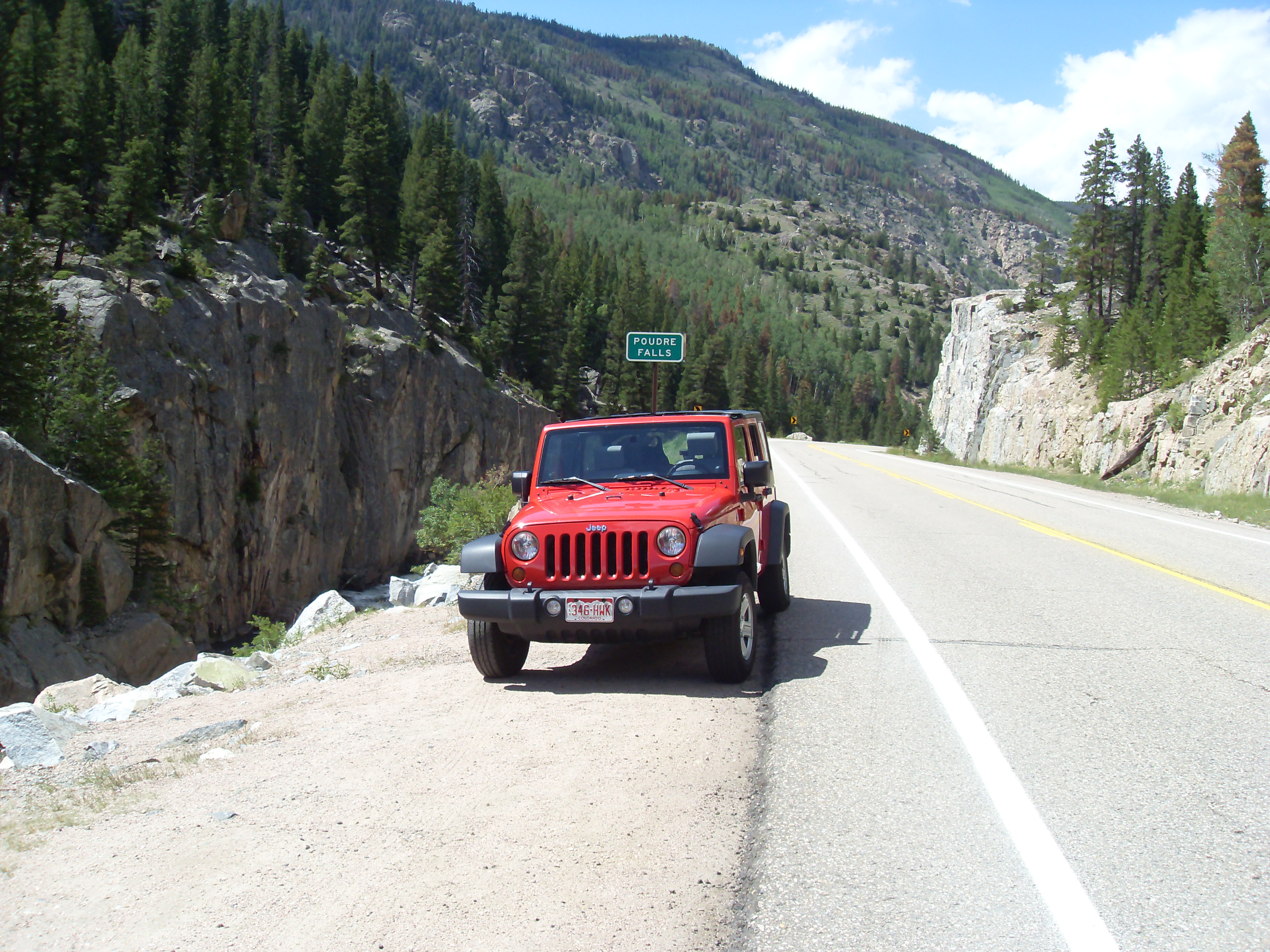
Highway 14 follows the Cache la Poudre through a canyon of fast water and steep rock. For a day on foot, that road access is a big part of the appeal. You can stop beside the river, look over a stretch, and decide where you want to fish.
I’ve fished the Poudre, and my Colorado fishing has included both winter visits and summer trips. I’d give this river a full day, with time to fish a manageable stretch of canyon. Check the access and reach rules before you leave, then spend your time at the water.
Quick Answer: The Cache la Poudre offers brown and rainbow trout, with much of its canyon closely followed by Highway 14. Plan a walk-and-wade day around confirmed access and current conditions. Stoneflies deserve space in your box, while small mayfly imitations are useful fall choices. Check the special regulations for your exact reach.
Other Rivers In Colorado
- Arkansas River
- Animas River
- Rio Grande
- Fly Fishing The Frying Pan River
- Eagle River
- Taylor River
- Roaring Fork River
- Yampa River
Our Colorado river directory compares the state’s rivers, and our US river guide covers trips farther afield.
Start With The Canyon Access
For a first Poudre trip, I recommend starting with the Highway 14 corridor. Roadside pullouts let you look at the river before getting your gear out, and much of the canyon is approached on foot.
The Poudre begins near the Continental Divide in Rocky Mountain National Park and eventually passes through Fort Collins. Much of the canyon river runs beside Highway 14, but that road connection doesn’t give you permission to enter every parcel. Confirm the bank you intend to use before leaving the road.
The Narrows has much steeper terrain than the easier roadside approaches elsewhere in the canyon. I’d leave that section out of a first visit and choose water with a more manageable route down to the bank.
Around Rustic, boulders break up the river into pocket water and runs. Give yourself time to look at the water before walking past it. An approach that lets you fish from your side of the river is a better choice than one that depends on a crossing.
Our guide to reading water for trout explains how to assess the water before making a cast.
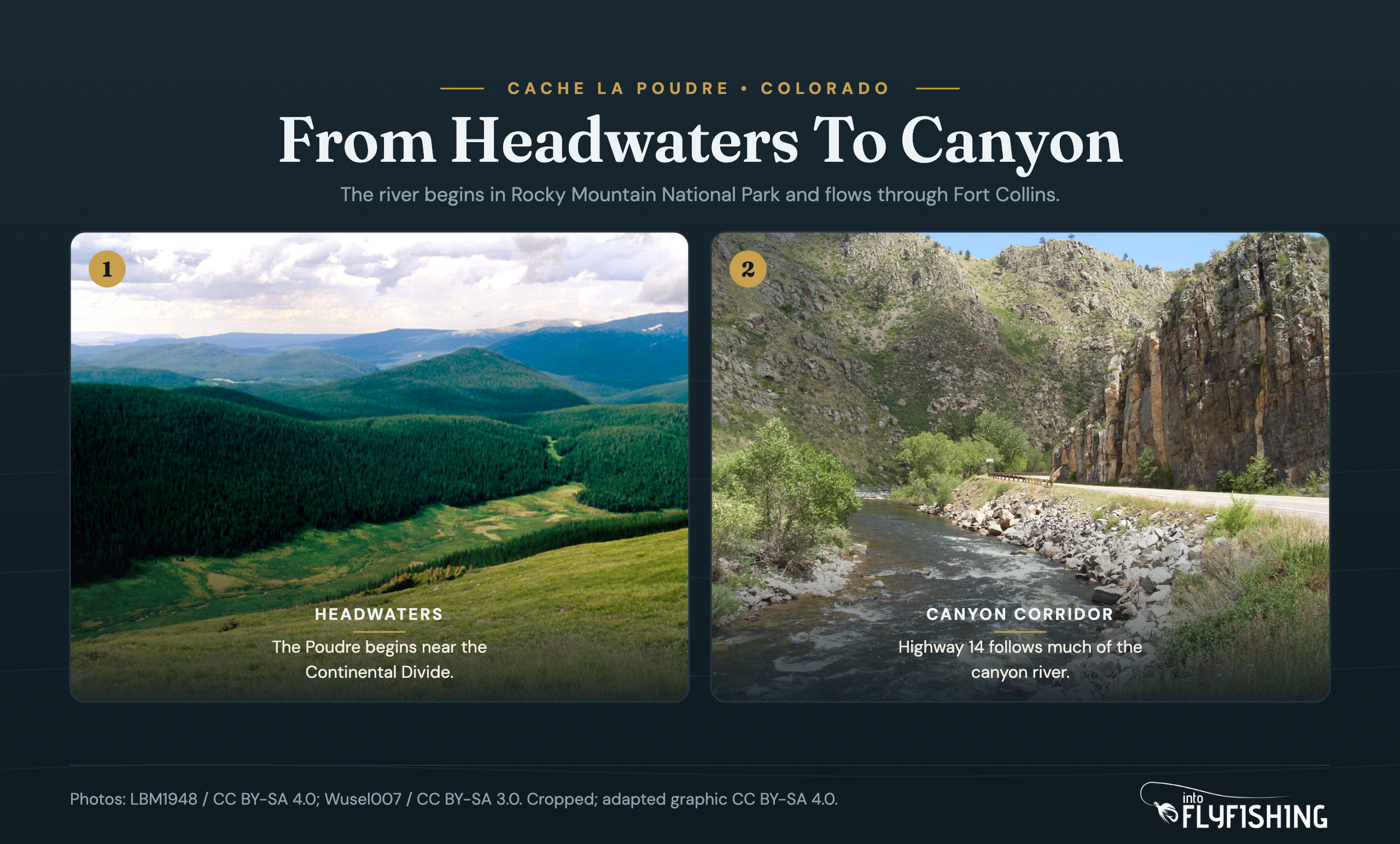
Parts of the Poudre river system have federal Wild and Scenic protection. The headwaters and canyon give you very different views of the same river, from the high country in Rocky Mountain National Park to the road beside the canyon walls.
For a longer trip, my Colorado fly fishing guide covers the wider state. I’d use the Poudre article to plan the canyon day, then the state guide to decide how it fits with the rest of the trip.
Let The River Decide Your Timing
For a fall trip, I’d pack small mayfly imitations and check a current canyon report before choosing a stretch. In summer, stoneflies would also be on my list. The Poudre’s flow changes substantially through the year, so season and current conditions both deserve attention.
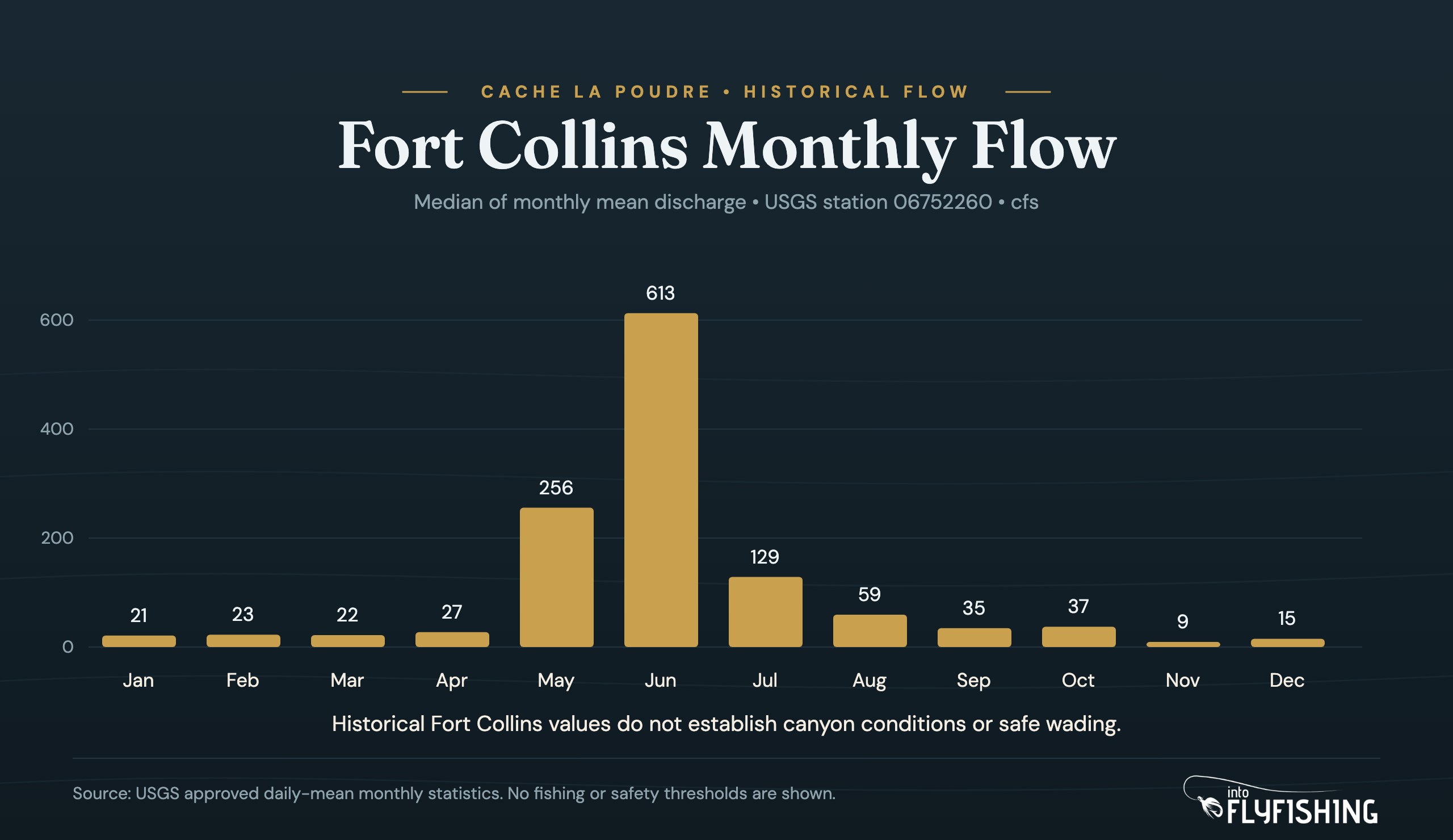
The historical USGS record at the Fort Collins gage shows a pronounced seasonal difference. The June median of the monthly mean flows is about 613 cfs, compared with about 35 cfs in September. These are historical statistics for the Cache la Poudre River at Fort Collins, station 06752260.
The chart shows that seasonal change at Fort Collins. Use the station name when checking a flow reading: this record measures the river in town and does not provide a safe-wading limit for the canyon.
The USGS Fort Collins station has the current reading. For fishing decisions farther upstream, pair it with a current canyon report and an assessment of the water when you arrive.
The current Poudre fishing report is useful for narrowing your choice of water and flies. Read the date before following its advice, especially when you’re planning a trip well ahead of time.
Check agency notices before traveling and follow posted restrictions when you arrive. Leave room in the day to choose another legal access point if the first stop doesn’t suit the conditions.
Put Stoneflies And Small Mayflies In Your Box
Stoneflies and small mayflies are where I’d start a Poudre fly selection. Stoneflies are a recurring part of this river’s insect life, while small mayfly imitations, including Blue-winged Olives, are useful fall choices.
The Poudre holds brown and rainbow trout. Both give you a reason to spend time fishing the canyon, with its boulders, pocket water, and fast runs around Rustic.

For summer, leave space for stonefly patterns. Watch the surface before deciding how to fish them; carrying a dry fly doesn’t mean you need to commit to it for the whole session.
In fall, I’d make sure my box includes smaller mayfly options, with Blue-winged Olive imitations among them. Have those flies ready before leaving home so you can adjust at the river.
A slim SF fly box works for the smaller mayfly imitations; keep bulky stonefly dries in a deeper box so they are not matted down.
Our guides to brown trout and rainbow trout cover the fish in more detail. They’re useful reading before the trip if you’re getting started with trout.
Check The Rule For Your Exact Reach
Save the regulation for your chosen reach before heading into the canyon. I pay particular attention to the boundaries here because the main stem and forks have separate entries, and the trout limit changes between stretches.
The main stem has four special-regulation reaches in the Colorado fishing regulations. All four restrict fishing to artificial flies and lures, but the trout limit differs in the uppermost reach.
From the Rocky Mountain National Park boundary downstream to Joe Wright Creek, the bag and possession limit is two trout. That is the main-stem reach named in the rule. Keep it separate from the South Fork entry below.
The following main-stem stretches require all trout to be returned to the water immediately upon catch:
- The upper boundary of Big Bend Campground downstream to Black Hollow Creek.
- The west boundary of Hombre Ranch, below Rustic, downstream to the Pingree Park Road/bridge.
- The upper boundary of Gateway Park downstream to the North Fork confluence.
Locate the beginning and end of your chosen stretch on a map before fishing. The campground, ranch, and confluence names above mark specific regulation boundaries.
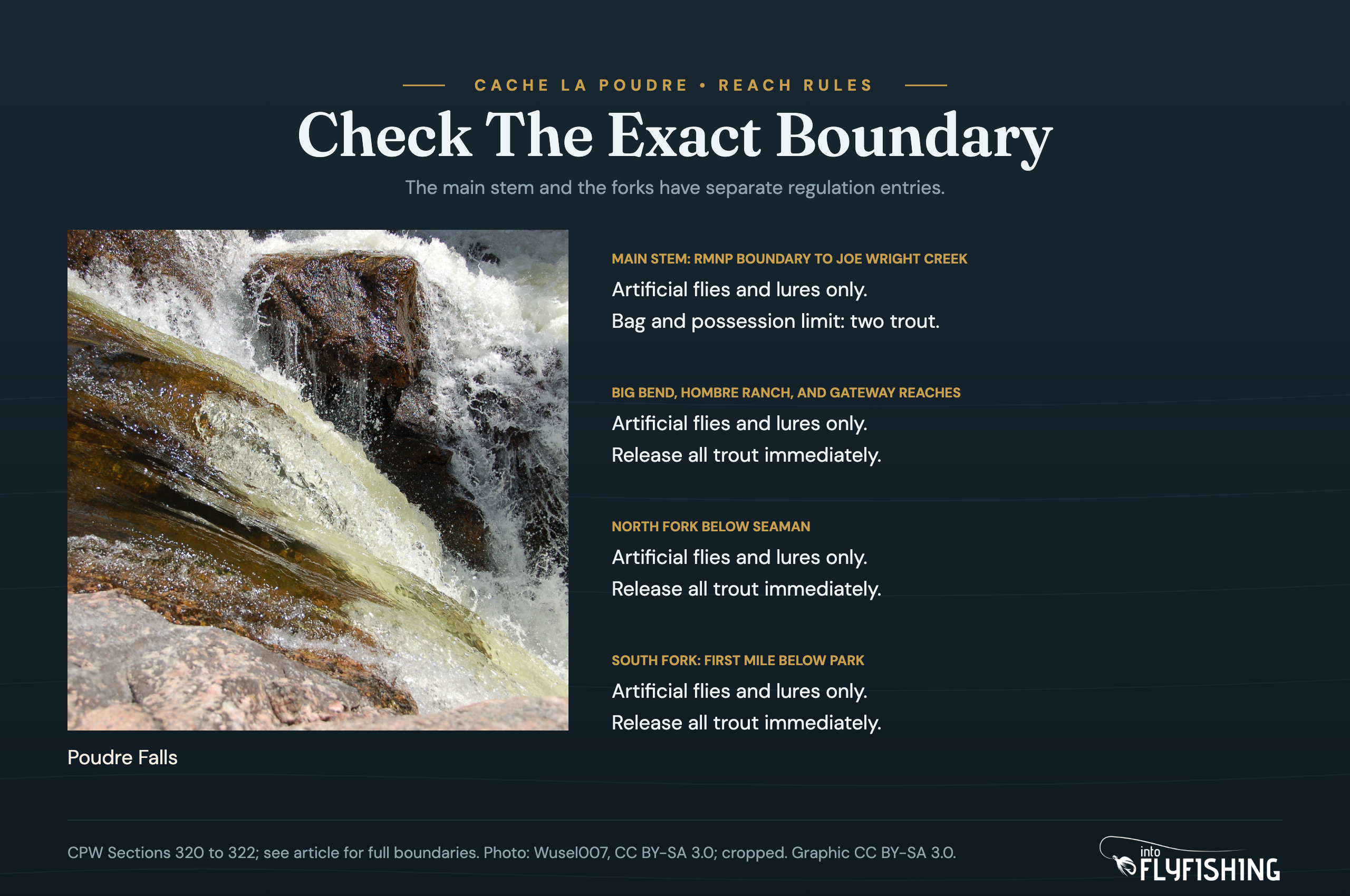
The forks have their own entries. On the North Fork, the stretch from Milton Seaman Reservoir downstream to the main-stem confluence requires artificial flies and lures, with immediate release of all trout.
On the South Fork, the first mile downstream from the Rocky Mountain National Park boundary also requires artificial flies and lures, with immediate release of all trout.
These rules cover the named reaches. Read the current agency text for your destination, including any emergency notices, and follow the signs at the water.
Pack For A Day On Foot
For the Poudre, I’d pack for a walk-and-wade day and carry only what I expect to use. Having the road nearby makes it easy to bring more gear than you want on your back.
My first decision would be the access route. Work out the walk to the water and back before choosing what to carry. Keep the fly box and spare tackle you’ll use within easy reach.
Carry spare fluorocarbon tippet so you can rebuild after a snag or a change between larger and smaller flies.
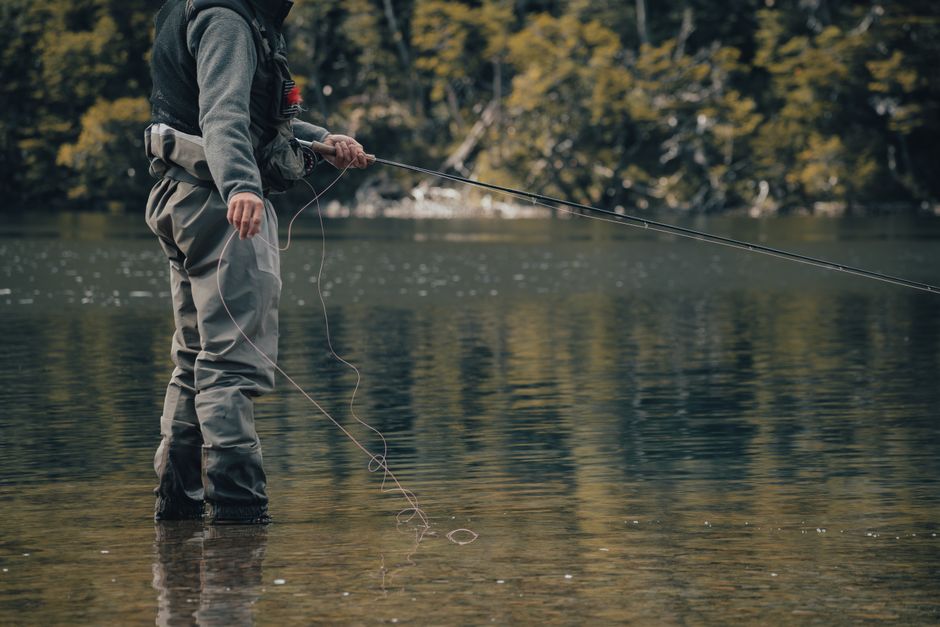
For rod shopping, our best fly rods for trout guide is the place I’d start. Use it to compare the equipment you already own with the fishing you intend to do. I wouldn’t buy a new outfit simply because this is a new river on the itinerary.
For a walking day, check your waders and boots before setting off. Frogg Toggs Canyon II waders are one option in our fly fishing waders guide.
Have your tackle ready before leaving the car so you can use your time at the water. I’d keep the outfit I already know unless there was a specific reason to change it for the fishing I planned.
Cache La Poudre Fly Fishing Questions
The Poudre works well as a canyon day trip, with brown and rainbow trout and road access along Highway 14. These are the questions I’d answer first when planning a visit.

Choose a stretch you can reach comfortably and give yourself time to fish it. The answers below cover the basics of trout, fly selection, and the Fort Collins flow record.
Yes. The Poudre holds brown and rainbow trout, and Highway 14 closely follows much of the canyon. It suits a walk-and-wade trip when you choose appropriate legal access and assess current conditions. Steep sections, including the Narrows, require more care in choosing an approach.
The Cache la Poudre holds brown and rainbow trout. The canyon includes fast runs, boulders, and pocket water, with road access along much of Highway 14.
Stoneflies deserve space in your box, and small mayfly imitations, including Blue-winged Olives, are relevant fall choices. Check a current canyon report before buying patterns, then adjust your selection to what you observe at the river.
The Fort Collins gage measures the river at that station. Its historical record helps describe seasonal changes there, but it doesn’t provide a safe-wading threshold for the canyon. Check information for the reach you plan to fish and assess the actual access and water when you arrive.
Give Yourself Time To Fish The Poudre
I’d give a single Poudre day to a manageable stretch of canyon water. Highway 14 makes it easy to keep moving between possible stops, but I’d choose an accessible section, confirm its rules, and leave myself time to fish it.
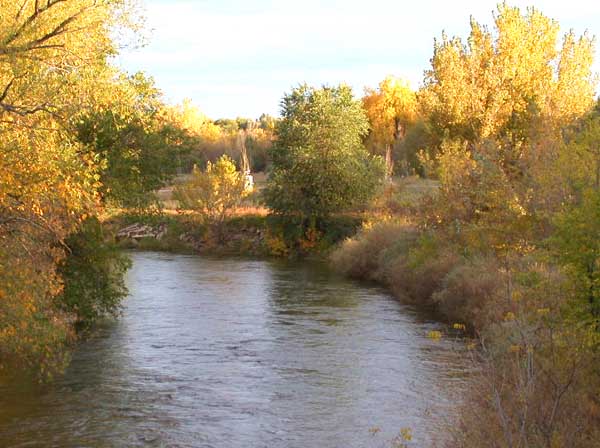
I’d check the current report before leaving, carry the flies appropriate to the season, and keep another legal access option in mind if the first stop didn’t suit the conditions. The Poudre has enough fast water and steep banks that there’s no reason to force an approach. Choose water you can reach and assess, then spend the time you saved actually fishing.
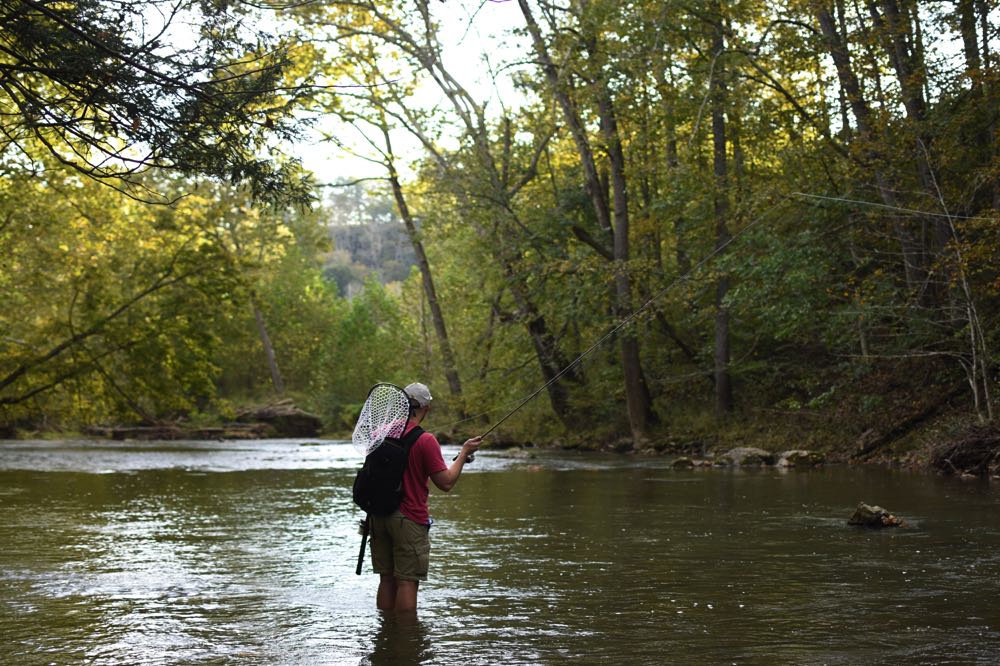
Featured photo: Walter Powers, CC BY 3.0.
Save This Fishing Guide For Later


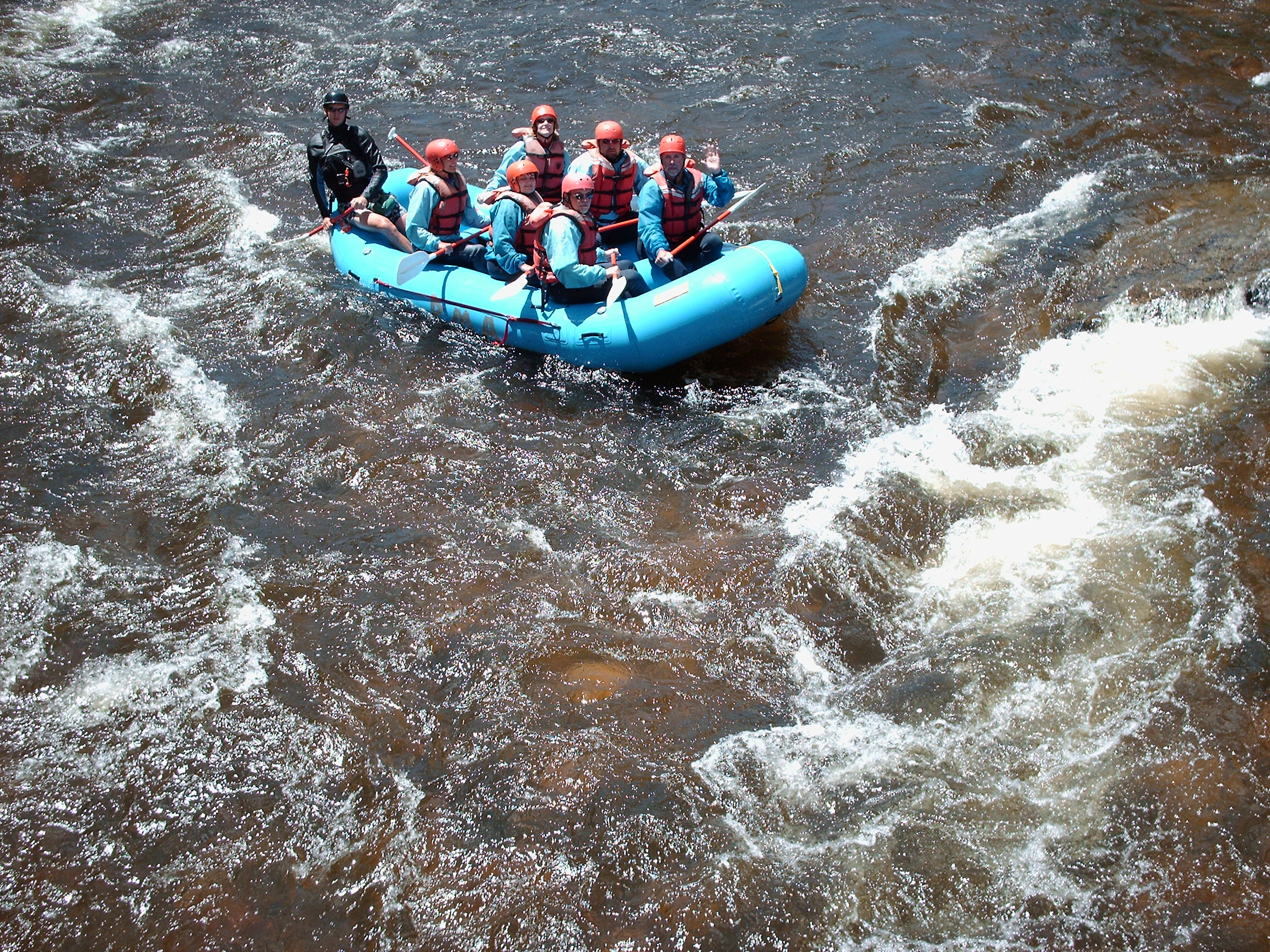
Photos: Runner1928, CC BY-SA 4.0; Oneliketadow, CC BY-SA 3.0. Cropped and overlaid with text; each adaptation retains its source license.
Amazon and the Amazon logo are trademarks of Amazon.com, Inc, or its affiliates.
As a part of the Amazon Associates Program and other affiliate programs, Into Fly Fishing® may receive a comission if you order products through links on this website.