As an Amazon Associate I earn from qualifying purchases.
The first time I stood on the bank of a new river, I spent 20 minutes working a pool that gave me nothing, while a guide 80 yards downstream was pulling fish out of what looked like plain, featureless riffle water every two or three casts. Same river. Same bugs in the air. Different results.
The difference wasn’t his rod, his flies, or his cast. He was reading the water and I wasn’t. He knew exactly where the trout were before he made a single presentation. I was guessing.
Reading water is the skill that separates anglers who occasionally catch trout from anglers who catch them consistently. Once you understand what trout need and where the river delivers it, fish stop being random. They become predictable. If you want to go deeper on the full picture of how to fly fish for trout, that guide covers the whole approach. This one is specifically about reading the river itself.
Why Trout Hold Where They Do
Trout don’t scatter themselves through a river at random. They hold in specific spots because three requirements have to be met in the same place: food delivery, oxygenated water, and relief from the main current. Our fly fishing on rivers guide covers the broader picture of river fishing; this section is specifically about what drives trout to one spot over another.
A trout that burns more calories fighting current than it gains from eating will move, or it will die. This is why you almost never find fish holding in the fastest water in the channel. They need somewhere to rest while current brings food to them, not somewhere they have to fight for every inch.
The Three Things Every Trout Needs
Food, oxygen, and cover. The food comes from whatever is drifting downstream: aquatic insects in various stages, terrestrials that fall in, small baitfish, and crustaceans. Oxygen comes from moving, well-aerated water, particularly riffles and broken sections. Cover means overhead protection from predators. Deep water, an overhanging bank, a boulder, or a submerged log all count.
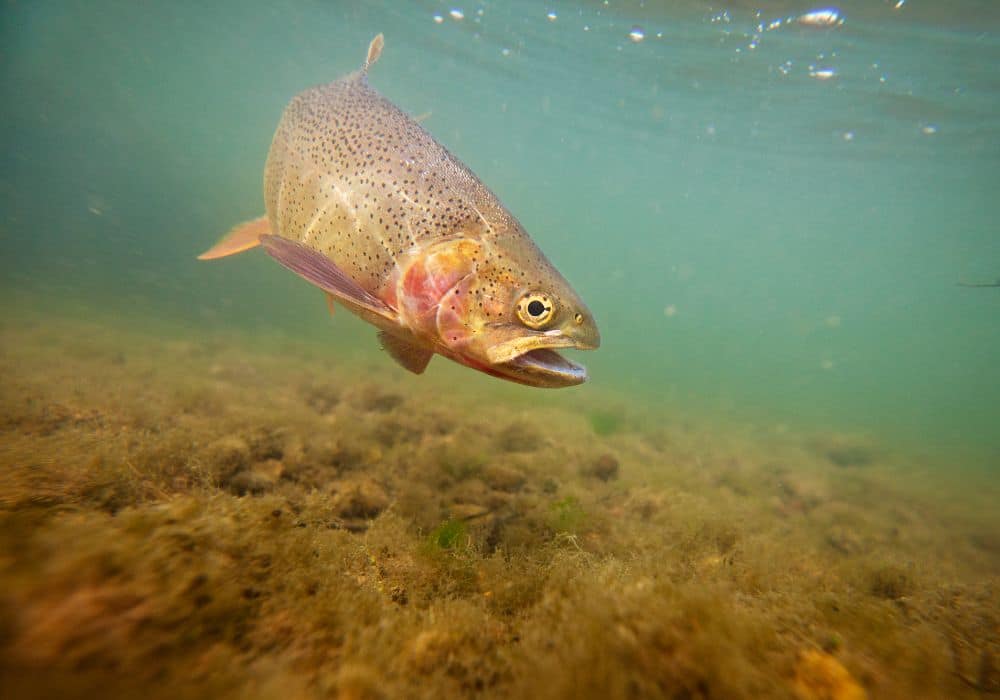
When all three overlap in the same two-foot window of the river, that is where the trout will be. The practical version of this is what guides call the 80/20 rule: roughly 20% of the water in any river holds 80% of the fish. Learning to spot that 20% means you stop wasting time on water that isn’t producing.
Riffles: Where Trout Come to Feed
Riffles are the stretches I fish most often, and they are the most underrated water type for beginners. A riffle is shallow, choppy, and fast, the kind of water that looks like it’s not worth stopping for. But riffles are the most oxygenated water in any river, and they are packed with aquatic insects: caddis larvae, stonefly nymphs, and baetis in every stage of development.
Trout come to riffles to feed, especially during or leading up to a hatch. When insects are active, fish push to the riffle edges and hold in the slight breaks and depressions along the bottom, tipping up to intercept drifting food. The fish aren’t in the white water itself, they’re in the soft spots within it.
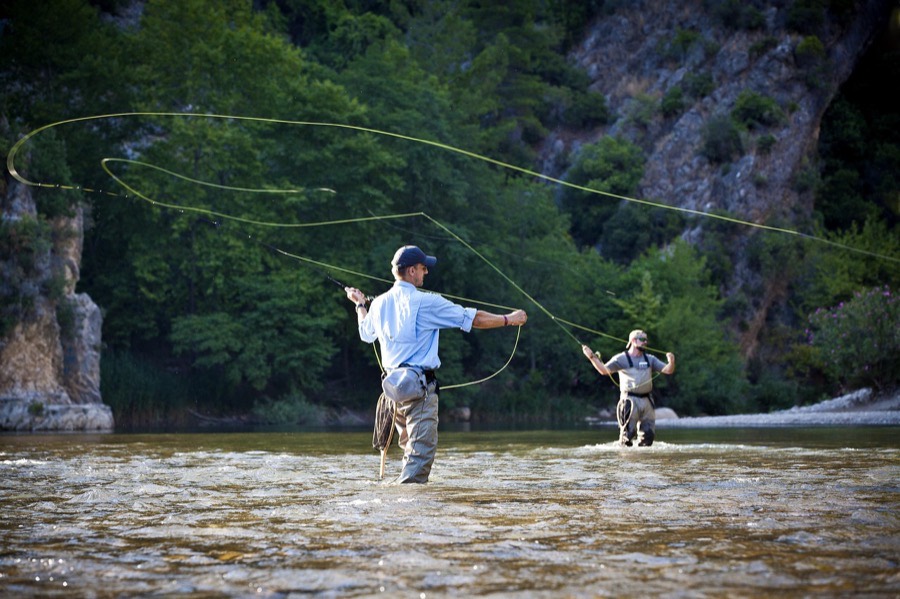
Fish the edges of riffles, not the center. The edge where riffle water starts to slow and deepen is one of the most reliable spots on any river. A dry-dropper rig covers riffles efficiently; the dry fly shows you the drift and the nymph below gets into the feeding zone. Don’t overlook any slight depression or color change in the riffle floor; those variations hold fish even when the surface looks uniform.
Runs: The Most Reliable Water on the River
A run is the section that follows a riffle: deeper and steadier, with a more consistent current. The turbulence of the riffle gives way to a smooth, purposeful flow. I’ve found more trout in runs than anywhere else over a full season, because runs fish well regardless of conditions, season, or time of day.
The depth gives fish overhead protection; the steady current brings food to them without asking them to hold in white water. In a good run, I look for any slight variation: a slight change in depth, a seam where two currents split, a submerged rock that creates a pocket of slower water. Those are where the fish station themselves within the run.
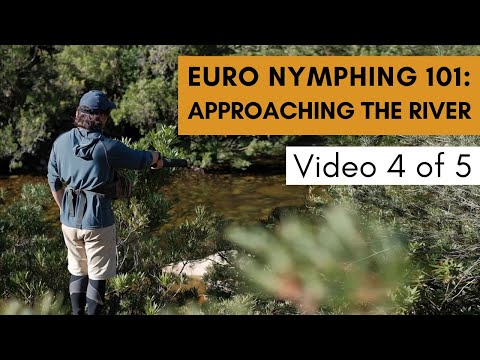
Nymphing is the most productive approach for runs. Euro nymphing in particular, because you can maintain contact through the drift and detect takes that wouldn’t register on an indicator. Our euro nymphing setup guide covers the rig if you want to try it. If you’re arriving at an unfamiliar river, find a solid run first to get your bearings before working anything else.
Pools: Where the Big Fish Wait
Pools are the deepest, slowest sections of the river. They form downstream of drops and rapids, on the outside of bends, and anywhere the channel widens and loses energy. Bigger trout live in pools because depth means safety. It’s harder for a heron or an osprey to pick off a fish in four feet of water than in twelve inches of riffle.
But pools aren’t uniformly productive. The fish aren’t spread across the whole pool. They’re in two spots. The head of the pool, where current is still moving and tumbling food in from the riffle above, holds active fish. The tail of the pool, where the water begins to flatten and speed up before the next riffle, is where fish position themselves to intercept food funneling through a narrowing channel.
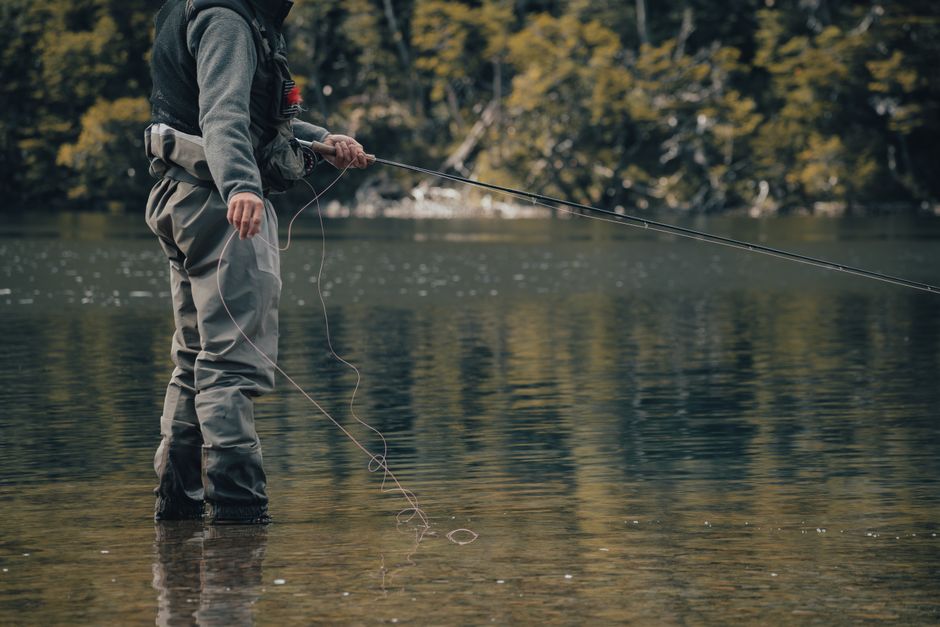
The wide middle of a pool (the slowest, deepest section) holds the largest fish but is the hardest to fish. They’re not actively feeding there most of the time. A long drag-free drift with a streamer, or a slowly swung wet fly through the depth, can get a response when nothing else does. The fly fishing for trout guide covers pool fishing tactics in more detail if you’re working on fishing deep.
Current Seams: The Most Important Line in the River
A seam is the boundary line between fast water and slow water. I’ve watched fish hold in a seam for an hour, barely moving, taking one item at a time as the current delivered it. Seams are where trout eat. If there’s one thing to look for first on any stretch of river, it’s the seams.
The mechanics are simple. Fast water carries food. Slow water means a trout can hold position without burning energy. A seam gives both at once: the fish parks in the slow side and tips into the fast side to pick off whatever drifts past. The seam is the line where the two meet, and fish hold right on that edge.
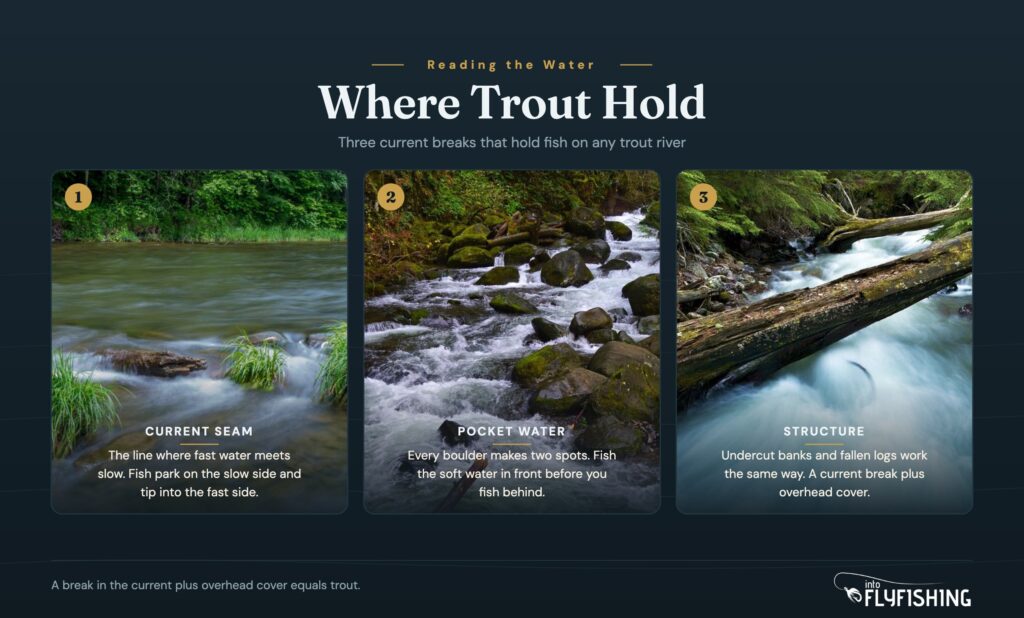
Seams form everywhere there is a current change: against every bank, on the downstream side of every boulder, along the edge of every riffle, wherever two currents of different speeds converge. Present your fly on the fast side of the seam, give it enough slack to drift without drag, and let it swing naturally across the edge. That transition is where the take happens. Learning to cast a fly rod accurately to specific current seams is what separates a competent river angler from a beginner.
Pocket Water and Structure
Pocket water is the irregular, boulder-strewn water that breaks up the flow into a series of small, distinct eddies and pockets. It looks chaotic from the bank, but each piece of structure creates two fishable spots: the slack pocket directly behind the rock where current swings around, and a smaller soft spot directly in front of the boulder where the current splits.
Both spots hold fish. The pocket behind the rock is more obvious and usually larger. The front pocket is smaller but often holds a bigger fish, because it’s a better feeding position. The current delivers food directly over the rock and drops it right in front of the fish. I put a fly in the front pocket first before I fish behind.
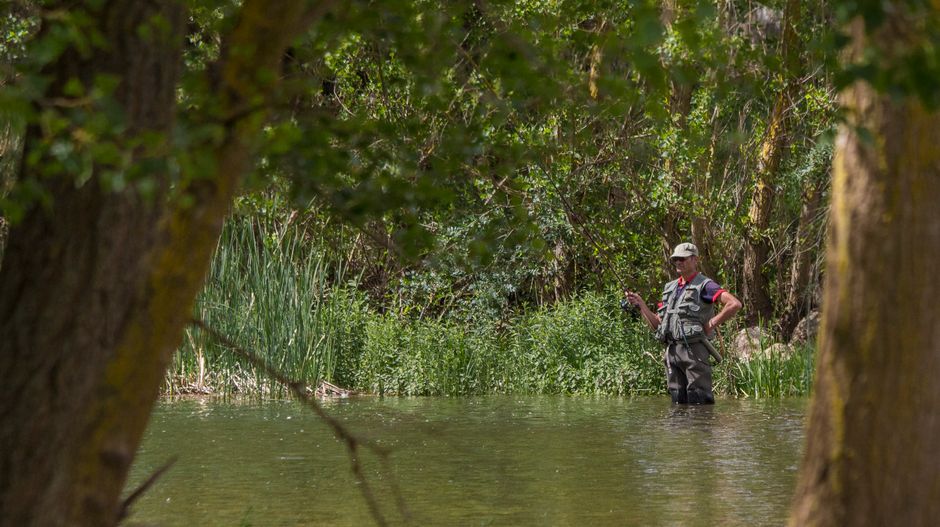
Fishing pocket water means working short. Long drifts aren’t available in broken current, and each pocket is only a few feet wide. A high-stick nymphing approach or a quick, accurate dry fly presentation covers more ground more efficiently than a traditional cast-and-mend. Work every rock methodically before moving upstream. Any other structure, undercut banks, fallen logs, bridge pilings, and submerged root balls, all work the same way. Break in the current plus overhead cover equals trout.
Foam Lines and Feeding Lanes
Foam on the surface of a river collects along the same channels that food does, because the same currents drive both. A foam line running through a pool or across the tail of a run is a feeding lane, and where there’s a feeding lane, there are rising fish during a hatch.
The presentation has to be precise. Place your fly two to four feet above the rise ring, mend as soon as the fly lands to kill any drag, and let the fly drift through the lane at the same speed as the foam. If the fly accelerates or slows relative to the foam line, the trout won’t take it. A bad drift in a feeding lane is worse than no drift at all. Drag alerts every fish in the lane.
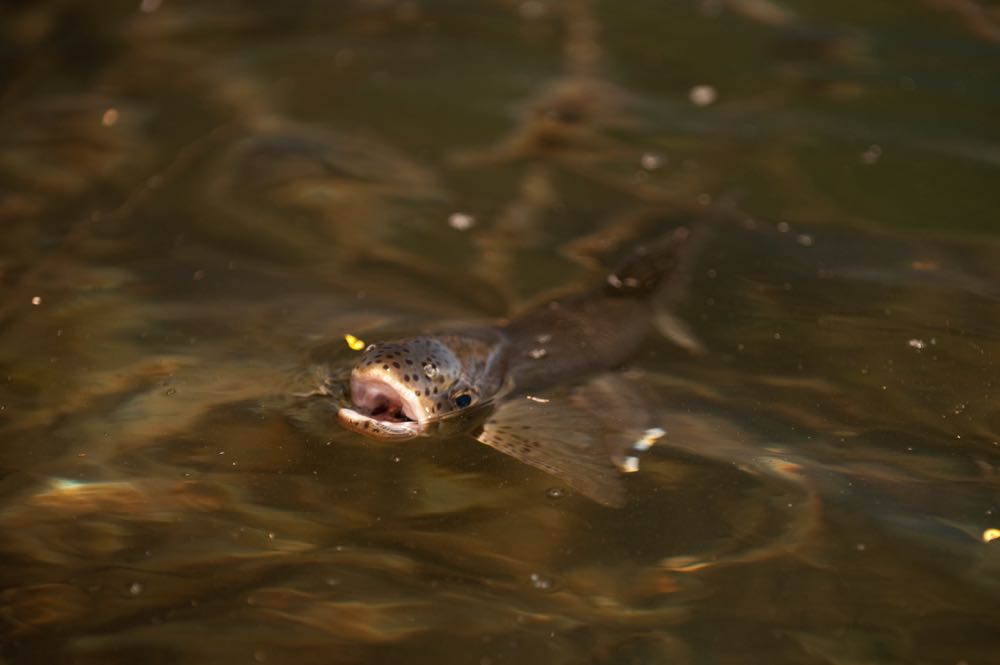
Surface rises in a feeding lane are not always obvious. Low light and slow sips can look like small ripples. Watch the foam line for any interruption in the surface film: a slight dimple, a small swirl, a single bubble that appears and disappears. Those are signs of a fish feeding just under the surface on emergers, and they’re the most productive trout in the whole stretch when a hatch is on. For more on what trout are eating when they’re feeding like this, the what do trout eat guide covers the diet side of it.
| Water Type | What to Look For | Best Fly Presentation | When It Fishes Best |
|---|---|---|---|
| Riffle | Choppy, shallow, oxygenated. Fish the edges, not the middle. | Dry-dropper or tight-line nymph | During and before a hatch |
| Run | Steady, deeper current. Look for slight depth changes and seams within the run. | Euro nymph or indicator nymph | All day, year-round |
| Pool | Deep and slow. Fish the head and tail, not the center. | Streamer or long dry drift | Early morning, late evening, winter |
| Seam | The line where fast water meets slow. Often visible as a texture change or foam line. | Cast to the fast side, let it cross to slow | All day, especially during hatches |
| Pocket Water | Boulder-broken current. Fish the pocket behind each rock and the small slot in front. | High-stick nymph or short dry fly | Morning in summer, all day in spring |
How River Level Changes Everything
The same river fishes differently at different water levels. I’ve been on rivers where I knew every seam and pocket from previous trips, then arrived after a week of rain to find those spots blown out completely. Accounting for river level is one of the last things anglers figure out, and it costs a lot of fish in the meantime.
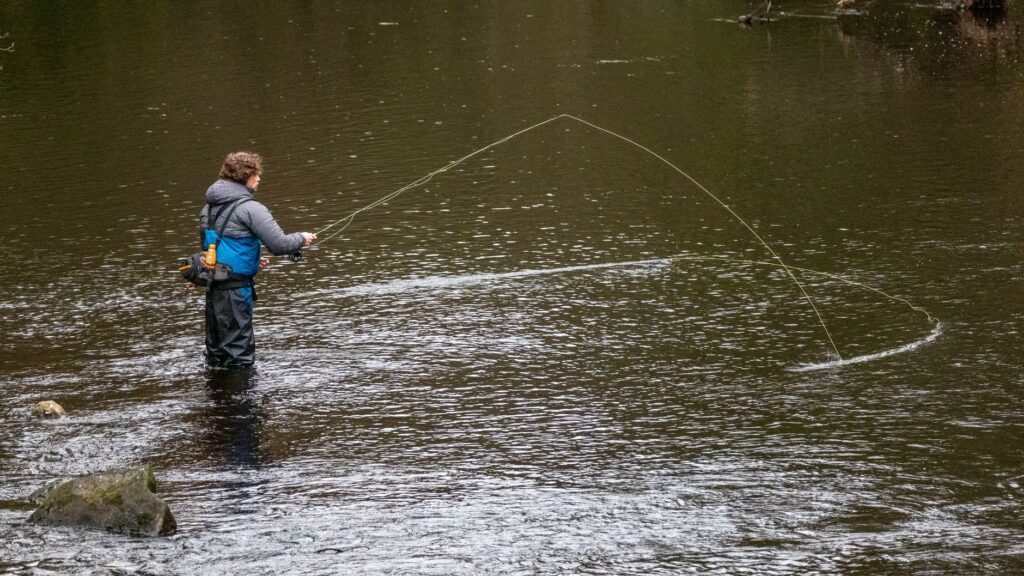
High water pushes trout out of the main channel and into the margins. They can’t hold in the blast of the main current, so they find slack water wherever it exists: against grassy banks, in flooded side channels, in any soft water along the edges. When the river is high, forget the mid-river features and fish the bank.

Low summer flows push fish into the deepest pools and make them harder to approach. The trout that were spread across a run in April will be stacked into the deepest slot of the nearest pool by August. They’re also more aware of anything approaching on the bank, because the shallower water gives them less overhead cover to hide behind. Slow down, lengthen your leader, and go to lighter tippet in low water.
Check the USGS stream gauge for the river you’re fishing before you go out. A normal reading means the features are where you expect them. A high reading means adjust to the margins and fish slower. A low reading means pool up and fish careful.
Reading Water FAQs
Look for where current delivers food and where fish can rest without fighting the flow. Seams between fast and slow water, the edges of riffles, pockets behind structure, and the head and tail of pools cover the majority of productive water in any river. Visit the fly fishing glossary if any of those terms are unfamiliar.
About 20% of the water in a river holds roughly 80% of the fish. Most of that 20% is seams, riffle edges, and the productive sections of pools. Identifying those features quickly lets you skip unproductive water and spend time where fish actually are.
Match cover with current relief. Trout need protection from predators and somewhere the current does the work of delivering food without requiring them to fight it. Wherever those two requirements intersect is where the fish will be. The how to fish for trout in a river guide goes further into trout behavior if you want more depth.
A seam shows as a visible transition between two water speeds: a slight color change, a surface texture shift, or a line where choppy water meets smooth water. Foam concentrates along seams, which makes them easy to locate when there is any debris or hatch material on the surface.
Start at the Seam
Reading water becomes instinctive with time on the river. The first few times, it’s deliberate. You’re running through the checklist, looking for cover, current breaks, seams, and structure. After a few seasons, you read a stretch from the bank in seconds and already know the two spots worth casting to before you’ve rigged up.
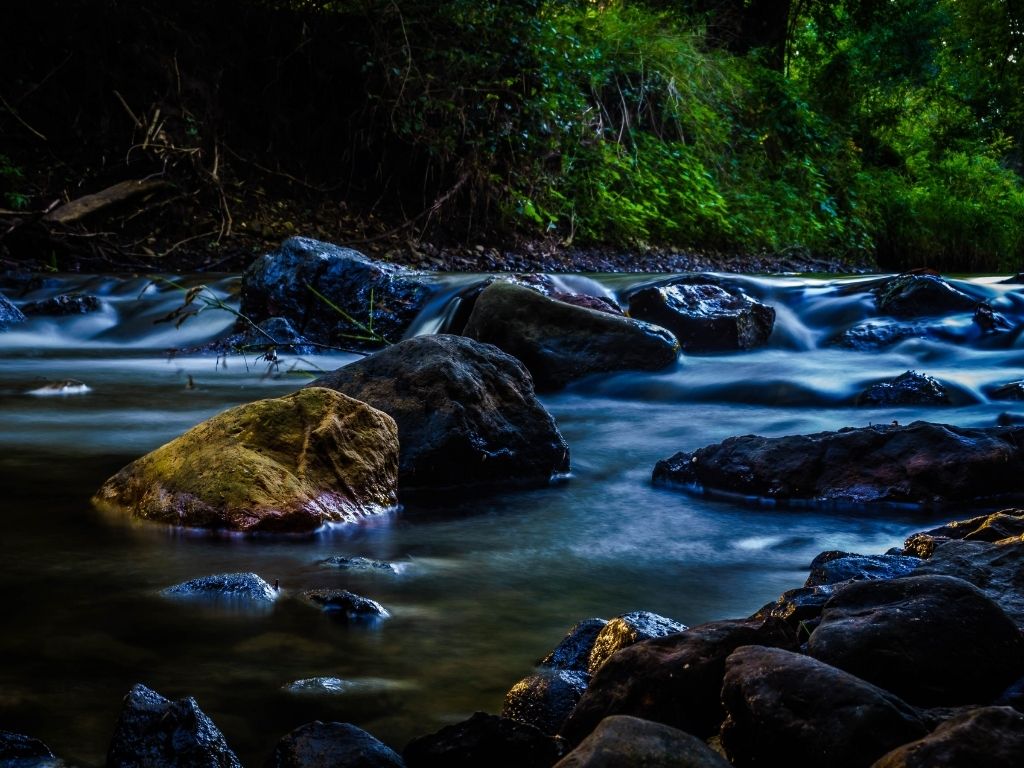
Start with one objective on your next trip. Find an obvious seam, the edge of a riffle or the slack water behind a rock in the main current, and fish it thoroughly before you move on. Trout hold in seams more reliably than anywhere else in the river. Once you see it work a few times, the patterns across the whole river start making sense. The five fly fishing techniques guide is a good next step once you can read where the fish are.
The right rod helps too when you’re fishing different water types in the same session. Riffles, runs, pocket water, and pools all ask something slightly different from your setup. If you haven’t sorted your rod yet, the best beginner fly rods guide covers the options that perform well across river fishing situations.
Amazon and the Amazon logo are trademarks of Amazon.com, Inc, or its affiliates.
As a part of the Amazon Associates Program and other affiliate programs, Into Fly Fishing® may receive a comission if you order products through links on this website.