As an Amazon Associate I earn from qualifying purchases.
The Piedra’s box canyons make the walk part of the fishing trip. A trail can take you above the river and around steep ground before bringing you back toward the water. Plan to fish the stretches you can approach comfortably, with enough daylight left for the return walk.
My Colorado trips have included rushing rivers, smaller streams, and lakes. For Piedra River fly fishing, keep the first outing focused on one trailhead and a manageable stretch of trout water. That leaves time to work the pockets and runs instead of spending the whole day trying to reach the other end of the canyon.
The main river holds brown and rainbow trout, and stoneflies deserve space in the fly box. Below, I cover the two road approaches, how to fish the water you reach, and the regulation boundaries. Our Colorado rivers guide will help you compare the Piedra with other waters in the state.
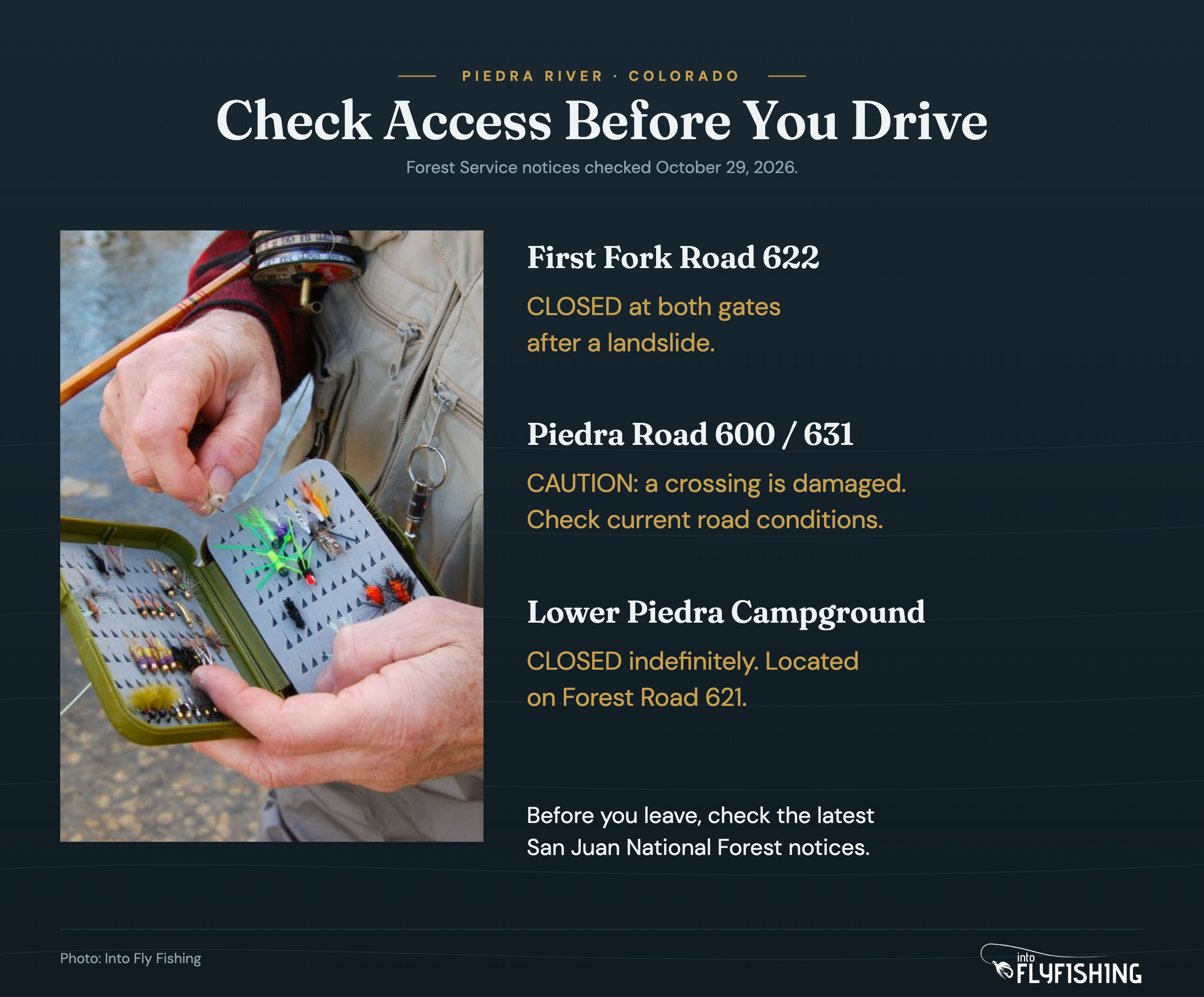
Current Road Conditions: The San Juan National Forest road report lists First Fork Road, FR 622, as closed at both gates after a landslide. It also warns that the Piedra Road crossing at Roush Draw is compromised, with water over the culvert and damage to the roadbed. Confirm the latest status before driving to either trailhead.
Quick Answer: Check road access before planning a Piedra River fly fishing trip. First Fork Road is closed, and Piedra Road has a compromised crossing. Pack stonefly imitations and attractor dries, and allow time to walk between fishable stretches. The main special-regulation corridor requires artificial flies or lures and immediate release of all trout.
Other Rivers In Colorado
- Arkansas River
- Animas River
- Colorado River
- Frying Pan River
- Gunnison River
- Rio Grande In Colorado
- Roaring Fork River
- South Platte River
- Cache La Poudre River
- Eagle River
- Taylor River
- Yampa River
- North Platte River
- Conejos River
- Dolores River
- Big Thompson River
- White River
- San Miguel River
- Elk River
- Crystal River
- Fraser River
- Williams Fork River
- Lake Fork Of The Gunnison River
- Michigan River
- East River
- Los Pinos River
Start At The Piedra Road Trailhead
Once road conditions allow access, the Piedra Road entrance suits an initial out-and-back canyon trip. It gives you a definite starting point beside the river, so you can decide how much walking fits the day. First Fork Road approaches the trail from the other end, but its current closure removes that driving option.
Walk Downstream From Piedra Road
From US 160 near Pagosa Springs, take Piedra Road north. This road is also marked CR 600 and FS 631. After roughly 16 miles, cross the Piedra River bridge and look for the trailhead parking on the left. The Piedra River Trail description gives the route and the second trailhead approach.
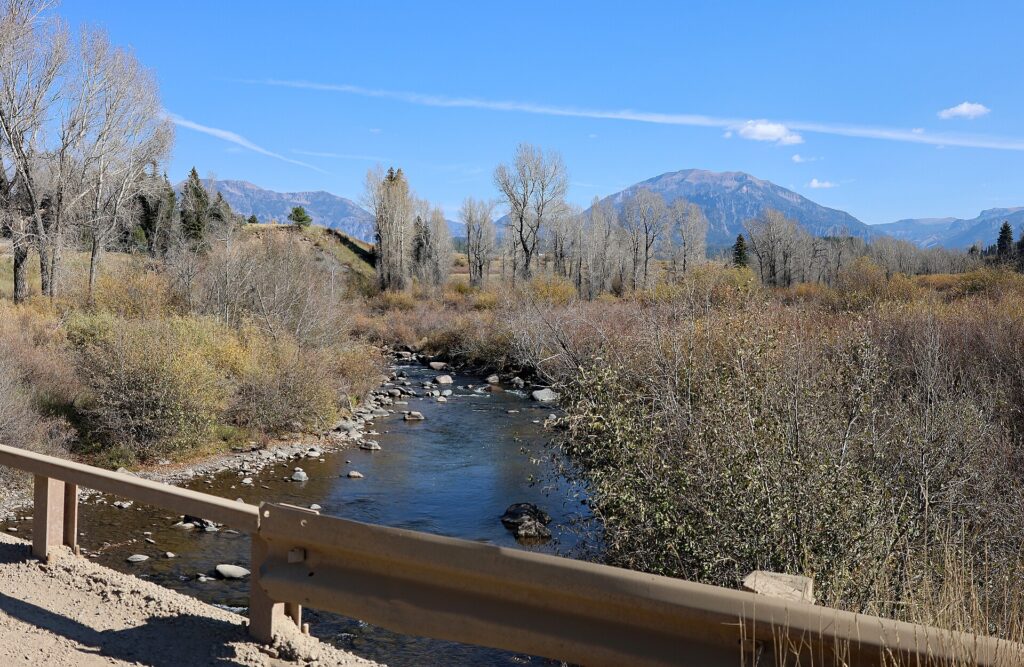
Pack for the walk before rigging the rod. Keep the pieces secured while moving through brush or negotiating awkward ground, then set up when you reach a useful fishing position. A rod carried ready to cast is convenient beside open water, but it becomes something else to manage on a narrow trail.
Follow the established trail where it climbs away from the water. The central box canyons interrupt easy riverbank travel, and a visible pool below the trail does not establish a usable route down. Choose an accessible bank or another stretch instead of committing to a descent without a clear way back.
Approach From First Fork Road
First Fork Road, FS 622, is closed at both the Main Gate and Sheep Creek Gate because of a landslide and boulders blocking the road. Do not plan to drive this approach while the closure remains in place.
For a future trip after reopening, the route leaves US 160 about 22 miles west of Pagosa Springs and follows First Fork Road north about 12 miles to its end. The trail access is across the bridge. The graphic below summarizes the current access notices. Check the latest Forest Service report before choosing an entrance.
A through-hike between the trailheads is a separate plan from a day of fishing near one entrance. For a first visit, an out-and-back route makes it easier to keep track of the return distance. Carry a map you can use without a phone signal, and leave your intended entrance and return plan with someone.
Leave Time To Walk Back
If the trip calls for waders, the Frogg Toggs Canyon II stockingfoot waders are one option to consider. Check the fit with your layers and wading boots before the trip. Carrying waders to the river can make more sense than wearing the whole outfit for a long approach.
Carry drinking water, food, a rain layer, and a light even if the fishing plan looks short. Keep the tackle compact enough that you still have room for those things. Finish the session while you have time to retrace the route, rather than waiting until the last fishable light to start walking.
Give Each Pocket A Short, Controlled Drift
Start with the closest pocket you can cover without stepping into it. On broken water, a short cast usually gives you a better chance to follow the fly than a long cast across several currents. Fish from a stable position, then move only when the next drift needs a different angle.
Pack Stoneflies And Attractor Dries
Stoneflies are part of the Piedra’s food supply, and attractor dries are an established option. Carry a surface fly you can see against the broken water and a stonefly nymph for working below it. Brown and rainbow trout are present in the main river; the fly choice should follow what the fish and water are doing, rather than the species you hope to catch.
Add an Elk Hair Caddis for a dry-fly option and a Hare’s Ear for subsurface work. Start with the fly that suits the feeding you can observe, then adjust its presentation before emptying the box in search of a different pattern.

Before casting, watch the current beside the bank and the slower water behind rocks. If a fish is rising, note where it returns between rises. Put the fly far enough upstream to arrive naturally, and keep the first cast away from the fish’s holding position.
When nothing is rising, try the subsurface option through a short stretch you can control. Give the fly time to sink before it reaches the holding water. Adjust the depth or weight if it continually catches the bottom or passes too high, changing one thing at a time so the next drift tells you something useful.
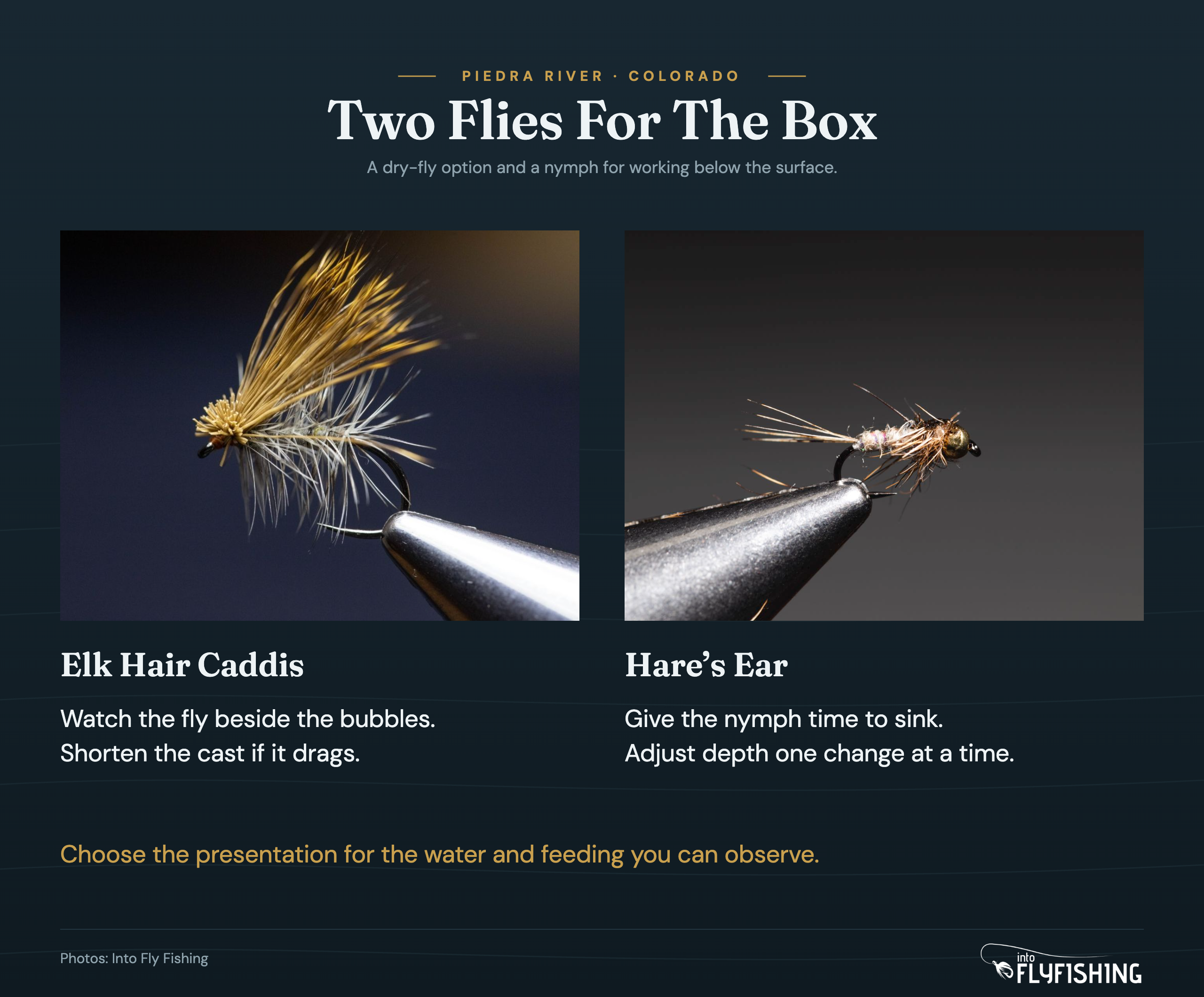
Keep a few replacements for the flies you expect to use. Losing the last useful nymph to a rock is frustrating when the rest of the box is a long walk away. The SF slim fly box is an option for a compact selection. Check that your larger dries fit without crushing the hackle, and separate them from weighted flies so you can make a change without emptying the box beside the river.
Change The Presentation Before The Fly
Watch a dry against the bubbles moving beside it. If it suddenly speeds up or slides across the current, shorten the cast or change your position. Try to keep unnecessary line off the faster water between you and the fly. A different pattern will still drag if it follows the same line.
In a deeper run, cover a narrow lane first. Cast upstream of the water you want to fish, follow the drift, and lift before the rig swings into an obstacle. Move the next drift slightly farther across once you can control the near lane. This is easier to judge than trying to cover the whole run with each cast.
Carry The Tackle You Can Walk With
A 5-weight is a useful starting point for this trip. Choose an outfit you can carry comfortably between fishing spots and cast accurately at short range. Our trout fly rod guide compares the options. Leave room in the pack for spare tippet, a few replacement flies, and the gear you need for the walk.
For nymphs or the subsurface section of a dry-dropper rig, the SF fluorocarbon 3X, 4X, and 5X tippet set gives you several diameters to match to the fly. Inspect the working tippet after a snag. A damaged section should come off before the next cast. Use a net to control a hooked fish beside the water, and have the release planned before you start fishing a bank that would make landing awkward.
Choose A Day After Runoff Has Settled
For a first wading trip, favor a period after the spring runoff has settled. High water can leave the Piedra dirty, and the canyon gives you fewer simple ways to move around an inaccessible stretch. Summer attractor fishing is a reason to bring dry flies, but the day’s water level and clarity should decide the approach.
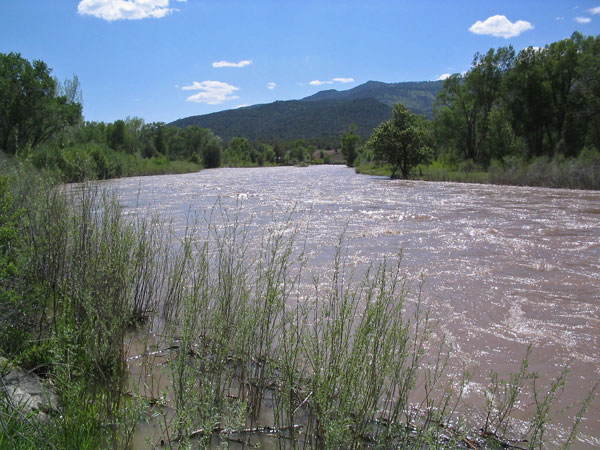
Look at the river before committing to the hike. If you cannot identify stable footing or a useful bank position, choose another outing. Reaching the trailhead does not mean the water will suit the fishing you planned. Keep enough flexibility to change the destination instead of trying to force access through a canyon.
Check a recent Piedra fishing report close to the trip and read the observation date. A report from a different season can help with general fly selection, but it cannot establish today’s road condition, water clarity, or hatch. Ask about the entrance you intend to use.
Read Conditions For The Reach You Will Fish
The active USGS station named Piedra River near Arboles is on the lower river near Navajo Reservoir. Its reading is lower-river context, not a measurement at the Piedra Road bridge or a safe-wading limit for the canyon.
For the canyon, combine a current local report with what you can see at the access point. Stay out of a crossing if the route back is uncertain. A downstream gauge cannot account for the depth, rocks, and current at the particular place where you want to step in.
If the Piedra does not suit the day, our Animas River guide gives you another southwest Colorado trip to investigate. Check that river’s own conditions and access before driving there.
Keep The Main River And East Fork Rules Separate
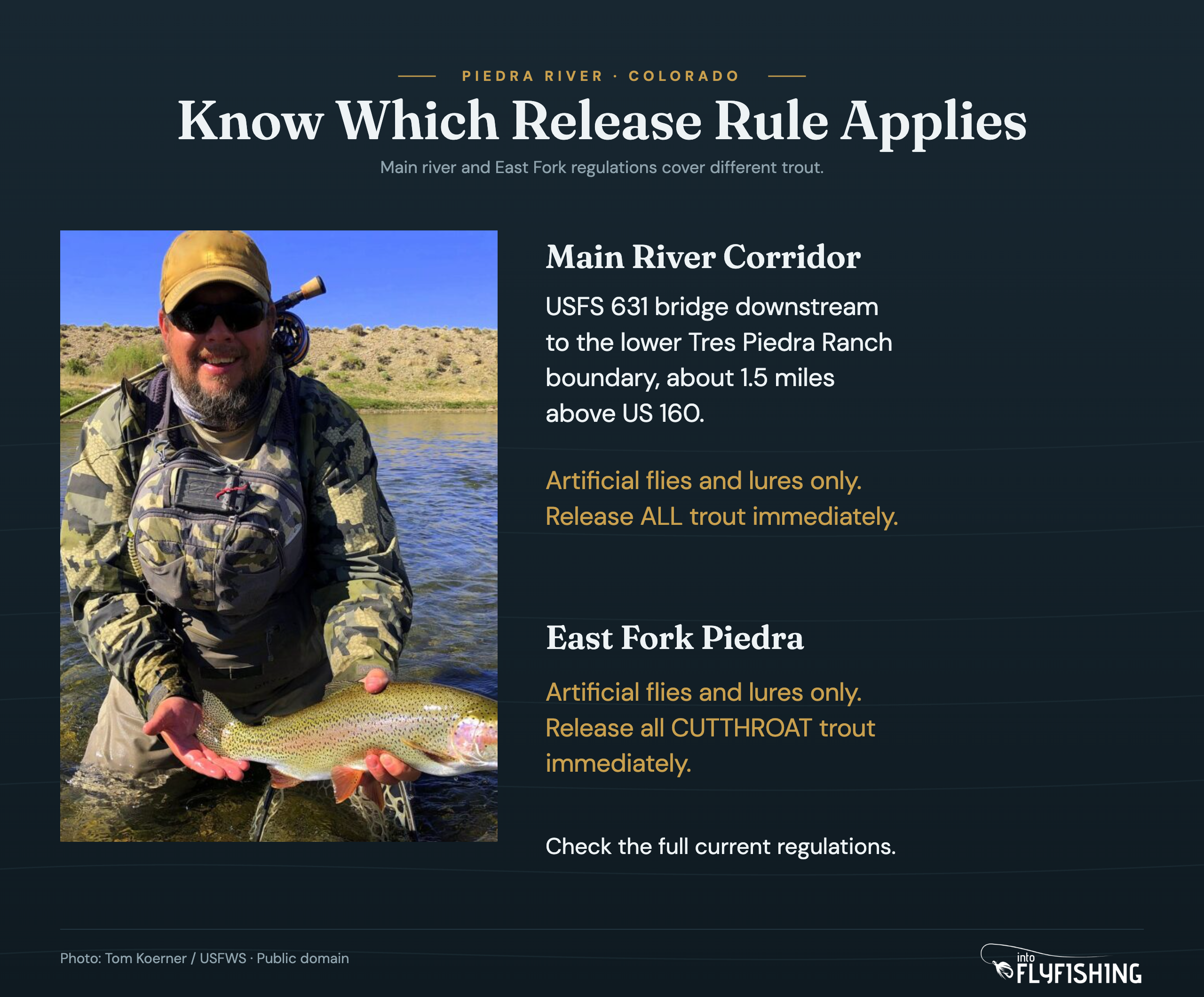
Keep the rule for your chosen reach with the access plan. The main Piedra’s special trout corridor and the East Fork have different release requirements. The Colorado fishing regulations name the boundaries; a broad description of “the Piedra” is not specific enough.
The Main Trout Corridor
From the Piedra River bridge on USFS 631, Piedra Road, downstream to the lower boundary of Tres Piedra Ranch, fishing is by artificial flies and lures only. All trout must be returned to the water immediately. The ranch boundary is about 1.5 miles above US 160, so the highway bridge is not the lower endpoint of this special rule.
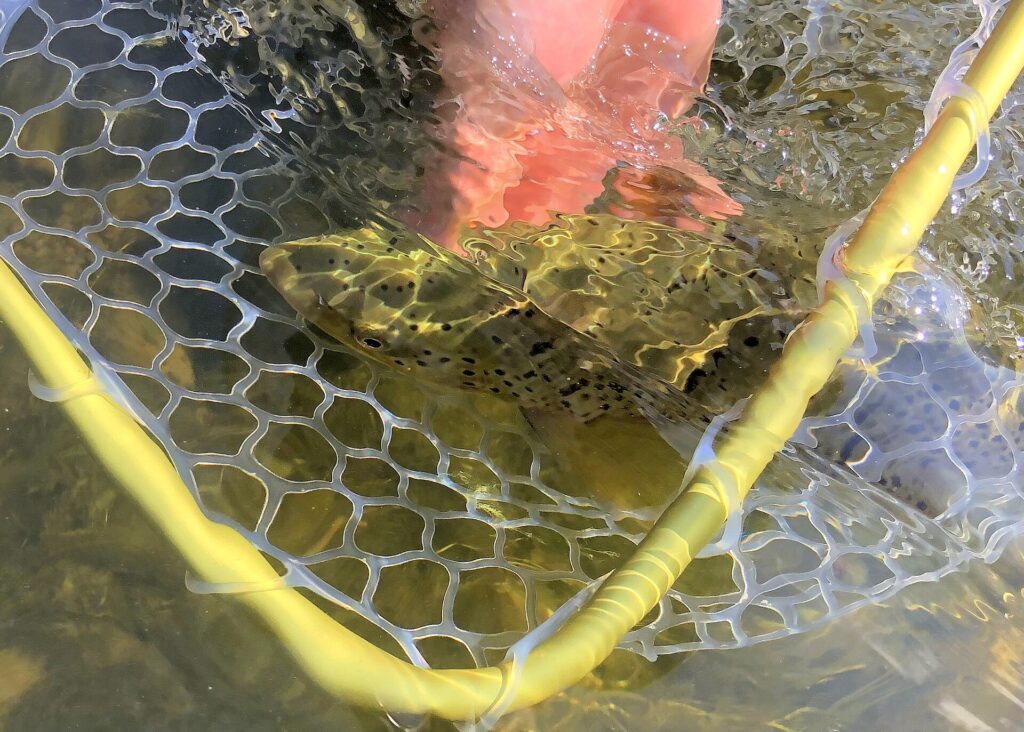
Plan to release a fish from this corridor promptly, with the net ready and unnecessary handling kept to a minimum. If the bank makes that difficult, choose a better fishing position before casting. The immediate-release requirement applies to every trout you catch within the named reach.
The East Fork And Lower River
On the East Fork Piedra, the special rule requires artificial flies and lures and immediate release of all cutthroat trout. Keep that cutthroat-specific rule separate from the main corridor’s all-trout release requirement. Read the rest of the applicable regulations before deciding what may be kept.
Below US 160, the river passes through private land and the Southern Ute Reservation. A public trail entrance upstream does not give permission to fish those banks. Nonmembers need a Tribal fishing permit to fish designated Tribal waters. Use designated access points, and obtain permission before entering private or allotted land.
The Forest Service also lists Lower Piedra Road, FR 621, and Lower Piedra Campground as closed indefinitely because of flood damage. For travel on the reservation, check the Tribe’s current notices for storm damage and road restrictions. These notices concern particular roads and facilities; confirm the status of your intended access before traveling.
Piedra River Fly Fishing FAQs
The established entrances are on Piedra Road, CR 600/FS 631, and First Fork Road, FS 622. First Fork Road is currently closed at both gates after a landslide, and the Forest Service warns of a compromised crossing on Piedra Road at Roush Draw. Check the current San Juan National Forest road notices before traveling.
Brown and rainbow trout are present in the main Piedra. The East Fork has a separate cutthroat-release regulation. Keep species identification and the exact reach in mind before handling or keeping any fish.
For a first wading outing, plan after spring runoff has settled and use a current local report to choose the day. Summer attractor dry-fly fishing is an option, but water clarity, access, and the conditions at your entrance matter more than a fixed calendar date.
The special rule from the USFS 631 Piedra Road bridge to the lower boundary of Tres Piedra Ranch requires immediate release of all trout and artificial flies or lures only. The boundary is about 1.5 miles above US 160. The East Fork has a separate cutthroat-release rule, and lower-river access and regulations must be checked separately.
Give One Canyon Stretch Enough Time
For a future day on the Piedra once access conditions allow, I would start from the Piedra Road trailhead, keep the walk manageable, and choose a stretch with a clear route in and out. Fish the nearest pockets first, then give the deeper runs a controlled subsurface drift. There is little benefit in walking past usable water just to make the day longer.
Leave enough time to pack the rod and walk back comfortably. A useful first visit leaves you knowing which entrance worked, where you could reach the bank, and how the river looked that day. For the rest of the trip, use our Colorado fishing overview and US rivers guide to plan other days.
Featured photo: Piedra River at Colorado Road 193, looking downstream. Dicklyon / CC BY-SA 4.0. Resized for display.
Save This Piedra River Guide For Later


First pin photo: Jeffrey Beall / CC BY 4.0. Cropped with text added.
Amazon and the Amazon logo are trademarks of Amazon.com, Inc, or its affiliates.
As a part of the Amazon Associates Program and other affiliate programs, Into Fly Fishing® may receive a comission if you order products through links on this website.