As an Amazon Associate I earn from qualifying purchases.
East River fly fishing in Colorado centers on the public water at Roaring Judy Fish Hatchery near Almont. Brown and rainbow trout, dry-fly opportunities, and a mix of riffles and pools make it a worthwhile stop. Access is limited elsewhere along the valley, so choose the fishing reach before choosing the flies.
Most of my fishing is for trout and grayling. For an East River trip, I would bring a small selection of dry flies and spend the first part of the day watching the water. A hatch list can help you pack, but the fish in front of you should guide the first cast.
Our Colorado river guide helps you compare the East with other waters in the state. Use the Colorado fishing guide for broader trip planning and the US river directory for more destinations.
Quick Answer: For an East River trout outing, start with Roaring Judy’s public property and carry blue-winged olive and caddis imitations. Check the Almont gauge before traveling. From August 15 through October 31, the river from the hatchery outlet downstream to the Roaring Judy property boundary is closed to fishing.
Other Rivers In Colorado
- Gunnison River
- Cache La Poudre River
- Yampa River
- Roaring Fork River
- Taylor River
- Eagle River
- Frying Pan River
- Rio Grande In Colorado
- Arkansas River
- Animas River
- Colorado River
- South Platte River
- North Platte River
- Conejos River
- Dolores River
- Big Thompson River
- White River In Colorado
- San Miguel River Fly Fishing
- Elk River In Colorado
- Crystal River In Colorado
- Fraser River Fly Fishing
- Williams Fork River Fly Fishing
- Lake Fork Of The Gunnison Fly Fishing
- Michigan River In Colorado
Start At Roaring Judy, Then Choose Your Reach
Roaring Judy Fish Hatchery is the main public starting point for this guide. Its address is 14131 North Highway 135, Almont. Use the official property information to identify the river, the hatchery outlet, and the upstream and downstream boundaries; those landmarks determine which rules apply.
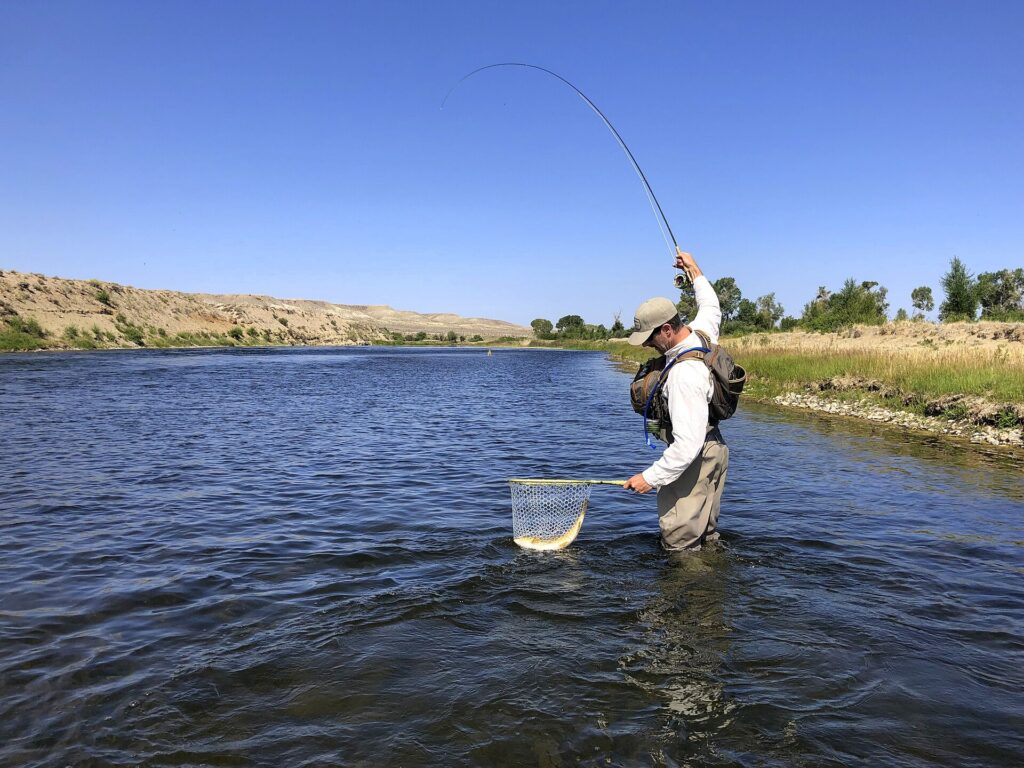
The hatchery stretch has riffles, runs, and pools. That gives you several types of water to examine during one visit instead of treating the whole property as a single fishing spot. Begin by watching a short reach from the bank, looking for rising fish and a casting position that lets you control the drift.
Much of the valley water outside the public areas is private or leased. A stretch visible from Highway 135 is not automatically available for fishing. If you book a guide or private-water day, confirm which property is included rather than assuming the arrangement covers the rest of the river.
From the hatchery’s upstream property boundary downstream to the Taylor River confluence, fishing is restricted to artificial flies and lures. The trout bag and possession limit is two fish, with a 12-inch maximum size. Taking kokanee salmon is prohibited.
The shorter stretch from the hatchery outlet downstream to the Roaring Judy property boundary is closed to fishing from August 15 through October 31. This closure has its own boundaries. It does not describe every part of the East River, and an open stretch elsewhere still needs legal access.
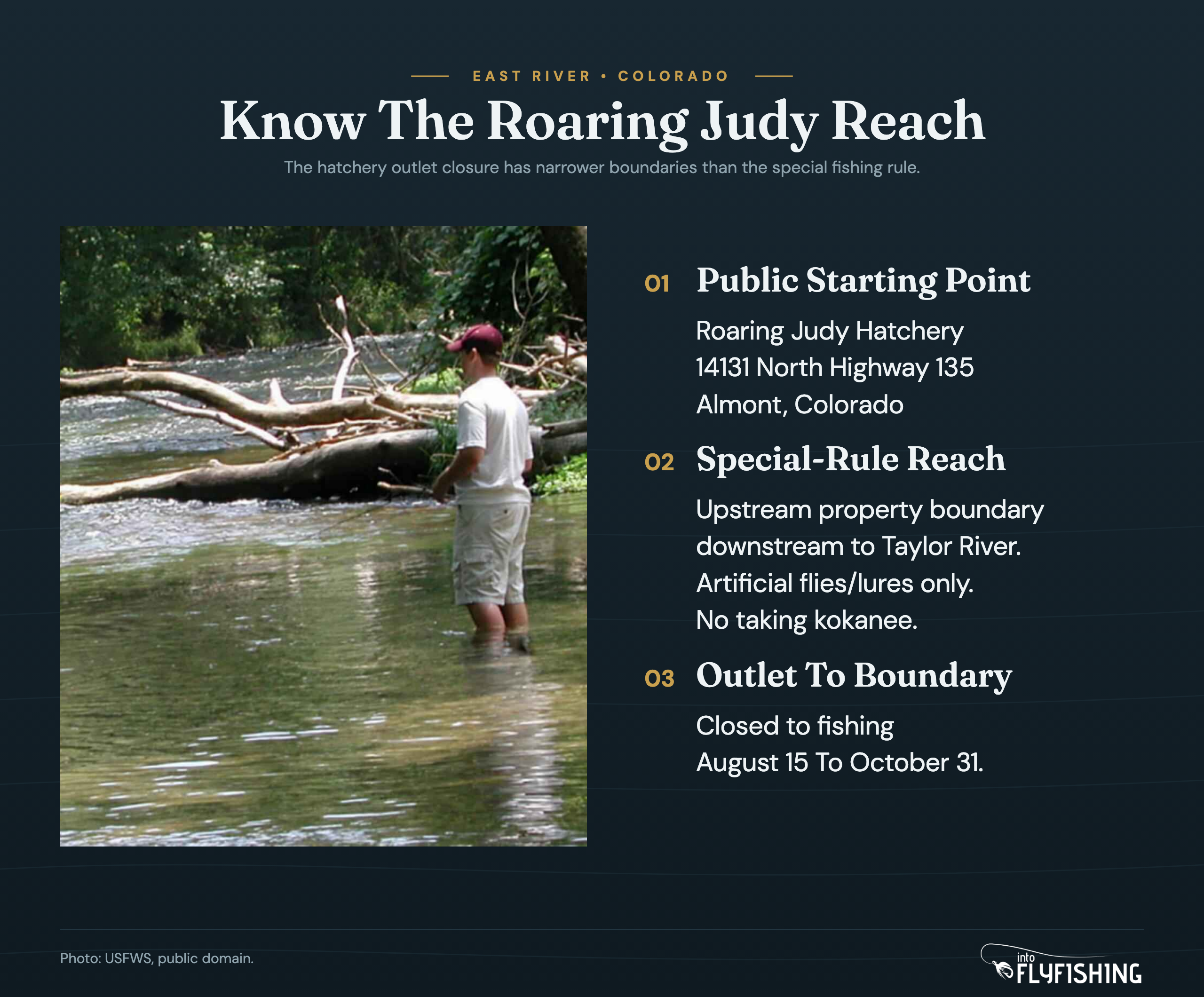
Keep the current CPW fishing rules with your trip notes and identify those landmarks before rigging up. In late summer and fall, choose the available fishing water first. Do not plan a session around the outlet without accounting for its closure.
The Roaring Judy property rules also close the fishing ponds and their connecting hatchery discharge stream, down to the hatchery outlet on the East River, from the day after Labor Day through November 15. That closure covers different water from the mainstem outlet-to-boundary closure above.
Public access to the property is prohibited from one hour after sunset until one hour before sunrise. The portion east of Highway 135 is also closed to public access from December 1 through April 30. Keep those property limits in your plan even when the river reach you want to fish is open.
If you need waders, compare the fit of the Frogg Toggs Canyon II stockingfoot waders with the layers you expect to wear. Separate wading boots are required. Make the decision to enter the river at the water’s edge, after checking the footing and current; a pair of waders is equipment, not a reason to cross.
Let The Riffles And Pools Guide Your Fly Choice
Pack blue-winged olive and caddis imitations for the East. Both give you useful dry-fly options without depending on one promised hatch. Bring a few sizes you can distinguish easily in the box, then compare them with insects and feeding activity when you arrive.
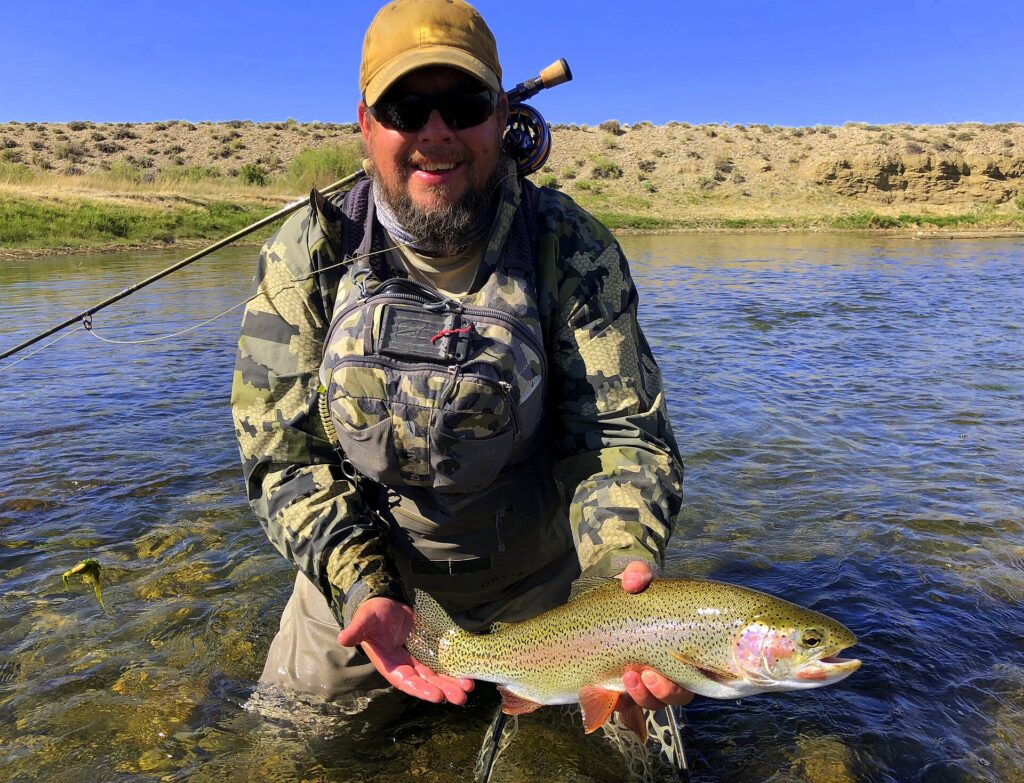
At a riffle, watch a short lane of water rather than casting across every current at once. Start close enough to see the fly and keep excess line off conflicting currents. When a fish rises repeatedly, use its position to plan the drift before making another cast. These are presentation choices you can make without changing flies after every unsuccessful pass.
In a pool or slower-looking section, pause long enough to see whether a fish returns to the same feeding position. Choose a place to stand that lets the fly reach that position ahead of your line. If you cannot control the drift from there, change the angle or shorten the cast before adding more distance.
The SF slim fly box is one option for smaller flies. Organize the dry flies so you can find each quickly, and check that the lid clears the dry-fly hackle. A slim box is less useful if packing it tightly crushes the flies you want to fish.
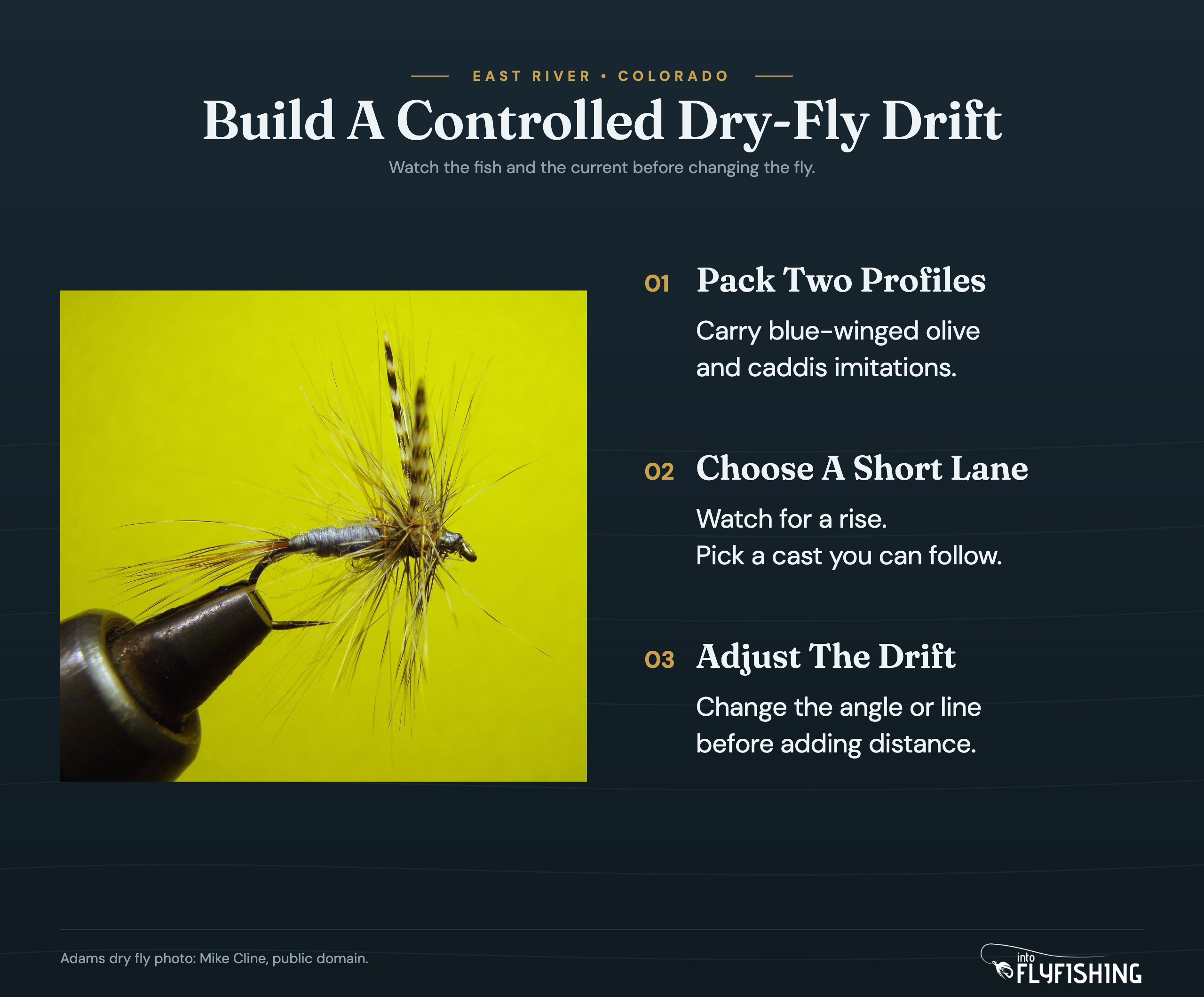
Before changing flies, give a promising drift another careful attempt. If the fly drags immediately, adjust the casting angle or the amount of line on the water. If it drifts cleanly without a response, try a different size or profile from your dry-fly selection.
Carry spare tippet for those changes. The SF fluorocarbon tippet combo offers several trout tippet sizes; match the size to the fly and rig you are using. Inspect the end after a snag or a lost fly before tying on another pattern.
For equipment choices, our trout fly rod guide provides comparisons. If controlling the presentation is the problem, revisit the fly casting guide and practice a shorter, repeatable cast. Buying another fly does not solve a drift you cannot follow.
Plan Around Runoff And The Outlet Closure
Allow flexibility for runoff in late spring and early summer. The East can change substantially during that period, so a date that worked in a previous season is a poor substitute for the current river trend. Check conditions before committing the whole day to one reach.
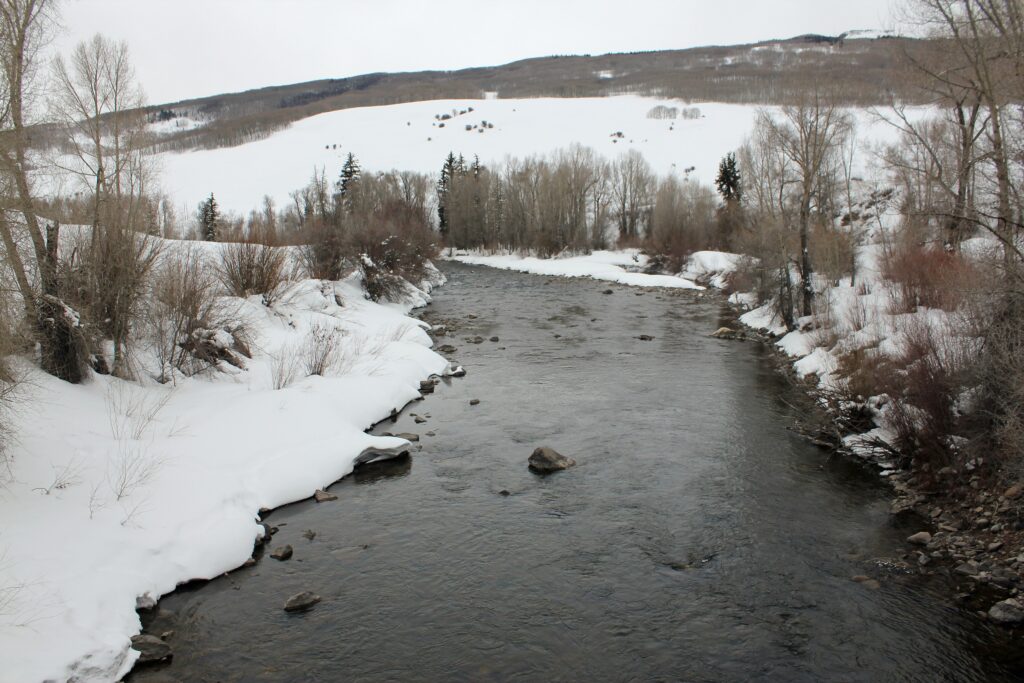
The USGS East River at Almont gauge, station 09112500, is the relevant named station for this plan. Look at the recent trend as well as the latest reading. A measurement at Almont does not tell you the depth, footing, or force of the water at every crossing.
For a summer dry-fly trip, carry the blue-winged olive and caddis choices discussed above, then let the actual surface activity decide which gets tied on. Avoid building the day around a guaranteed large hatch. A few different sizes and profiles give you room to respond to what you find.
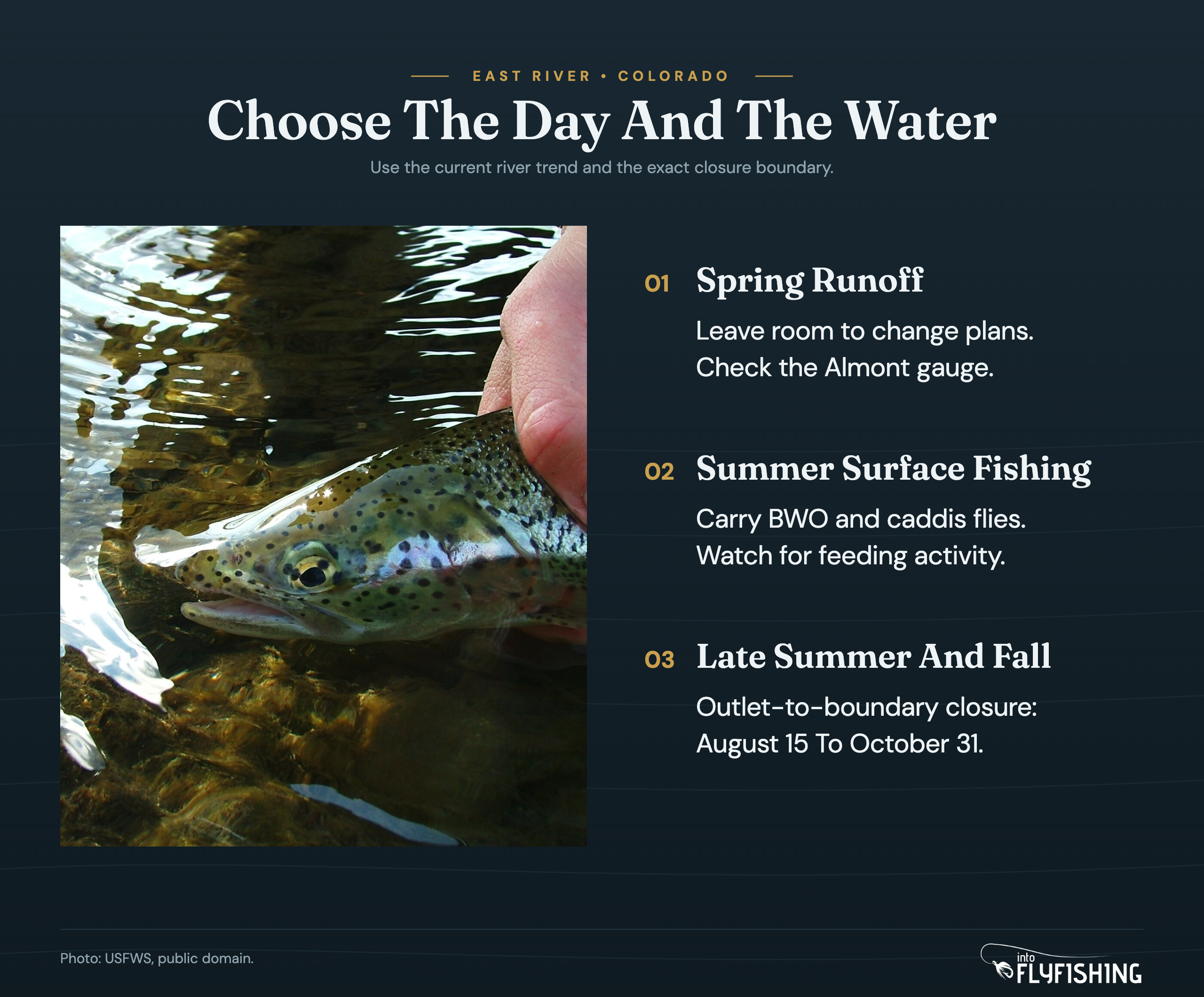
A late-summer or fall visit needs an additional access decision because the hatchery outlet-to-boundary stretch closes August 15 through October 31. Mark that reach before choosing the rest of the day’s fishing. The artificial-fly-and-lure restriction and the prohibition on taking kokanee cover the broader hatchery-boundary-to-Taylor reach.
Leave room to shorten or change an outing if the river does not suit your plan. The useful preparation is a clear choice of public water, a few presentations you can fish well, and the current conditions for your travel date. That keeps you from spending the day driving between private banks.
East River Fishing FAQs
Roaring Judy Fish Hatchery near Almont is a main public entry. Much of the valley water outside public areas is private or leased, so use the property information to choose the reach. The hatchery outlet-to-property-boundary stretch has a seasonal closure.
Fishing is prohibited from August 15 through October 31 from the hatchery outlet downstream to the Roaring Judy property boundary. That is the specific closed reach, not a closure of the entire East River.
Blue-winged olive and caddis imitations are useful dry-fly choices. Carry a few sizes and profiles, and choose the fly after watching the water rather than relying on a guaranteed hatch.
Use USGS station 09112500, East River at Almont, to inspect the recent river trend. It is a planning tool, not a safe-wading threshold for every part of the river.
Give One East River Reach A Proper Session
Roaring Judy gives you a practical starting point for an East River trout day. Once you have chosen an available stretch, work through the riffles and pools at a pace that lets you see what the fish are doing. Start with a presentation you can follow, then adjust the fly size or casting angle for a reason.
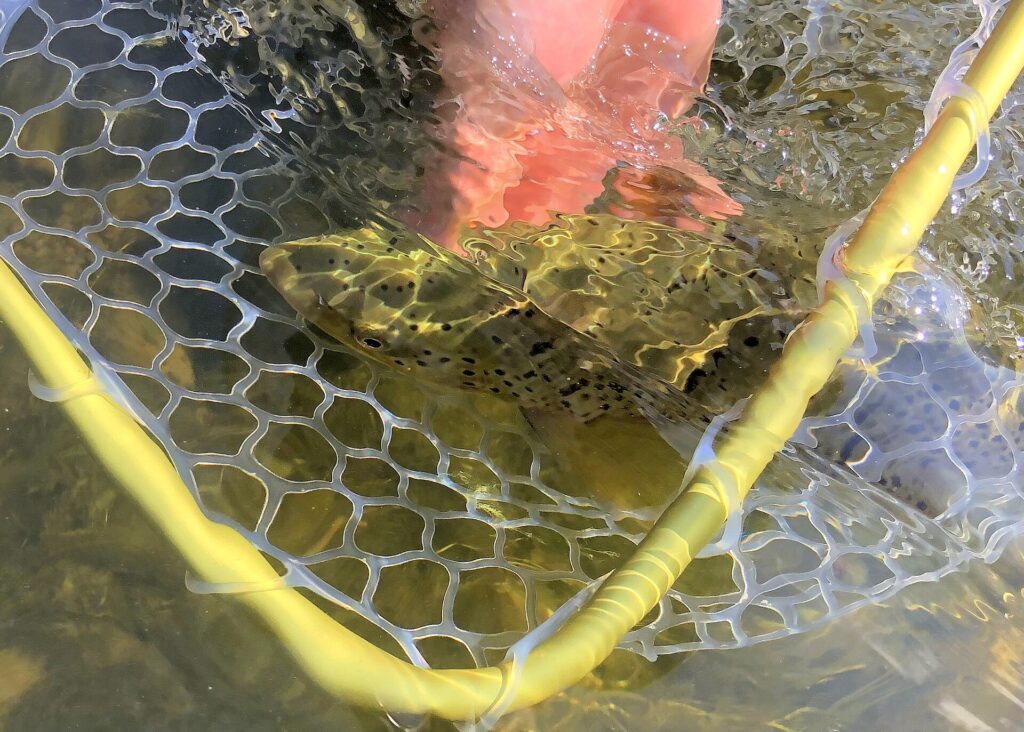
The East rewards preparation because public access is limited and the outlet has a specific seasonal closure. Settle those details before arriving, then spend the session concentrating on the water. A handful of suitable flies and a controlled drift make a useful starting plan.
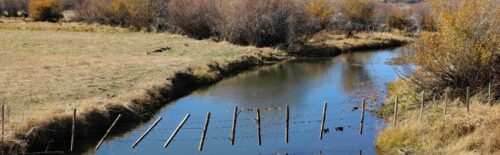
Featured photo: Jeffrey Beall / CC BY 4.0. Resized for display.
Save This Fishing Guide For Later


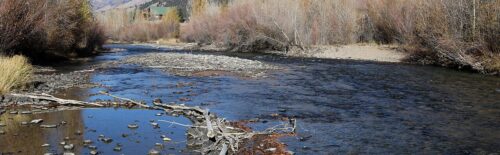
Pin 1 photo: Jeffrey Beall / Wikimedia Commons, CC BY 4.0. Cropped and overlaid with text. Pin 2 photo: Jeffrey Beall / Wikimedia Commons, CC BY 3.0. Cropped and overlaid with text.
Amazon and the Amazon logo are trademarks of Amazon.com, Inc, or its affiliates.
As a part of the Amazon Associates Program and other affiliate programs, Into Fly Fishing® may receive a comission if you order products through links on this website.