As an Amazon Associate I earn from qualifying purchases.
The Beaverhead River in southwestern Montana does not get the attention it deserves. The Madison gets the magazine covers. The Big Hole gets the pilgrimage crowd. The Beaverhead just quietly stacks fish.
This is a 70-mile tailwater fed by Clark Canyon Reservoir, running through Dillon, Montana, before meeting the Big Hole River at Twin Bridges. The upper stretch, from the dam down to Barretts Dam, is some of the most densely populated brown trout water in the state. I have fished it multiple times and come away wondering why it is not on more people’s radar.
The answer, according to our guide expert Nicolas Jovanovich, who has guided the Beaverhead professionally for 15 years, is exactly that: the river is deliberately overlooked, wedged in a corner of Montana that most anglers pass through on the way to somewhere else. That oversight is your opportunity.
Compare this river with other waters in our Montana river guide.
The Beaverhead River is a tailwater fishery in southwestern Montana running ~70 miles from Clark Canyon Dam to Twin Bridges. It holds exceptional populations of brown and rainbow trout, with nymphing the most reliable method year-round. June through August is peak season for dry fly fishing during the PMD and caddis hatches.
What Is the Beaverhead River?
The Beaverhead is a tailwater, which means it is fed by cold, stable water released from Clark Canyon Reservoir. The Bureau of Reclamation built Clark Canyon Dam in the 1960s for irrigation and flood control, and the result is a river that runs cold and clear even in midsummer, producing enormous quantities of aquatic insects year-round.
Locals call it “the ditch.” That nickname is partly affectionate and partly accurate: the dam releases are managed primarily to water crops, not to optimize fishing. But the stable temperatures and heavy moss growth that irrigation management creates have turned this small river into a factory for trout food. The bugs are everywhere, and the fish are fat.
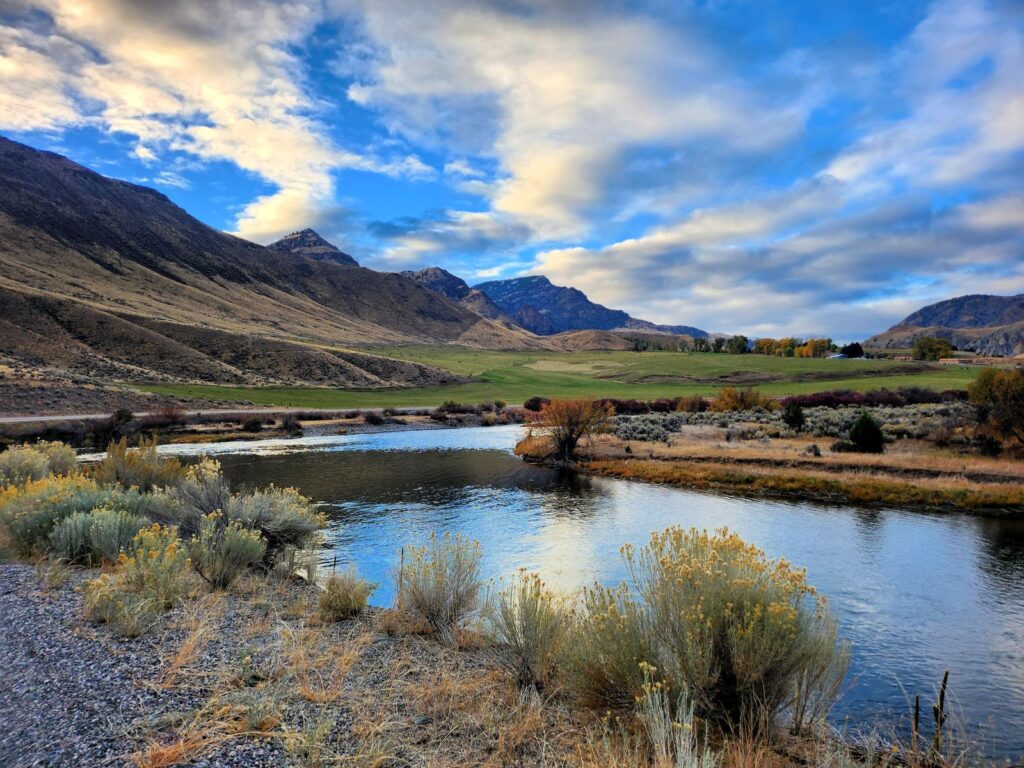
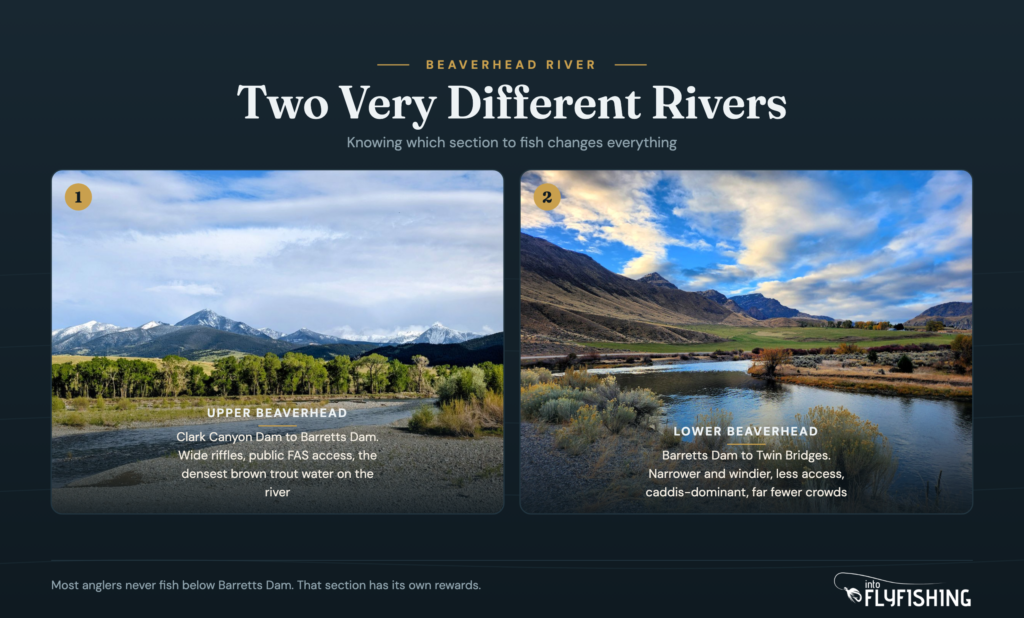
The river runs for approximately 70 miles total. Most fishing happens on the upper section, from Clark Canyon Dam downstream to Barretts Dam, where the river character and access are best. Below Barretts Dam, the Beaverhead flows through Dillon and on to Twin Bridges, where it joins the Big Hole River to form the Jefferson, one of the three source rivers of the Missouri.
The Two Sections of the Beaverhead
Understanding the difference between the upper and lower Beaverhead will save you time and set your expectations before you get there.
Upper Beaverhead: Clark Canyon Dam to Barretts Dam
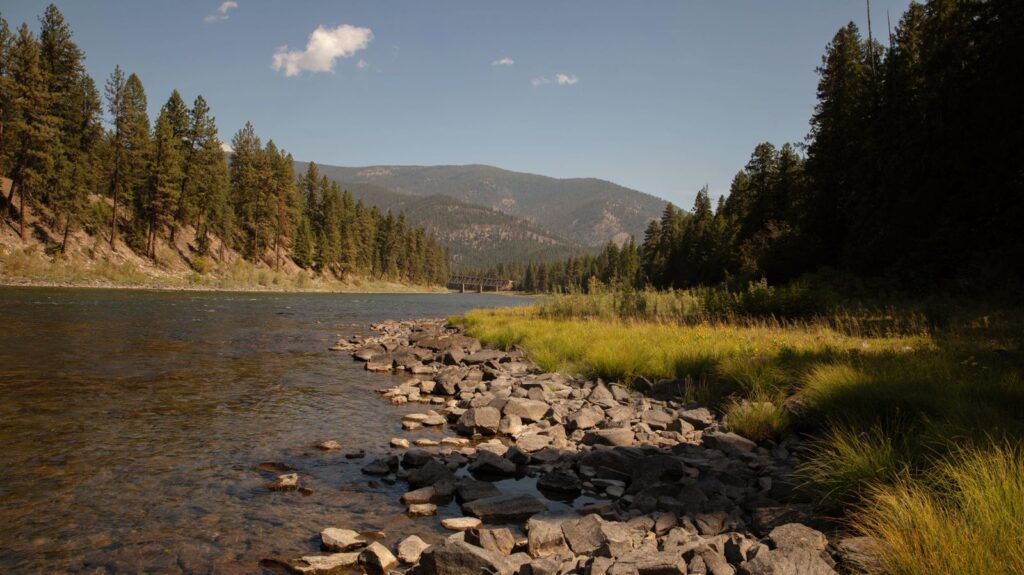
This is where the fishing is. The upper section below Clark Canyon Dam is wider, reads with riffles and bends and willow-laden banks, and has the most public access via state Fishing Access Sites. If you are planning a trip to the Beaverhead, this stretch is your destination.
The current is stronger here than you might expect for a river this size. The trout know how to use it. A 20-inch brown that looks manageable on the surface will run hard into that current and test whatever you throw at it.
This section holds the highest concentrations of large brown trout in the river, along with quality rainbows. The bug life near the dam is exceptional, with scuds and sow bugs supplementing the midge and mayfly hatches. Fish are fat and selective.
Lower Beaverhead: Barretts Dam to Twin Bridges
Once you pass Barretts Dam, the river changes. It becomes narrower and windier, running through farmland and ranch country where most of the land is privately owned. Access here is limited to a handful of specific spots.
The best public access on the lower section is where I-15 and Highway 278 come together at Pointex Slough. You can fish the slough and the lower Beaverhead right there. The fishing is not as concentrated as the upper section, but if you want to escape the crowds that float the upper river on summer weekends, the lower section gives you options.
Caddis become progressively more important the further you get from the dam. The lower Beaverhead’s caddis fishing can be excellent, especially in late summer and early fall.
Fish Species in the Beaverhead River
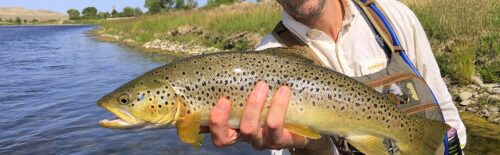
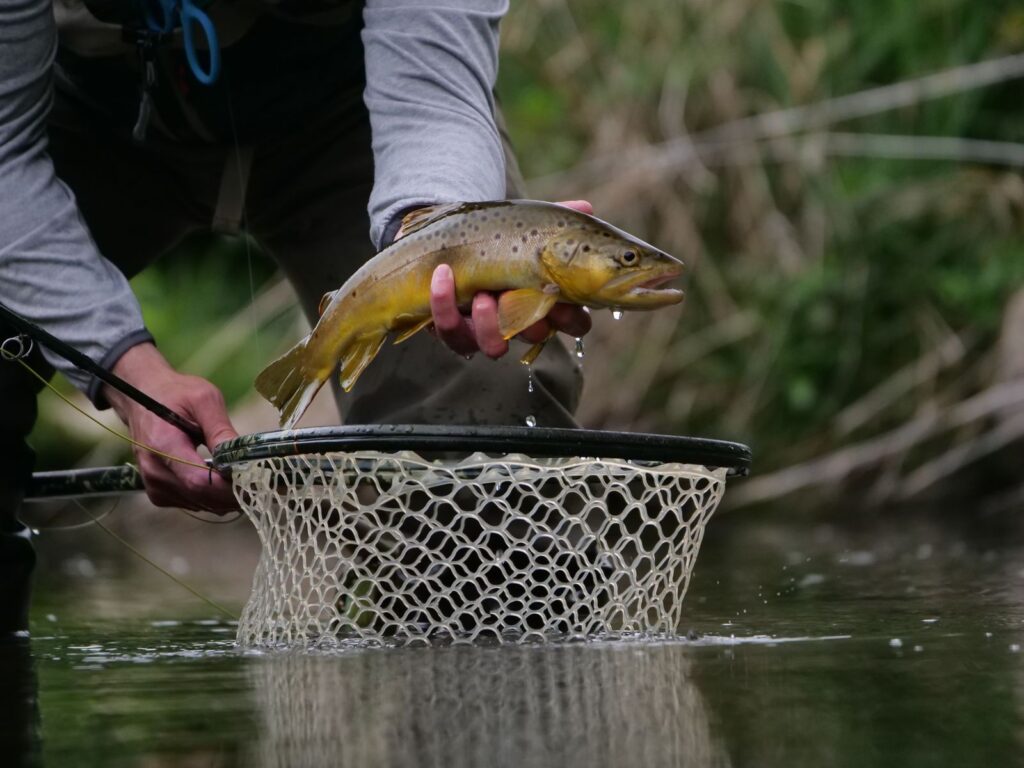
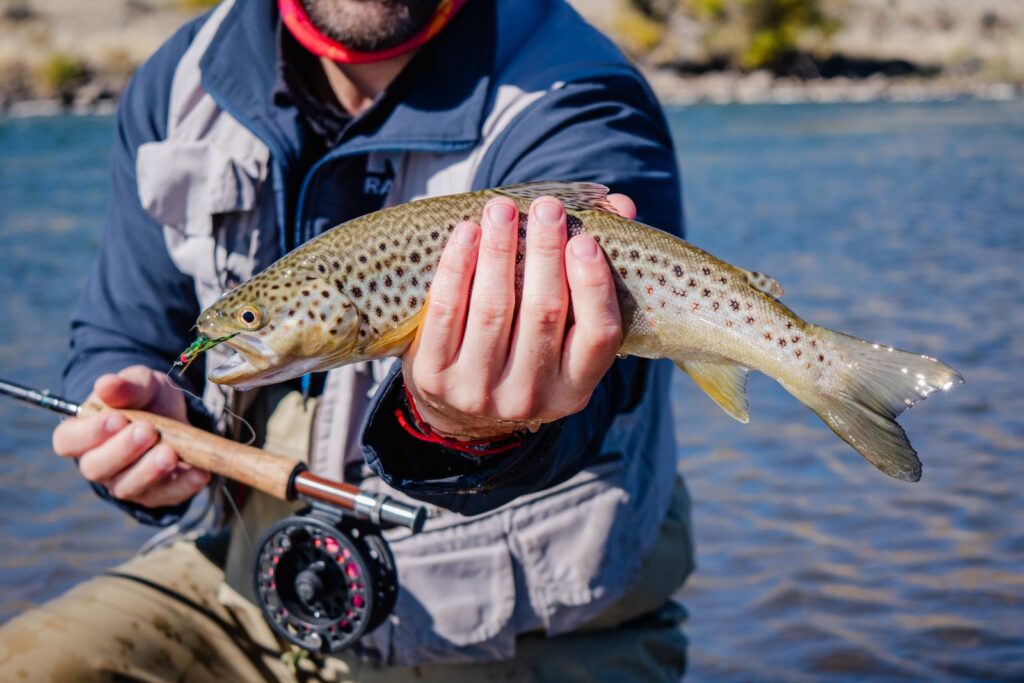
Brown trout are the Beaverhead’s defining species. The river produces more large brown trout than any other river in Montana, and that reputation is well earned. Fish in the 18 to 22-inch range are common, and fish over 24 inches are caught regularly, particularly by anglers who know where the big ones stage in late summer and fall.
Rainbow trout share the river with the browns and run a similar size range. Before Clark Canyon Dam was built, cutthroat trout were the dominant species, as the Red Rock River and Horse Prairie Creek that fed the original headwaters held strong cutthroat populations. The dam changed all that. Cutthroat are rare on the Beaverhead now.
Mountain whitefish are everywhere. This is not a complaint. The Beaverhead holds whitefish large enough that landing a Montana state record is a realistic possibility if you target them specifically. Most anglers catch them while nymphing and release them without a second thought.
Beaverhead River Hatches by Season
The Beaverhead’s tailwater character produces a longer and more varied hatch calendar than most Montana rivers. You can fish rising trout here in the middle of February with the right midge patterns. In July, there are days when you can pick your hatch: PMDs in the morning, caddis in the evening, Yellow Sallies in between.
| Hatch | Season | Sizes | Top Patterns |
|---|---|---|---|
| Midges | Year-round (peak: winter/spring) | 20-24 | Zebra Midge, Griffith’s Gnat, RS2 |
| Scuds & Sow Bugs | Year-round (near dam) | 14-18 | Pink Scud, Sow Bug |
| PMDs (Pale Morning Duns) | June-August | 16-18 | PMD Comparadun, PMD Spinner, Parachute PMD |
| Caddis | June-October (peak: late summer) | 14-18 | Elk Hair Caddis, Stimulator, Caddis Pupa |
| Yellow Sallies | July-August (mid-morning) | 14-16 | Yellow Stimulator, Yellow Sally |
| Tricos | Late July-September | 20-24 | Trico Spinner, Trico Dun |
| Streamers | Year-round (peak: Sept-Oct) | 4-8 | Woolly Bugger, Sculpin, Olive Bunny Leech |
The Beaverhead’s brown trout grow large partly because of this year-round food supply. When one hatch ends, another begins, and fish are rarely without a feeding opportunity for long.
Winter and Early Spring: Midges
Midges are the backbone of Beaverhead fishing from late fall through early spring. The tailwater keeps temperatures stable enough for Chironomid activity even when most other Montana rivers are running ice or too cold for surface feeding.
Fish midge larvae and pupae on light tippet under a small indicator. Size 20 to 24 patterns in black, red, and olive cover most situations near the dam. Griffith’s Gnats and midge cluster patterns on top work during heavy emergences.
Late Spring and Summer: PMDs and Caddis
The PMD hatch is the event anglers travel to the Beaverhead specifically for. Pale Morning Duns emerge throughout summer, and when the hatch is on, big browns come out of their hiding spots and feed aggressively on the surface. PMD spinners in the evening are worth carrying separately from the dun patterns.
Caddis are present throughout the year and become increasingly important the further you fish from the dam. Elk Hair Caddis and Stimulator patterns in size 14 to 18 cover most surface situations. Caddis pupae fished on a swing or dead-drift through the lower sections of the upper river can be extremely effective.
Midsummer: Yellow Sallies and Tricos
The Yellow Sally hatch on the Beaverhead is remarkable. In the faster riffle sections, these small stoneflies emerge in clouds during midsummer, and the fish respond. Yellow Stimulators and Yellow Sally patterns in size 14 to 16 produce well during the hatch windows, typically mid-morning to early afternoon.
Trico midges also feature in late summer, creating spinner falls that can bring every trout in a flat to the surface. Trico fishing is technical: small flies, fine tippet, and accurate presentations on calm water.
Fall: Caddis and Streamers
September and October bring cooling water and aggressive streamer fishing as browns move into pre-spawn mode. Large streamer patterns in olive, black, and white provoke strikes from fish that ignored everything else all summer. Fall is also when the caddis fishing on the lower sections is at its peak. If you are planning a broader tailwater tour, fly fishing the Animas River in Colorado pairs well with a Beaverhead trip on the drive down.
The crowds thin out significantly in fall. If you can schedule a trip in September, you will have sections of the river to yourself that had guided rafts stacked up in July.
Tactics for Fishing the Beaverhead
The Beaverhead rewards versatility. You need to nymph, you need to throw a dry fly, and if you want the biggest fish, you need to throw streamers. None of these is optional.
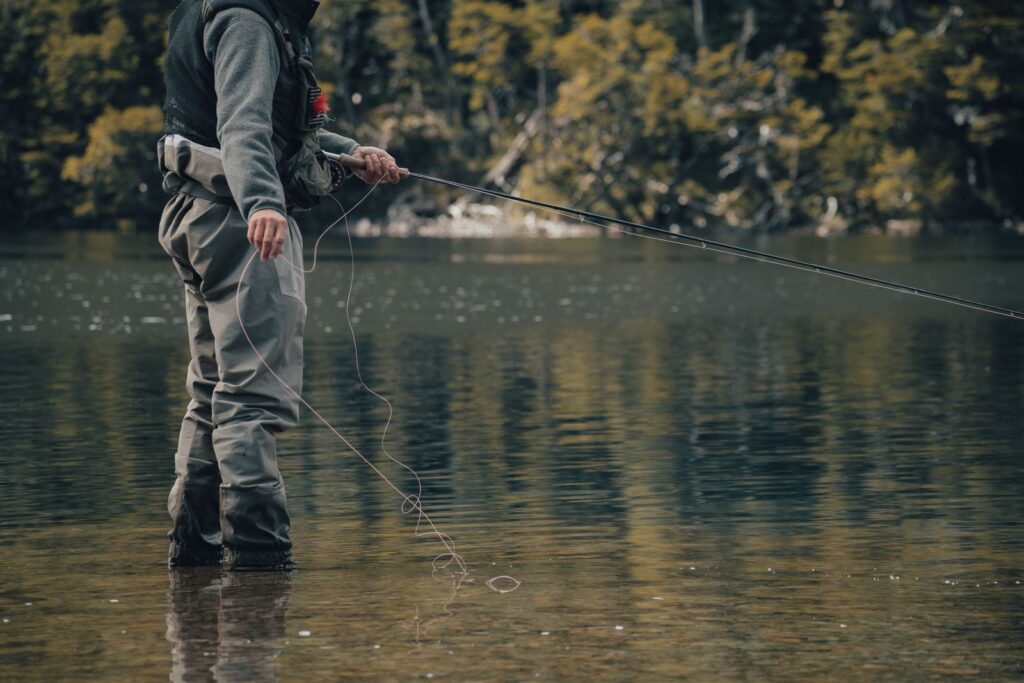
Nymphing
Nymphing with an indicator is the most reliable method on the Beaverhead, full stop. The underwater bug life is so dense and varied that there are always trout feeding subsurface, even when nothing is hatching on top. A standard two-fly rig with a larger attractor nymph over a smaller midge or PMD nymph works on most sections throughout the year.
Scud patterns and sow bug imitations are important near the dam and in the first few miles below it. Fish them on lighter tippet than you think you need; the water is clear and the fish see everything. Czech nymphing and tight-line techniques work well in the faster riffle sections where indicator fishing is harder to manage.
Dry Fly Fishing
The Beaverhead can be one of the best dry fly rivers in Montana when the hatches align. During a PMD emergence, the surface feeding is sustained and deliberate, not the frantic smashing you see on freestone rivers. Matching the hatch matters here. Fish that are locked onto PMD duns will refuse an Elk Hair Caddis.
Presentation matters as much as pattern selection. The Beaverhead’s current has subtle seams and conflicting flows that create drag faster than you expect. Reach casts and mending are necessary on most dry fly presentations. If you are not already comfortable reading water for trout, study the riffles and inside seams before you put a fly on the water.
Streamers
Streamer fishing on the Beaverhead is about targeting the biggest fish in the river. Large browns hold in the undercut banks and deep bends throughout the river. Stripping a streamer tight to the bank, with a bit of twitch to trigger the strike, is how you get them.
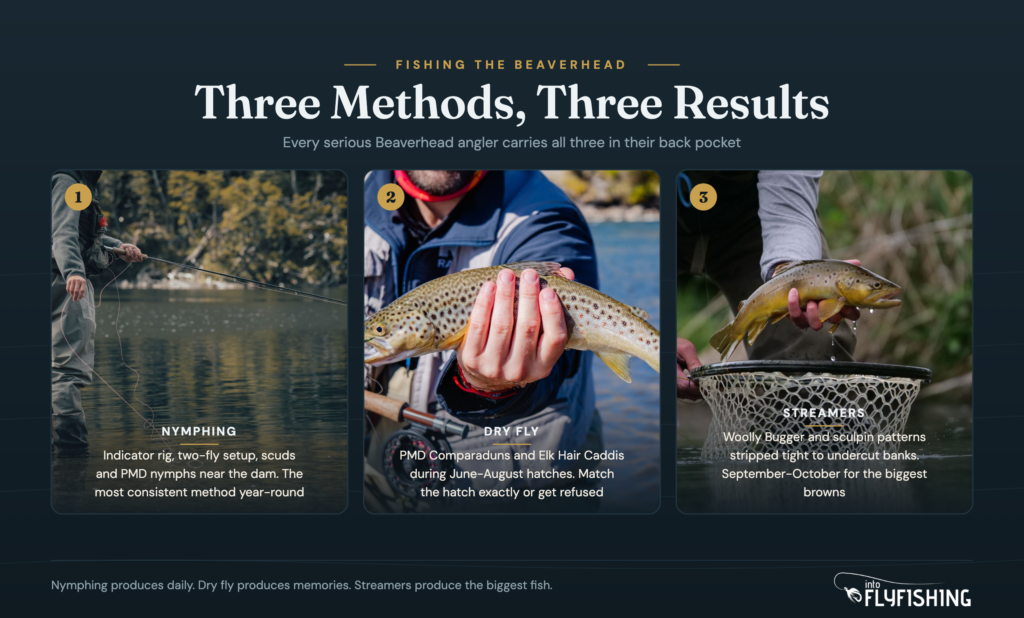
You do not need a sink tip on the Beaverhead. A floating line with a heavier streamer or a small amount of added weight is enough to get the fly into the zone. The current does the rest. Strip in short, aggressive bursts and be ready for a take at any point in the retrieve.
Gear for the Beaverhead River
You need two rod setups to fish the Beaverhead properly. A 9-foot 5-weight with a floating line covers dry fly fishing and lighter nymphing. The 5-weight is the workhorse for most of the season. A 9-foot 6-weight with a floating line handles heavy multi-fly nymph rigs and streamer fishing. The 6-weight gives you the backbone to fight big browns in strong current.
Floating line works for all three methods on this river. Do not buy a sink tip specifically for the Beaverhead; it is not necessary, and you will not use it.
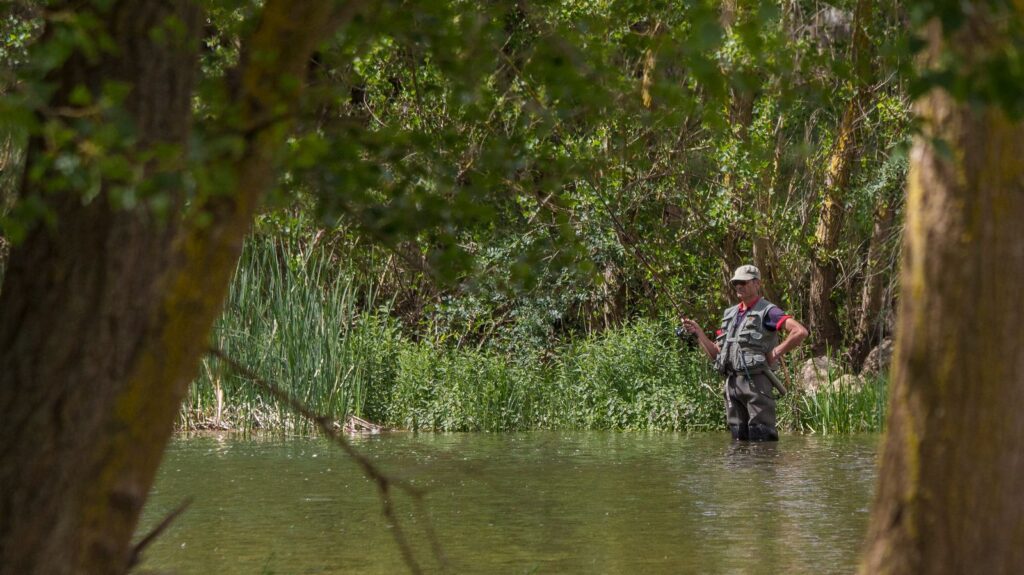
Tippet runs lighter than most rivers because the water is so clear. 5X tippet covers most dry fly and nymphing situations. Drop to 6X during Trico spinner falls or when fish are being particularly selective. Use 3X to 4X for streamers.
If you are looking to upgrade your rod before a Beaverhead trip, check out our guide to the best fly rods for trout for specific recommendations across budget ranges.
Access Points: Float vs. Walk-In Fishing
The Beaverhead is excellent for both float and wade fishing, and your choice depends more on your experience level and the time of year than anything else.
Floating opens up the river. A full-day float covers water you will never reach on foot and puts you into sections where fish have seen very little pressure. The Beaverhead is a float fisherman’s river, with plenty of state Fishing Access Sites where you can launch and take out. That said, the channel is narrow and the bends are tight. If you are new to rowing, hire a guide or go with someone who knows the river. This is not the place to learn on the oars.
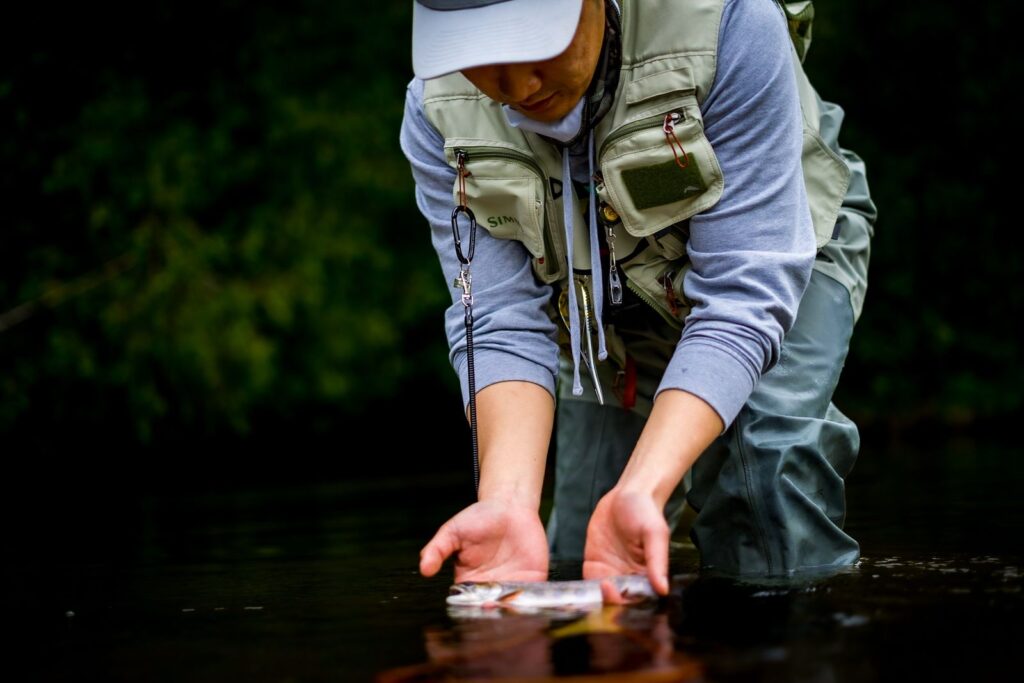
Wade fishing is excellent and productive. Montana’s stream access law means the riverbed cannot be privately owned, so you can wade between the high-water marks even through private land as long as you stay in the water. The FAS sites give you legal access to put in on foot, and the Henbury Homestead and Henberry Walk-In Access are designated walk-in-only sections that keep float traffic off specific stretches, giving wading anglers a real advantage.
On summer weekends, two sections of the river operate on a rotating closure for commercial guides and out-of-state float fishermen: one section is closed on Saturdays, one on Sundays. Walk-in anglers are not affected by these closures. You can still fish both sections on foot during any weekend closure.
Beaverhead River Regulations
Check Montana Fish, Wildlife and Parks regulations before you go. Two rules in particular catch anglers off guard.
The first is the weekend rotation closure system described above. If you are floating with a guide from out of state, specific sections are closed to you on specific days. Know which section is closed before you launch.
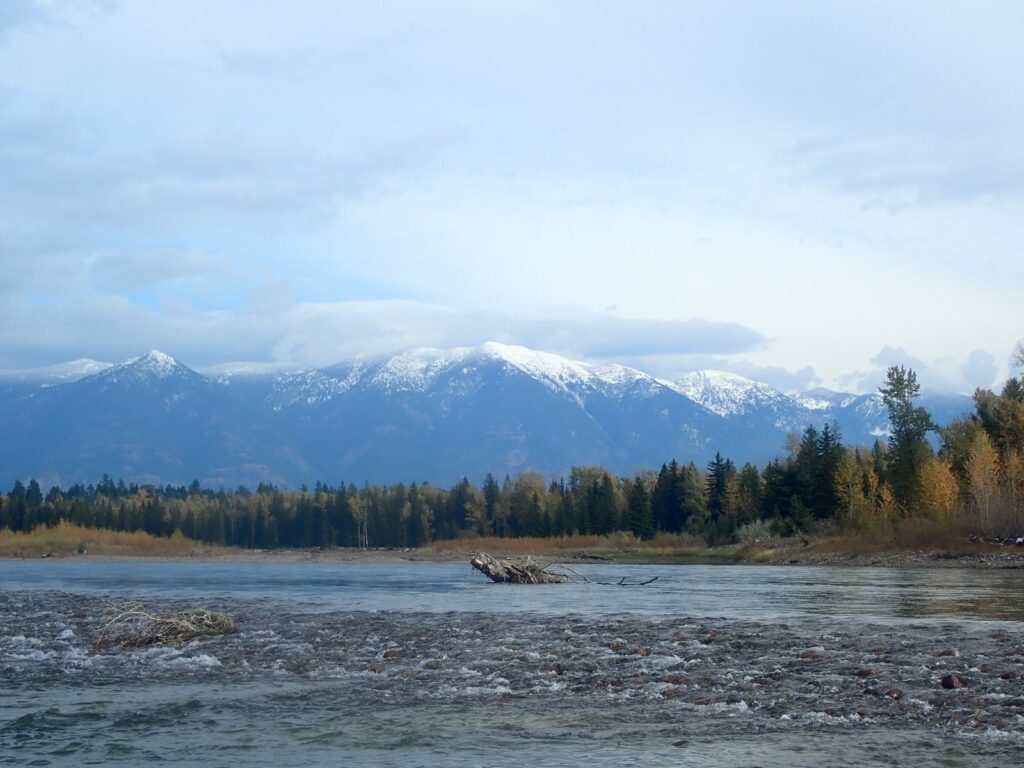
The second is Montana’s heat restriction policy. When water temperatures hit dangerous levels in summer, the state requires anglers to stop fishing at 2pm and not resume until midnight, when the water has cooled overnight. If conditions get severe enough, Montana will close the river entirely until temperatures drop. Check the FWP website before any summer trip.
For a Montana fishing license, you can buy it online from Montana Fish, Wildlife and Parks or at the local fly shops in Dillon. Montana accepts digital license copies on your phone. Download it before you leave the wifi zone, because there is no cell service on most of the river. Our guide to getting a fishing license in every state has the current Montana licensing information.
When to Fish the Beaverhead River
March through May is the underrated sweet spot. The traffic is light, water temperatures are rising, and the fish are eager. Spring midge hatches and early season nymphing produce well, and you will share the river with almost no one. The weather in southwestern Montana in April can be cold and unpredictable, so pack layers.
June through August is peak season. PMDs, Yellow Sallies, and caddis all overlap during this window, and the dry fly fishing can be extraordinary. Float traffic is heavy on summer weekends. If you are fishing in July or August, go on weekdays or plan around the weekend rotation closures.
September and October are the second-best time to visit. The crowds are gone, the browns are aggressive ahead of spawn, and streamer fishing reaches its seasonal peak. Water temperatures drop back to comfortable levels and the heat restriction rules go away.
Winter fishing is possible and can be excellent for midges near the dam, but bring the right gear. Southwestern Montana winters are not mild.
Getting There: Dillon, MT and Local Resources
Dillon is the base town for the Beaverhead. It is a small city but has everything you need: fly shops, lodging, restaurants, and a few excellent local guides who know the river as well as anyone.
Dillon has a small airport but it handles private charters only. For commercial flights, your options are Butte, which is under an hour to the north; Bozeman, which is less than two hours away and has the most flight options; or Missoula and Idaho Falls, both around two hours. Most anglers fly into Bozeman and rent a car.
In Dillon, stop at Anderson’s Tackle or Frontier Anglers before you fish. Both shops carry the local fly patterns and have current fishing reports. Buy something when you ask for intel; these shops make local guiding and the river’s continued health possible.
For a guide, look up Montana Trout Fishers. Nicolas Jovanovich, who has guided the Beaverhead for 15 years and appears regularly in our Into Fly Fishing videos, operates through that service.
The Beaverhead is one of the great rivers in our full breakdown of fly fishing in Montana. If you are building a multi-river trip, the Big Hole River is a short drive from Twin Bridges, and Rock Creek near Missoula is worth the detour.
FAQ: Fly Fishing the Beaverhead River
The Beaverhead holds brown trout, rainbow trout, and mountain whitefish. Brown trout are the dominant species and can grow to 24 inches and beyond. Cutthroat trout were historically present but are now rare following the construction of Clark Canyon Dam.
The Beaverhead is fishable year-round. Peak season is June through August for dry fly fishing during the PMD, Yellow Sally, and caddis hatches. Spring (March to May) offers excellent nymphing with light pressure. Fall is best for streamer fishing as browns go into pre-spawn mode. In summer, Montana heat restrictions can limit fishing to morning hours during hot spells.
The Beaverhead is one of the best trout rivers in Montana. It produces more large brown trout than any other river in the state, with fish in the 18 to 24-inch range caught regularly. The prolific hatch calendar and clear tailwater conditions make it exceptional for both nymphing and dry fly fishing.
The Beaverhead runs approximately 70 miles from Clark Canyon Dam to its confluence with the Big Hole River at Twin Bridges, Montana. The prime fishing section is the upper stretch from Clark Canyon Dam to Barretts Dam.
Yes. A Montana fishing license is required. You can purchase one online through Montana Fish, Wildlife and Parks, or at local fly shops in Dillon. Montana accepts digital copies on your phone, but download the license before you lose cell service on the river.
Final Thoughts on Fly Fishing the Beaverhead River
I keep coming back to this river because it delivers without drama. There is no need to be on the water at first light to beat the crowd. You are not racing another angler to the best run. The Beaverhead gives you a good reason to drive past the well-publicized rivers and stop in Dillon for a few days.
If I had one day on it, I would float the upper section from Clark Canyon Dam to the first access site below, fish a two-fly nymph rig until the PMD hatch started, then switch to a dry dropper and work every rising fish I could find. That is a full day, and it almost always produces.
The big browns are in the undercuts. The PMDs are reliable. The crowds go elsewhere. That combination is rare on a river this productive, and it is worth protecting. Follow the regulations, support the local fly shops, and leave the fish in the water.
Amazon and the Amazon logo are trademarks of Amazon.com, Inc, or its affiliates.
As a part of the Amazon Associates Program and other affiliate programs, Into Fly Fishing® may receive a comission if you order products through links on this website.