As an Amazon Associate I earn from qualifying purchases.
The Big Hole River earns the nickname “The Last Best River” for a reason. It runs more than 150 miles through southwest Montana and holds five species of wild trout, including Arctic grayling that have no business surviving this far south.
I’ve fished a lot of Montana rivers. The Big Hole is one of the few where I’ve had real trouble deciding what to target next. The hatch calendar is one of the best in the state. The fish are wild. The access, for a Montana river of this quality, is surprisingly good.
This guide covers the full picture: the three distinct sections of the river, the five species that live in it, the hatches that drive the best dry fly fishing, and everything you need to plan a trip that matches the time of year you can actually go.
Compare this river with other waters in our Montana river guide.
The Big Hole River in southwest Montana holds brown trout, rainbow trout, cutthroat trout, brook trout, and one of the last native populations of Arctic grayling in the lower 48. The best fishing runs March through October, with the Skwala hatch (March-April), salmonfly (May-June), and Trico spinners (July-August) marking the peak dry fly windows.
What Makes the Big Hole River Special
Most trout rivers in the lower 48 hold brown and rainbow trout. A few of the better ones add cutthroat. The Big Hole holds all three, plus brook trout and Arctic grayling in the same watershed. On the same day.
The grayling is the headline. Montana FWP considers this population one of the last self-sustaining native grayling populations in the continental US. They’re not planted here. They survived on their own in the upper reaches of the river, the way they’ve been doing since before there were roads through the valley.
Beyond the species count, the river runs through dramatically different water types from source to mouth. The upper meadow section near Wisdom fishes like a spring creek: clear water, visible fish, presentations that have to be good. The canyon section runs like classic western pocket water with some legitimate gradient and fish stacked in every seam. The lower river below Melrose is wide, slower, and lined with cottonwoods that turn gold in October. You can spend a week on the Big Hole and not fish the same kind of water twice.
The trout density in the canyon section runs up to 3,000 fish per mile, which puts it in the same conversation as any blue-ribbon water in the state. The hatch calendar covers March through October with something significant firing in every month. And unlike some famous Montana fisheries that have gone from secret to circus in the past decade, the Big Hole still has stretches where you can fish a whole morning without seeing another angler, as long as you’re willing to walk five minutes from the access site.
It also sits about two hours from Bozeman’s airport, which puts it within reach of a long weekend trip. You don’t need a week to get something out of this river, though a week is the right amount of time if you can manage it.
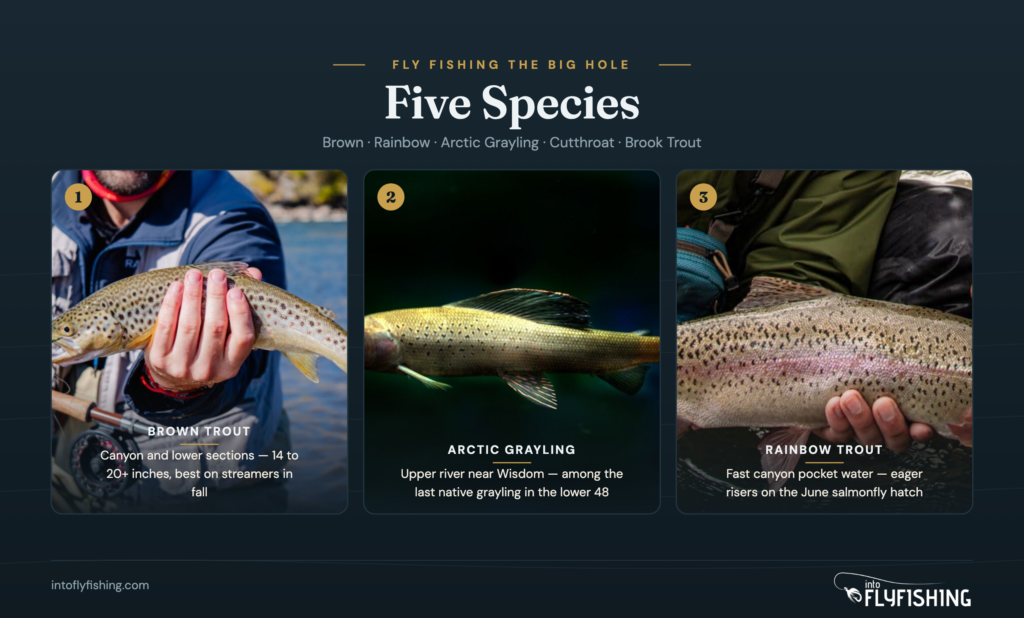
Species: Five Trout in One River
Five species is not marketing. The Big Hole is one of a handful of rivers in North America where you could realistically catch all five on the same day if you fished the right sections.
All five species share this watershed. Most rivers in the West hold brown and rainbow trout at best; finding all five wild species in the same system is rare.
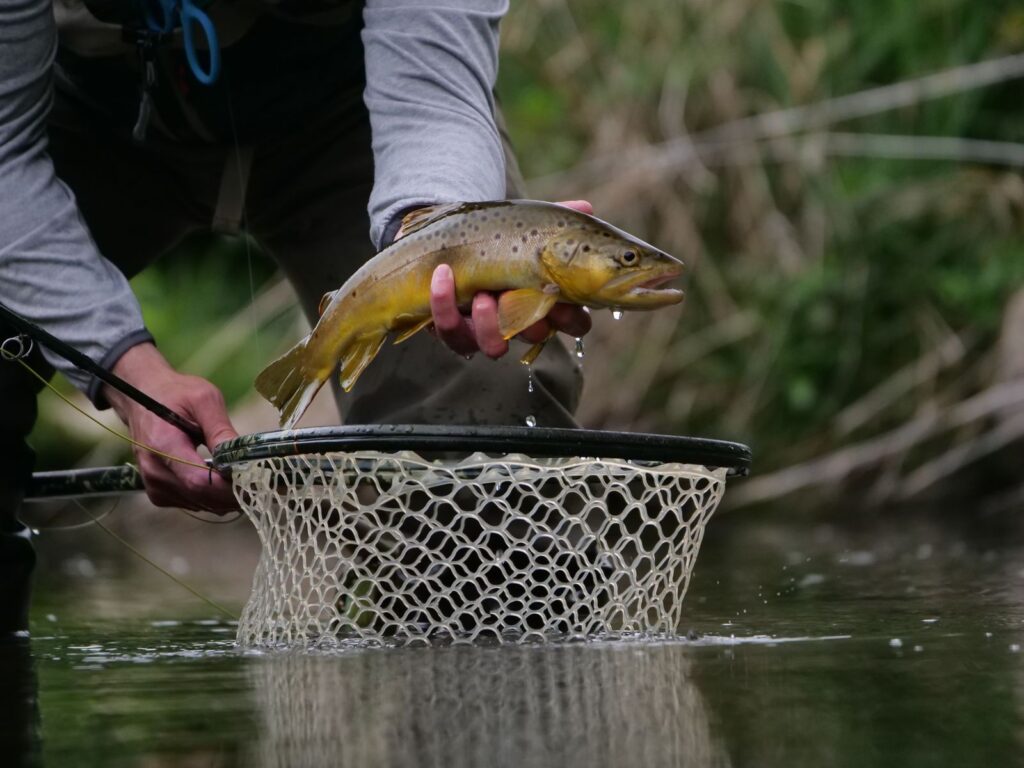
Brown Trout
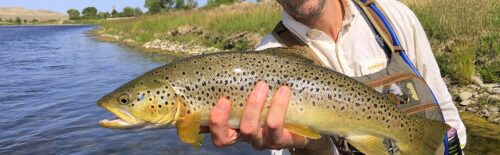
Browns are the backbone of the Big Hole. They’re throughout the river from the North Fork confluence downstream, and they run large in the lower sections. I target them on streamers in October when the big ones move shallow and start eating aggressively in preparation for the spawn, but they’ll eat a dry through most of the season if you’re matching the hatch.
The canyon section holds the highest concentrations. Browns in the 14- to 18-inch range are common fish; anything over 20 inches shows up regularly, especially on the lower river in the deep bends and undercut banks. The canyon’s mix of pools, runs, and pocket water gives brown trout everything they need, and they’re fat and healthy here.
For streamer fishing, an articulated pattern in olive or black stripped through the slow side of a pool is the standard approach in fall. In summer, they’re on the surface for the major hatches just like the rainbows.
Rainbow Trout
Rainbows share water with the browns throughout most of the river. They tend to hold in faster, more oxygenated water, which makes the canyon runs and pocket water the productive spots through summer. When the salmonfly hatch fires in June, rainbows are often the first fish to the surface and the most enthusiastic risers.
They average a bit smaller than the big browns, but a 16-inch canyon rainbow that runs upstream and jumps twice before you land it is not a disappointment. They fight harder weight for weight than any other species in this river.
If you want to get into the specifics of reading water and targeting rainbows specifically, our full guide to fly fishing for rainbow trout covers the tactics that transfer across any western river.
Arctic Grayling
The grayling draws anglers from across the country who want to catch a native population. They’re in the upper river, concentrated in the reaches near Wisdom and the meadow sections above the North Fork. A size 14-16 dry fly is all you need. They eat aggressively and aren’t picky about pattern the way a selective spring creek brown might be.
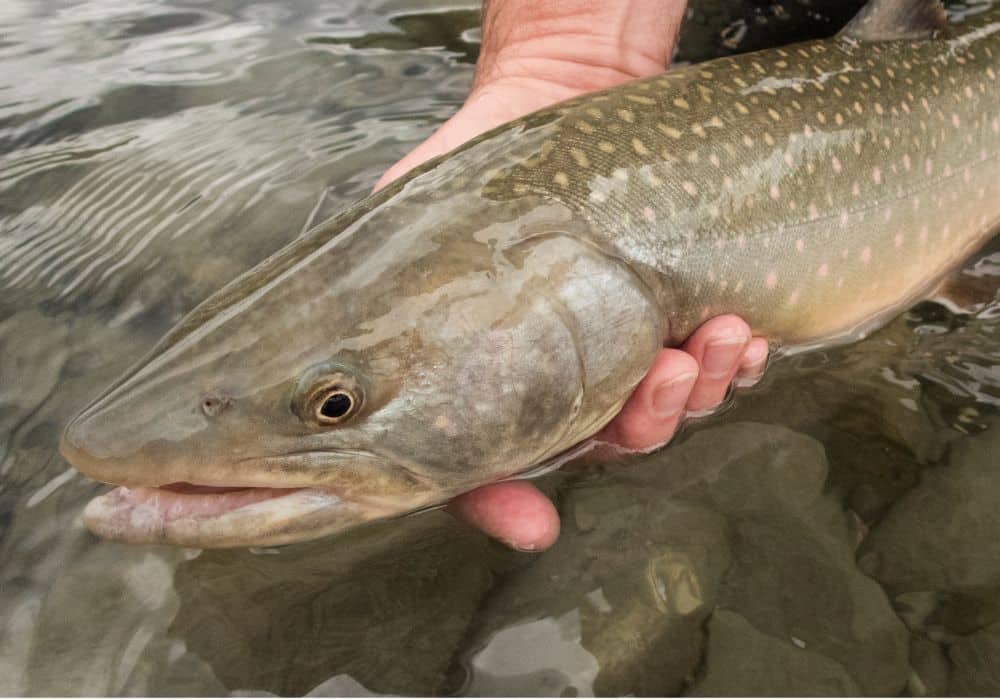
They’re not large: the upper river fish run 10 to 14 inches on average, and a 15-inch grayling is a good fish here. But that’s not why you go. You go because these fish should not exist this far south in the 21st century, and they do. The sail-like dorsal fin is unlike anything else in Montana trout fishing. Handle them quickly and return them to the cold water. They’re worth more in the river than they are in a photo that takes 30 seconds too long.
Plan to fish the upper section in the morning when water temperatures are coldest. Grayling are more sensitive to warm water than brown or rainbow trout, and on hot summer afternoons they go deep and stop feeding.
Cutthroat and Brook Trout
Cutthroat are present in the upper reaches alongside the grayling, holding in the same meadow stretches and shallow riffles. They’re opportunistic feeders and will eat a dry fly fished through the same runs where grayling are rising. Native cutthroat in this kind of setting are worth appreciating as what they are: wild fish that belong here.
Brook trout show up throughout the headwater tributaries and the upper main stem near the headwaters. Neither species dominates the river the way browns and rainbows do once you move downstream, but in the upper sections they fill out what is already a remarkable species count for a single river system. If you’re fishing the upper Big Hole with a long leader and a small dry fly, expect to catch all five species in the same day.
The Three Sections of the Big Hole
The river changes character completely from top to bottom. Which section you fish determines what gear you bring, what flies you tie on, and how you spend the day.
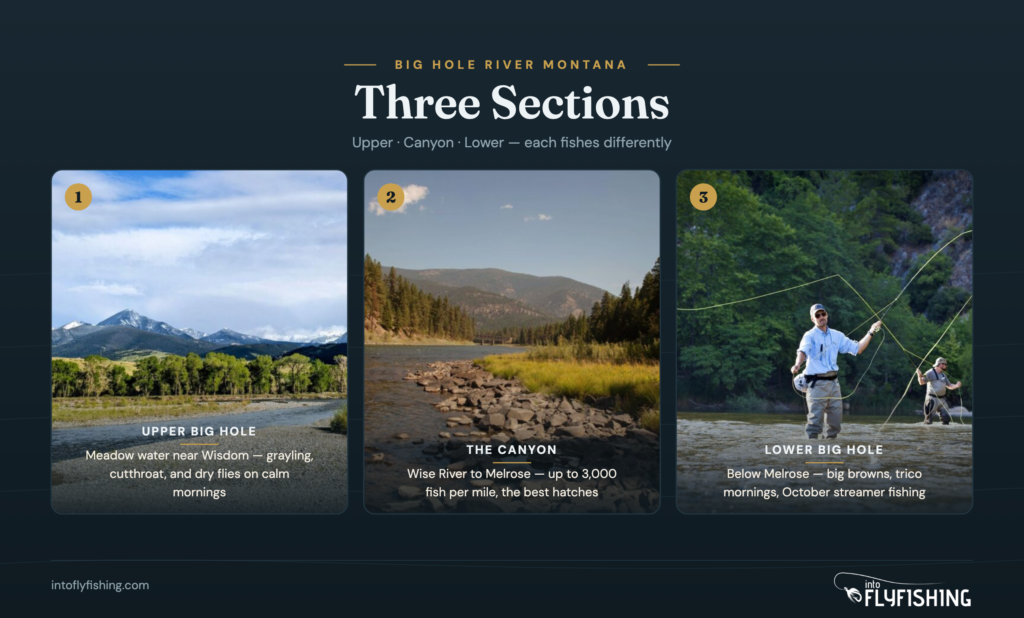
Each section fishes differently enough that you could spend a week on the Big Hole without repeating the same type of water.
Upper Big Hole: Wisdom to Wise River
This is meadow water. The river winds through wide-open agricultural valley with the Beaverhead and Pioneer Mountain ranges visible in every direction. The gradient is low, the current is steady and readable, and the fish average 10 to 14 inches. The grayling are here and the dry fly fishing on calm mornings can be as good as anything in Montana.
Wade fishing is the right call in this section. There’s public access throughout, the banks are walkable, and the softer water rewards careful presentations over aggressive ones. A 9-foot leader tapered to 5X and a size 14 dry fly is the standard setup. Fish the edges of the current seams and the inside bends where trout hold in slower water.
This is where I’d send someone who wants a technical dry fly experience without the crowds that show up in the canyon section during the salmonfly hatch. In June, while the canyon is lined with drift boats, the upper meadow section is still fishing well and you might have whole bends to yourself.
Big Hole Canyon: Wise River to Melrose
The canyon is what most people mean when they talk about the Big Hole. The river drops into the mountains near Dewey and doesn’t fully open up again until Melrose. The water type changes every quarter mile: deep pools, long classic runs, pocket water, and some legitimate rapids in the tighter spots that ask for real rowing on the part of whoever’s in the sticks.
This is where the trout density peaks. Up to 3,000 fish per mile in the best stretches, all four of the major species, and the most intense hatches on the river. The salmonfly hatch draws crowds here every June, and for good reason. When the big stoneflies are moving and the fish are looking up, it’s as good as it gets on a Montana river.
Drift boat fishing dominates the canyon, but there’s enough public wade access to keep a wading angler productive for multiple days. Look for the FWP access sites between Divide and Melrose along the Big Hole River Road. The best wading spots are at the tail-outs of long pools and the edges of riffles where you can work a dry fly without getting pushed off your feet by the current.
Lower Big Hole: Melrose to the Mouth
Below Melrose the river flattens out and widens considerably. The character shifts from canyon pocket water to long, slower runs with gravel bars, braided channels, and cottonwood-lined banks that turn gold in October. The lower river is float fishing territory. Wade anglers can work it, but a drift boat is the better tool down here.
Brown trout hold in the deep bends and undercut banks. They’re the target on the lower river, and the bigger specimens in this section are large fish. The trico hatch fires on calm August mornings and produces some of the most rewarding dry fly fishing on the entire river: rising fish in flat light, long leaders, small flies, and enough fish activity to keep you focused for three hours straight.
Fall streamer fishing for big browns is the other reason to make the drive to the lower sections. October into early November, when the water cools and the spawn kicks in, large browns come out of the deep water. An articulated streamer worked slowly through the bend pools early in the morning is the approach that produces the biggest fish of the year on this stretch.
When to Fish the Big Hole River
The Big Hole fishes from March through October, but each season asks something different of you.
Spring: March Through May
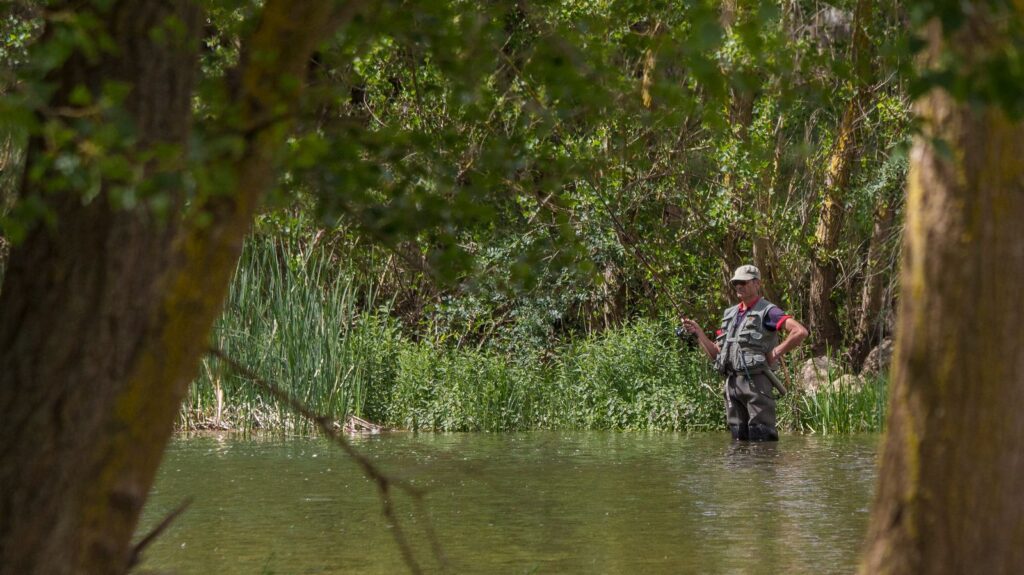
March through April is Skwala season. The Skwala is a large stonefly that hatches before runoff and before most other Montana rivers wake up, which makes the Big Hole one of the state’s most compelling early-season destinations. Water temperatures are cold, fish are hungry after winter, and you’ll fish size 8-10 Skwala dries or nymphs depending on conditions.
By May, the salmonfly hatch starts in the lower river and works upward. Runoff can blow out sections of the river in late May, so check conditions before you drive out.
Summer: June Through August
June is salmonfly month, and the canyon section is the place to be. The salmonfly and golden stonefly hatch is one of Montana’s most famous fly fishing events. Fish stack up in the riffles and eat dries that look like large, clumsy insects because that’s what they are.
July and August bring heat, and with it, Hoot Owl restrictions. Montana FWP issues these restrictions when water temperatures stress trout, limiting fishing to the morning hours. Check current conditions before heading out. The trico hatch on the lower river is the summer bright spot: early mornings, calm water, and visible rising fish taking tiny spinners.
Fall: September and October
September and October are my favorite months on the Big Hole. The crowds thin out, the cottonwoods turn gold, and the brown trout start moving. Blue-winged olive hatches fire on overcast days in September. By October, big browns are staging near the mouths of tributaries and they’ll eat a streamer stripped hard through the deep bends.
Air temperatures can drop fast in October; bring layers and expect some cold mornings. The trade-off is that you’ll likely have long stretches of river to yourself.
Big Hole River Hatches and Fly Patterns
The hatch chart on the Big Hole is one of the most complete on any Montana river. There’s fishable surface action from March through October if you know what to look for.
| Hatch | Approx. Dates | Key Flies | Best Section |
|---|---|---|---|
| Skwala | March to April | Skwala Dry/Nymph #8-10 | Canyon, Upper |
| Salmonfly | May to June | Sofa Pillow, Pat’s Rubber Legs #4-8 | Canyon |
| Golden Stone | June to early July | Golden Stimulator #6-10 | Canyon, Upper |
| PMD | June to August | PMD Dry/Emerger #16-18 | All sections |
| Trico | July to August | Trico Spinner #18-22 | Lower, Canyon |
| Terrestrials | July to September | Hopper, Beetle, Ant #6-14 | All sections |
| BWO | September to October | BWO Dry/Emerger #16-18 | All sections |
Local fly shops in Melrose and Twin Bridges track the hatches daily. A call the morning you fish is more reliable than any printed chart.
Skwala Hatch (March-April)
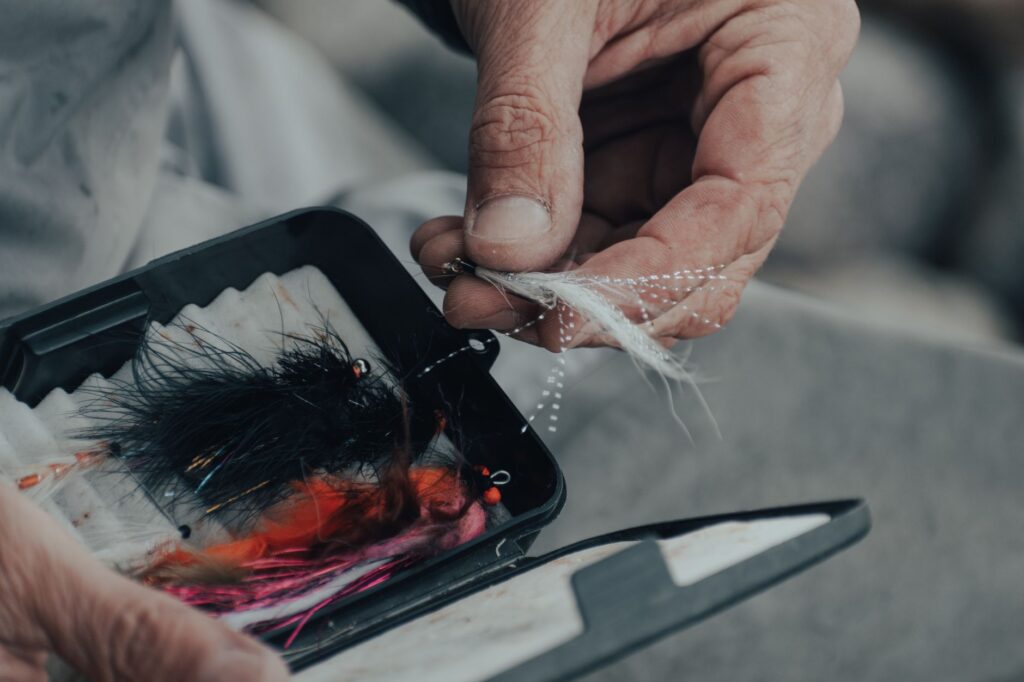
The Skwala is your entry point to the season. This large stonefly hatches in water that’s still cold, often with snow on the banks. Fish a size 8-10 Skwala dry or a Skwala nymph under an indicator when the surface action isn’t happening. The canyon section fishes well during this hatch, and you’ll find fewer anglers than you will in June.
Salmonfly and Golden Stone (May-June)
The salmonfly is the biggest event of the year. Fish a Sofa Pillow, Salmonfly dry, or Pat’s Rubber Legs in sizes 4-8 depending on where you are in the hatch. The golden stonefly follows the salmonfly by a week or two and extends the big-bug fishing into early July. These hatches move upstream through the season, so timing depends on where you’re fishing.
Trico Hatch (August)
Tricos hatch on calm mornings throughout July and August, most visibly on the lower river. You need size 18-22 Trico spinners and a long, fine leader. Fish rise in steady rhythms to the spent spinners and they can be selective. This is technical fishing, but the visual reward of watching rising fish in flat morning light is worth the difficulty.
Terrestrials and Fall Patterns
Hopper fishing runs from July through September. The meadow section and anywhere with grassy banks are your targets. Fish size 6-12 hopper patterns tight to the bank, especially on windy days when real hoppers end up in the water.
Blue-winged olives take over in September and October, particularly on overcast days. A size 16-18 BWO dry or emerger is the right answer. Streamer fishing for browns picks up as the water cools, and an articulated streamer or large Woolly Bugger fished in the deep bends will find the bigger fish in the river.
Accessing the Big Hole River
The Big Hole has substantial public access. Montana FWP maintains fishing access sites throughout the river, and most of the canyon section is reachable by foot or by drift boat.

Wading Access
Wade access is best in the upper section near Wisdom and in the lower canyon around Melrose. Look for FWP fishing access site signs along Highway 43 and the Big Hole River Road. The meadow section is wading-friendly: stable substrate, moderate flows, manageable banks.
The canyon is trickier to wade. The gradient is steeper, the rocks are slicker, and some of the best pools are only reachable by boat. If you’re committed to wading the canyon, study the access sites carefully and plan for shorter walks than you’d expect.
Float Fishing
A drift boat opens up the entire river. Most outfitters based in Twin Bridges, Melrose, and Wise River run guided float trips on all three sections. If you’re putting in your own boat, the canyon section is the most technical, with some legitimate rapids that beginners should scout first.
For the right rod to handle everything from dry flies to streamers on a float trip, our roundup of the best fly rods for trout covers the full range of options across price points.
Big Hole River Regulations
Montana fishing regulations apply throughout the river. You need a valid Montana fishing license, which you can buy online through Montana FWP. Check the current regulation pamphlet for specific season dates by section: most of the Big Hole main stem is open from April 1 through September 30, though the headwaters and tributaries have different rules.
Hoot Owl restrictions are the regulation that trips up visiting anglers most often. During hot summers, Montana FWP restricts fishing on the Big Hole to before 2 PM to protect trout from warm-water stress. The restrictions can kick in as early as July and sometimes last through August, depending on the summer. Check current conditions before you drive out to the river. The fly shops in Twin Bridges and Melrose post daily updates, and Sunrise Fly Shop’s website carries the current restriction status for the Big Hole specifically.
The Arctic grayling in the upper river are a species of conservation concern. Use barbless hooks, keep fish in the water during release, and move quickly. They’re more fragile than the browns and rainbows and don’t recover from a long, warm-air hold. The upper river is worth visiting precisely because the grayling still exist there; treat them accordingly.
Float fishing requires knowledge of the public access sites and respect for private land. Montana’s stream access law gives anglers the right to wade and fish any stream below the high-water mark, but launching boats is restricted to legal access sites. Stick to the FWP sites and you won’t run into problems.
Planning Your Big Hole River Trip
The river sits about two hours southwest of Bozeman. Bozeman’s airport (BZN) is the best entry point, with direct flights from major western cities. Fly in, pick up a rental car, and you’re on the river the same day.
Wise River is the smallest of the access towns, with a general store, some basic lodging, and proximity to the upper canyon. Melrose is the best base for canyon and lower river fishing. It has a handful of fishing lodges that have been operating for decades, a couple of outfitters, and it’s close to some of the best drift boat put-ins for the canyon. Twin Bridges is the largest town and has more accommodations, and it’s where the Big Hole joins the Beaverhead to form the Jefferson River.
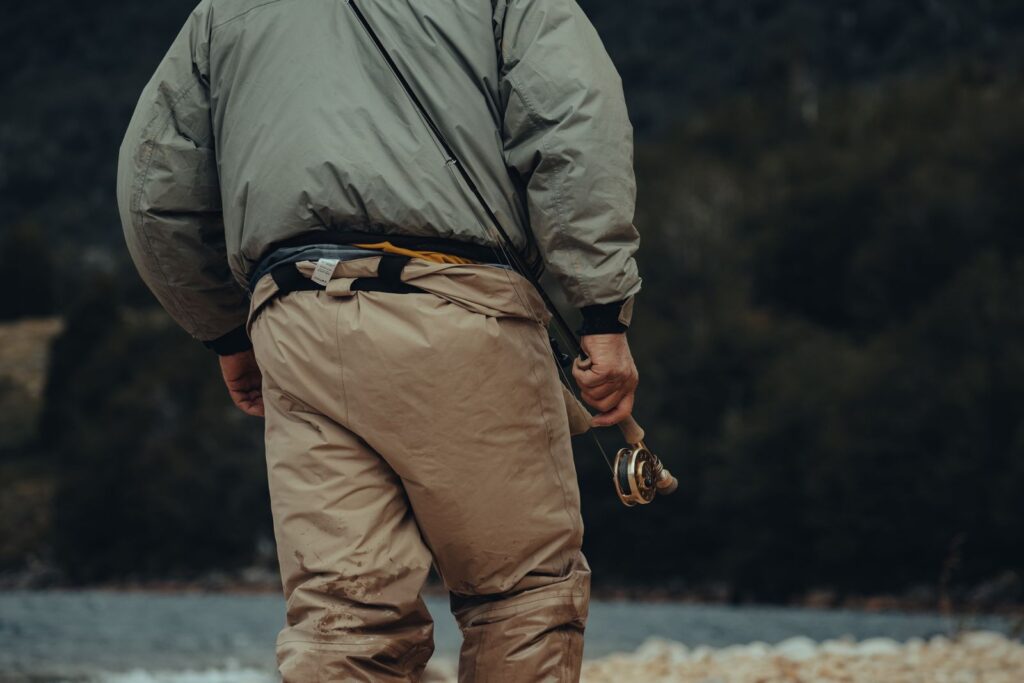
Guided trips are worth considering on your first visit. The canyon section has some technical water and the hatches can be hard to time without local knowledge. The outfitters based in Melrose and Twin Bridges know which sections are fishing and where the hatches are happening on any given day.
Pair the Big Hole with the Beaverhead River, which runs into the Big Hole near Twin Bridges. The two rivers fish differently but share the same access towns, and you can cover both on a single Southwest Montana trip with only an hour’s drive between them. Our full Montana fly fishing guide covers all the rivers worth fishing in the state and how to put together a multi-river itinerary.
A 5-weight is the right tool for most of what the Big Hole demands. Step up to a 6-weight if your plan is to fish streamers for big browns in fall, or if you’re targeting the salmonfly hatch and want to throw wind-resistant size 4-6 patterns all day without your casting arm giving out by noon. A 4-weight is a pleasure on the upper meadow section for grayling and cutthroat on small dries.
Frequently Asked Questions
The Big Hole has Montana FWP public access sites throughout its 150-mile length. The upper meadow section near Wisdom is best for grayling and technical dry fly fishing. The canyon section between Wise River and Melrose holds the highest trout density and the most intense hatches. The lower river below Melrose is float fishing territory for large brown trout. Access sites are marked off Highway 43 and the Big Hole River Road.
The Big Hole fishes March through October. March-April is the Skwala hatch, one of Montana’s best early-season dry fly opportunities. May-June brings the salmonfly hatch, the most famous event on the river. July and August can bring Hoot Owl restrictions from Montana FWP; check conditions before heading out. September and October are excellent for streamer fishing as large brown trout begin pre-spawn movement.
Key patterns by season: Skwala dry or nymph (size 8-10) in March-April; Sofa Pillow or Pat’s Rubber Legs (size 4-8) for the salmonfly hatch in May-June; PMD dries (size 16-18) in June through August; Trico spinners (size 18-22) on calm mornings in July-August; hopper patterns (size 6-12) from July through September; BWO dries (size 16-18) in September-October. For big browns in fall, articulated streamers in olive or black stripped through deep bend pools.
The Big Hole is one of the best fly fishing rivers in Montana. The canyon section between Wise River and Melrose holds up to 3,000 trout per mile. It is one of a handful of rivers in North America where anglers can realistically catch five species of wild trout in a single day: brown, rainbow, cutthroat, brook trout, and Arctic grayling.
The Big Hole holds five game fish species: brown trout, rainbow trout, cutthroat trout, brook trout, and Arctic grayling. The grayling are concentrated in the upper reaches near Wisdom and represent one of the last self-sustaining native populations in the contiguous United States. Brown and rainbow trout are found throughout the river, with the highest concentrations in the canyon section.
Final Thoughts on Fly Fishing the Big Hole River
The one thing that matters most on the Big Hole is paying attention to water temperature. A river this good gets fished hard in summer, and the Hoot Owl restrictions exist for a reason. Fish the mornings, respect the fish, and the river will reward you.
If I had one day on the Big Hole, I’d drive to the canyon section and float from Wise River to Melrose. Whatever season it is, that stretch is almost always fishing. In June, I’d go earlier and stay until the restrictions kick in. In October, I’d fish streamers all day and not think twice about it.
The Big Hole deserves its reputation. It’s not the easiest Montana river to time right, but when you get it right, there’s nothing like it.
Amazon and the Amazon logo are trademarks of Amazon.com, Inc, or its affiliates.
As a part of the Amazon Associates Program and other affiliate programs, Into Fly Fishing® may receive a comission if you order products through links on this website.