As an Amazon Associate I earn from qualifying purchases.
Georgia Fishing Guide
Fly Fishing Rivers
In Georgia
Choose a Georgia trout trip, from Atlanta tailwater parks to reserved creek water and longer walks into the mountains.
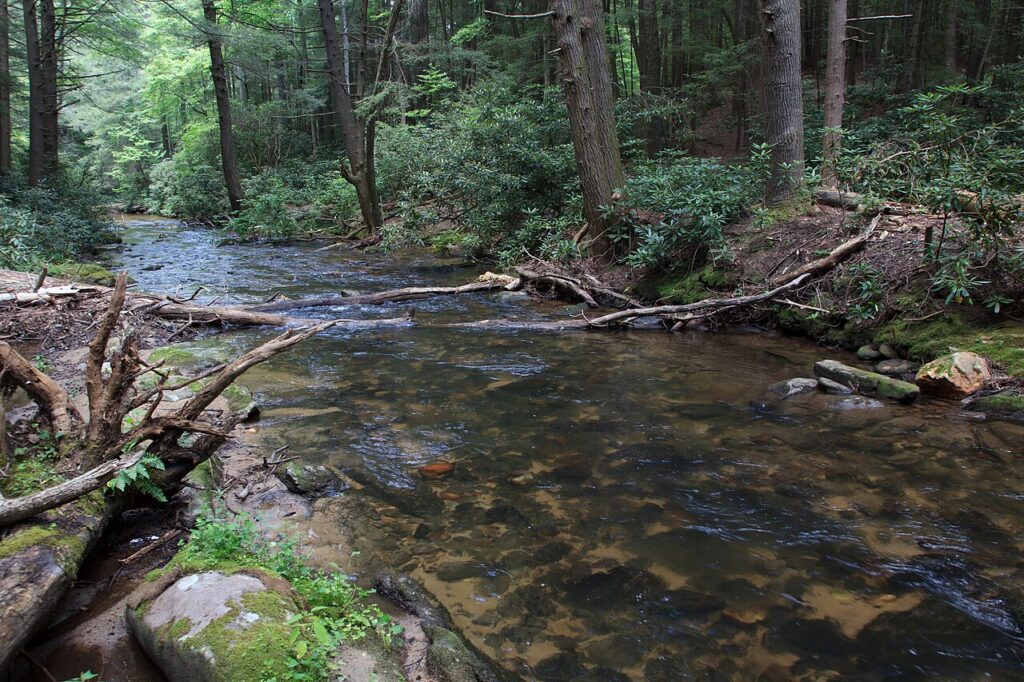
Noontootla Creek in Fannin County. Photo: Scott Long / Wikimedia Commons, CC BY 3.0. Resized for display.
Georgia offers several very different ways to spend a day with a fly rod. You can fish a public Chattahoochee access, reserve a session on Dukes Creek, book private Soque water, or make the walk into the Jacks River part of the trip. Start with the kind of day you want, then choose the water.
I grew up fishing in Connecticut and have spent years on the Farmington. For a Georgia trip, give one river enough time to learn its access, current, and feeding water. Start with a stretch you can reach comfortably and leave enough of the day to fish it well.
The seven rivers and creeks below cover public tailwaters, booked trout fishing, and mountain streams. The profiles separate the exact reaches that matter, including the upper and lower Toccoa, the public Noontootla water, and Georgia’s named delayed-harvest sections.
Where To Begin: Start with the Chattahoochee for a public tailwater outing near Atlanta, the Soque for a prearranged private-water trip, or Noontootla for a smaller wild-trout stream. Choose Dukes when you can reserve a permitted day, and the Jacks when you want a longer walk as part of the fishing.
Choose Your Georgia River
Use the access and fishing style to narrow the list. A short public-water session, a reserved creek visit, and a wilderness walk need different plans.
Water
Consider It For
Plan Around
A public tailwater trip near Atlanta
Choose the reach and follow dam-release information.
Border-water trout with nymph and dry-dropper options
Separate Burrell Ford from the Highway 28 delayed-harvest outing.
A booked private-water trout trip
Choose the property, casting space, and included tackle.
A reserved creek session at Smithgall Woods
Day-use dates and permits are central to the trip.
An upper-river outing or a separate tailwater day
Decide which side of Lake Blue Ridge you will fish.
Wild trout with a substantial wilderness walk
Choose the mainstem trail route and leave time to return.
Small-stream wild trout in Blue Ridge WMA
Plan the Forest Road 58 approach and managed-water rules.
Atlanta Tailwater
Chattahoochee River
The Chattahoochee tailwater below Lake Lanier is a practical place to start if you want a trout trip near Atlanta. Cold releases support trout fishing through the year, and the river also holds bass. The tailwater and national recreation area are the focus here; the smaller headwaters near Helen offer a separate trip.
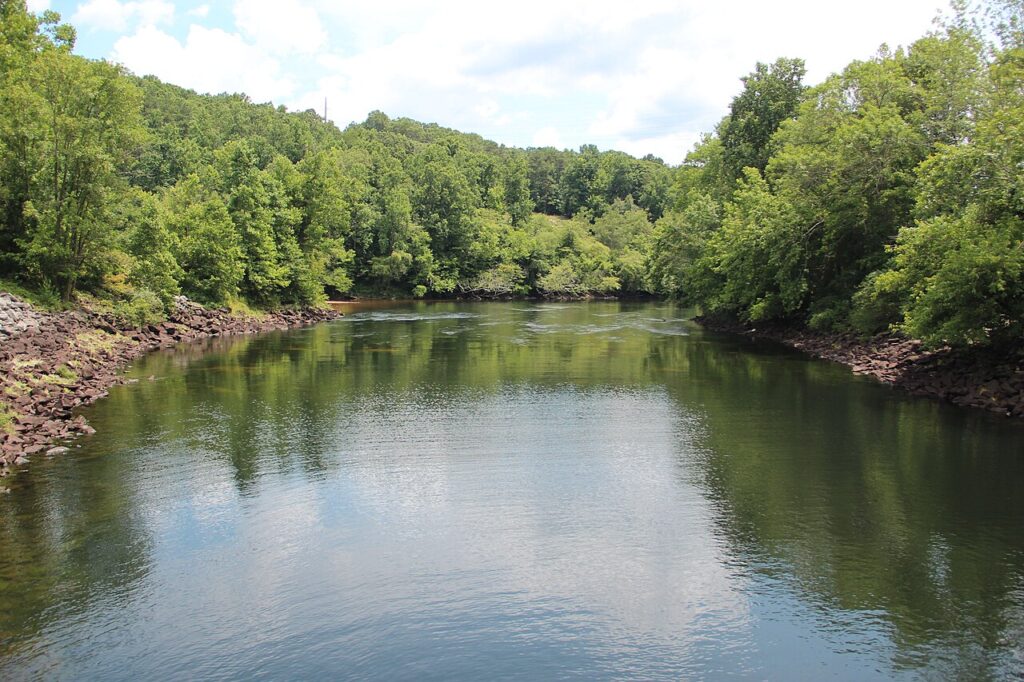
Jones Bridge is a public launch with parking arrangements worth planning around: the National Park Service reserves the small launch lot for trailers on weekends. Paddlers using the main lot have about a 0.4-mile carry, and parking along the access road is prohibited.
Tight-line nymphing is a useful method here. Start with a manageable length of line and a drift you can follow, then adjust the weight and casting position to reach the water beneath the surface current. Our Euro nymphing setup guide explains the equipment and leader choices. You do not need to cover the entire width of the river to practice a controlled presentation.
For a cool-water outing, Frogg Toggs Canyon II stockingfoot waders are one clothing option to compare. Check the fit and choose compatible wading boots separately. Our wader guide explains the choices; suitable clothing does not make a high release manageable.
Before entering the water, use the park’s release and water-quality information. Buford Dam releases, Morgan Falls operations, and rain affect different parts of the trip. A calm-looking bank is not a substitute for that information. PFDs must be worn while wading or boating between Buford Dam and Highway 20, and between Morgan Falls Dam and the Morgan Falls boat ramp.
The park allows fishing from 30 minutes before sunrise until 30 minutes after sunset. The delayed-harvest stretch is farther downstream, from Sope Creek to U.S. Highway 41, with trout release and single-hook artificial-lure rules from November 1 through May 14. Check the rule for your exact reach instead of applying that seasonal designation to every tailwater access.
Choose the Chattahoochee when you want to spend the day learning a public stretch without adding a wilderness hike. Give one access enough time, carry a small selection of nymphs, and keep the dam-controlled water level central to the day’s plan.
Northeast Georgia
Chattooga River
The Chattooga is a good choice if you want a trout trip with room to walk and several ways to fish. The Georgia and South Carolina border water holds rainbows and browns, with both wild and hatchery-supported fish. Choose the stretch before you choose the day: the Burrell Ford area and the delayed-harvest water near Highway 28 are different outings.
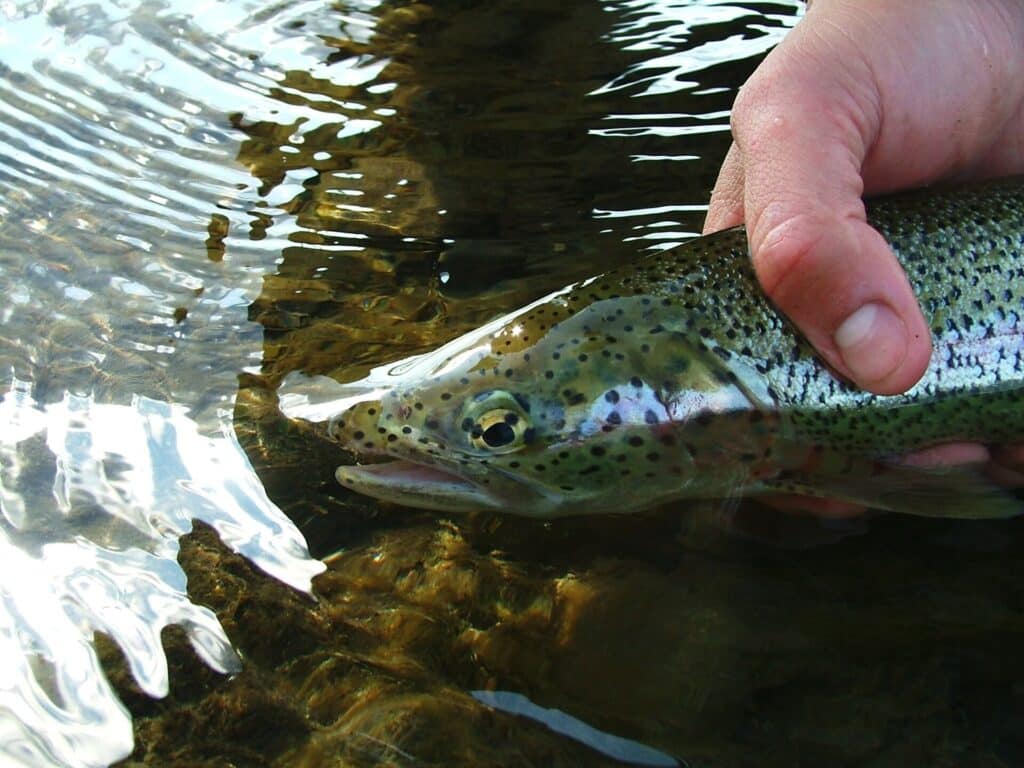
Burrell’s Ford Campground is a useful riverside base. Allow for a quarter-mile walk from the parking lot to the riverside campsites, where there are picnic tables and a vault toilet. Bring your own drinking water. The campground is on the South Carolina side, so settle the applicable border-water license and rules before treating it as a Georgia-only trip.
For the fishing, bring nymphs and a dry-dropper option. Start with a short drift through a reachable run, then change the depth if the fly is passing above the water you want to cover. Where a dry can float cleanly, the dropper gives you a subsurface presentation while you watch the surface fly. If the currents pull the two flies apart or sink the dry repeatedly, simplify the rig rather than forcing it through every piece of water.
The delayed-harvest reach runs from Georgia Highway 28 to Reed Creek. From November 1 through May 14, its special rules require immediate trout release and single-hook artificial lures. Locate those boundaries before fishing; the water around Burrell Ford has a different place in the trip.
For a first visit, pick either the Burrell Ford walking plan or the Highway 28 delayed-harvest plan and give it enough time. Walking farther can open up more water, but leave time to return and do not make an unfamiliar crossing just to reach the next run. A few runs fished carefully will give you a better feel for the river than a day spent moving between access points.
Northeast Georgia
Soque River
The Soque suits an angler who wants to arrange a specific stretch of trout water before arriving. Much of the river is bordered by private property, and private bookings are central to the fishing described here. Rainbow and brown trout are the targets. Choose the property and the casting space that suit you, rather than driving to a bridge and assuming the bank is available.
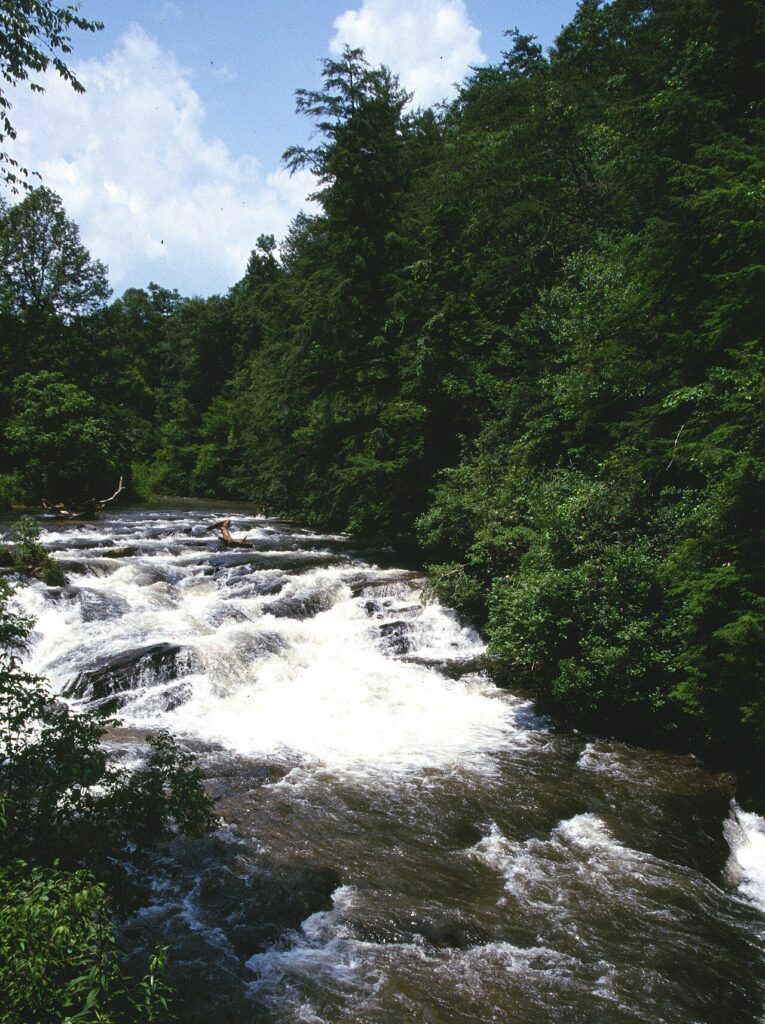
Unicoi Outfitters’ private-water trips offer two useful choices. Rainbow Point lies on the Soque near Clarkesville and offers a broader section of river. Larry’s Lodge, near Batesville on the upper Soque, has tighter casting lanes. These are named booked options, not public access points.
If you are still getting comfortable with a fly rod, tell the operator that when choosing the trip. More room for the backcast can make the day easier to manage. If you enjoy working through confined water, the upper section may be more appealing. Ask which property your booking covers, how much walking it involves, and whether the guide supplies the required flies and tackle.
For a winter booking, include midge imitations in the conversation with your guide. They are a useful option on the Soque, but let the actual water and feeding fish determine the pattern and presentation. Choose a position that gives the fly a clean drift without repeated casts into vegetation. Match the leader to the fish and the room available to play them, rather than assuming a light small-stream setup belongs on every private reach.
There is no reason to buy a complete new outfit before confirming what the trip includes. A guide may supply tackle, while a self-equipped booking may have particular hook or handling requirements. Settle those details along with the date. Private access also does not mean fish should be pursued in unsuitable water conditions; ask how the operator handles warm weather or a rescheduled fishing day.
Choose the Soque for the arranged access and the chance to work closely with a guide on presentation and fish handling. For a trip where you can decide your own public route after arriving, compare the Chattahoochee or upper Toccoa instead. A trout-water designation on a map is not permission to enter private land.
Northeast Georgia
Dukes Creek
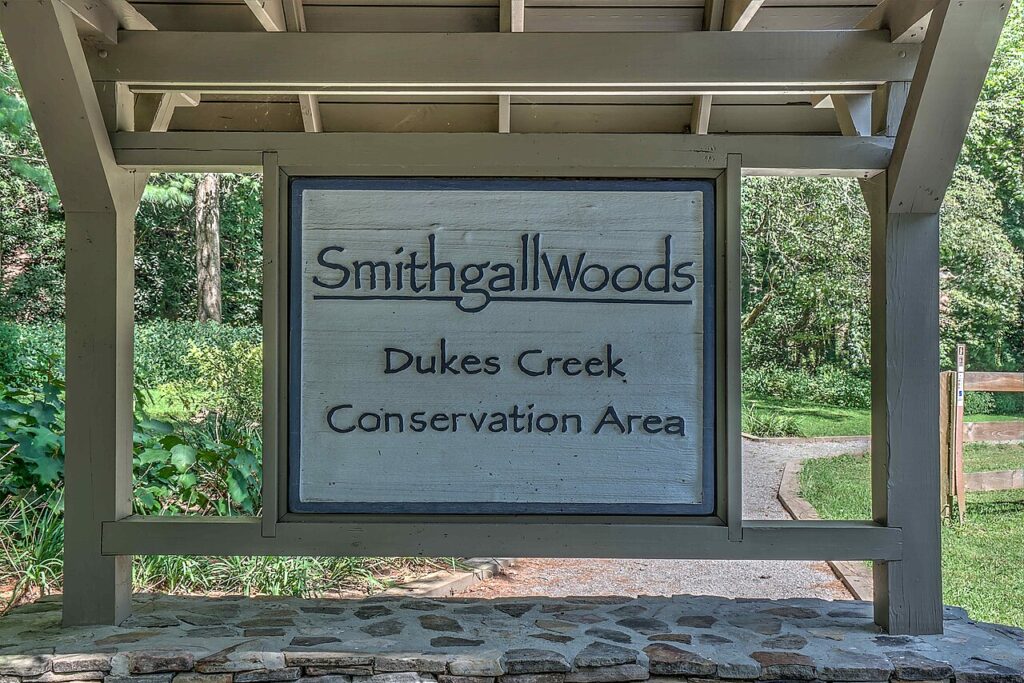
Dukes Creek at Smithgall Woods is a good choice for an angler willing to reserve a place and spend time on careful trout presentation. Angler numbers are limited. Arrange the fishing first, then build the rest of the day around your reserved session.
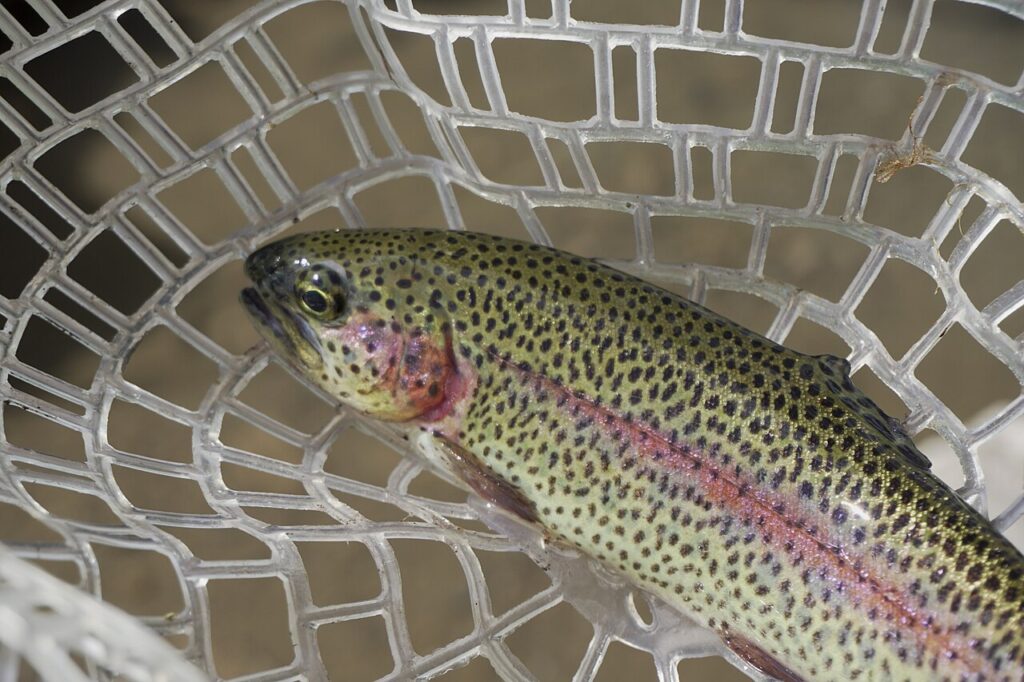
Smithgall Woods offers day-use fishing on Wednesdays, Saturdays, and Sundays from October through May, by reservation. Day-use fishing is closed from June through September. Call the park to arrange the visit and confirm the required check-in, permit, and assigned fishing details.
Overnight cottage guests have different fishing arrangements. Do not assume those terms apply to a day visitor or to every part of the property. If you are booking a cottage specifically for fishing, confirm the water included in that stay with the park. That is particularly important for a summer trip when ordinary day-use fishing is unavailable.
On the water, begin with nymphs and give smaller, natural-looking patterns a place in the box. Clear, pressured water rewards attention to the approach and drift. Choose a position that lets you present the fly without repeatedly lining the same fish, and change the depth before making a dozen identical casts that pass above the holding water.
A small fly does not mean you should automatically use the lightest leader you own. Match the tackle to the fly, the cover, and the fish you are targeting. If you cannot control the drift from your position, shorten the cast or find a better angle before changing patterns again. The limited fishing time is best spent improving a presentation you can actually manage.
Smithgall’s water is catch-and-release, with artificial lures and barbless hooks. Prepare those flies before arriving so you can spend the session fishing. Dukes is especially worth considering for a planned cooler-month visit. For more flexible public access, compare the Chattahoochee or upper Toccoa.
Blue Ridge And Cohutta
Toccoa River
The first Toccoa decision is whether to fish above or below Lake Blue Ridge. The upper river offers a mountain-river trip with public Forest Service areas and flow-dependent walking or floating options. Below Blue Ridge Dam, the tailwater is a separate fishery shaped by releases. Pick one for the day before choosing an access, flies, or a boat route.
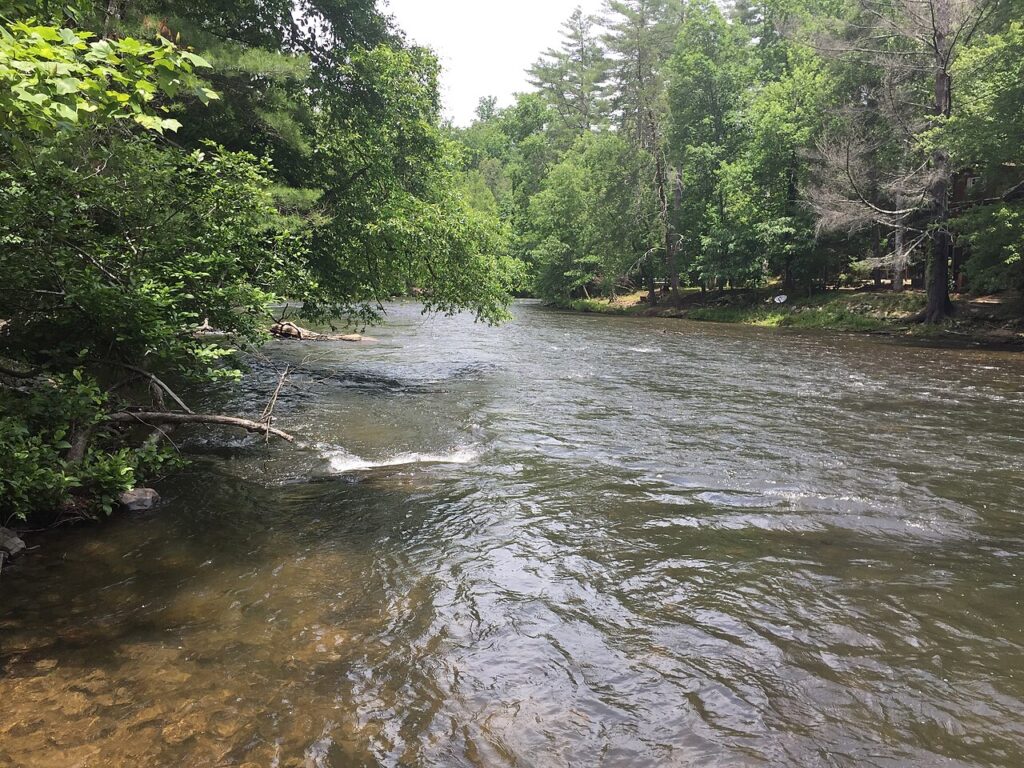
On the upper river, Sandy Bottoms is a named campground, fishing area, and canoe takeout. Use the operator’s current directions and site information. For a float, match the connecting route and actual water level to your craft and experience. For a walking trip, choose the bank approach for that day’s conditions.
The upper delayed-harvest section begins 0.4 mile above Shallowford Bridge and ends 450 feet above Sandy Bottom Canoe Access. From November 1 through May 14, its special rules require trout release and single-hook artificial lures. Plot those two boundaries carefully. Sandy Bottoms is a nearby access reference, not a reason to extend the delayed-harvest rule past its actual endpoint.
For the lower river, TVA identifies a canoe and kayak launch below Blue Ridge Dam. Check the release information for that dam when planning a tailwater outing. An upper-river gauge, a quiet morning at the launch, or yesterday’s report does not describe the release you will experience farther downstream.
The tailwater can offer caddis dry-fly opportunities when conditions suit them. Bring a caddis dry, but wait for surface activity before committing the whole day to it. Watch where the fish rises, then give the dry enough room to drift naturally into that feeding lane. Keep a subsurface option ready for the periods between rises.
On the upper river, a float can connect water between the limited public banks. Arrange a takeout and a return before launching, and choose the route for the actual flow and your experience. Keep a bank-fishing or different-river alternative if the flow rules out the wading you had in mind.
Blue Ridge And Cohutta
Jacks River
The Jacks is the choice for a fishing trip where the walk is a substantial part of the day. It runs through the Cohutta Wilderness and offers wild rainbow and brown trout. This is a different commitment from stopping at a roadside tailwater park: allow time and energy for reaching the river, fishing, and walking back out.
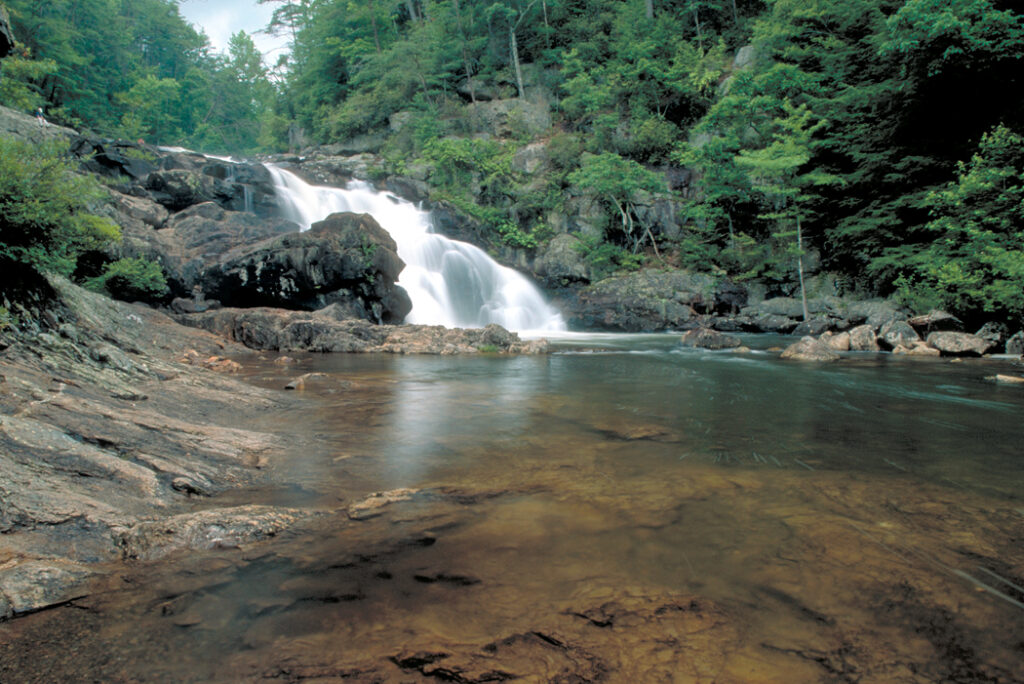
Plan the mainstem route with a current Forest Service trail map. The Beech Bottom approach begins in Tennessee and leads toward the water above Jacks River Falls. Confirm the road and trail status before traveling, and keep the Georgia fishing destination distinct from the state where you begin the walk.
Jacks River Fields Campground sits beside the South Fork and South Fork Trail. It offers a separate base in the watershed. For the mainstem water above the falls, plan the longer trail approach described here.
For a summer trip, an attractor dry with a small nymph dropper is a reasonable starting rig. Fish the reachable riffles and pockets before spending all your time on a clear pool. Keep the dry visible, use only enough weight to manage the dropper, and adjust when a deeper run calls for a different drift. A compact fly selection leaves less to sort through while standing beside the water.
Choose how far you will go before the first cast. It is easy to keep fishing upstream when the next run looks promising, but the return journey still needs daylight and effort. Carry the route and the essentials for the walk, and leave room in the plan for a slower approach than expected.
The Jacks makes sense when you want that longer outdoor day as much as the fishing. If your available time is a short morning or you are traveling with someone who wants an easy return to the car, pick another river from this guide. Give this river a day when you can enjoy both the wilderness walk and the wild-trout fishing.
Blue Ridge And Cohutta
Noontootla Creek
Noontootla is a useful choice for a smaller wild-trout stream in the Blue Ridge area. It feeds the upper Toccoa, with wild rainbow and brown trout in the watershed and brook trout in some of the higher tributaries. Focus this plan on the public Blue Ridge Wildlife Management Area water, rather than assuming a private downstream fishing property is part of the same outing.
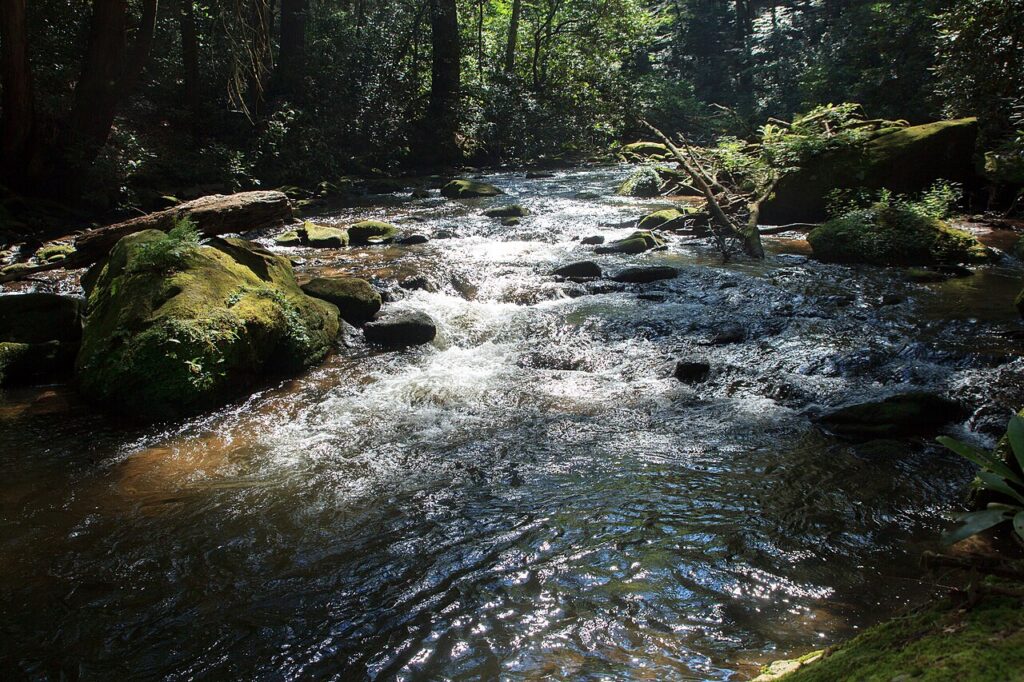
Forest Road 58 is the corridor to locate on the current forest map. Allow for a walk down from a roadside turnout, with vegetation and steep, uneven slopes between the road and the water. Check the road’s current status before driving in, and choose an established approach you can also climb back out of.
A small attractor dry with a nymph dropper is a practical starting choice. Give the nearest pocket a controlled drift before stepping farther into the creek. If the dry is difficult to see or the dropper repeatedly catches the bottom, adjust the rig to that piece of water instead of continuing with the same setup through every pool.
Keep the small flies organized in a compact box. The SF slim fly box is an option for a selection of small nymphs and dries; check the clearance for the patterns you carry and give bulky flies deeper storage.
Think about the casting space before picking a position. On a confined stream, a short cast that reaches the useful water is enough. Keep line clear of the vegetation behind you, and move only when you have finished fishing the water within comfortable reach. A clean drift through one pocket is a useful result before you move to the next.
Within Blue Ridge WMA, Noontootla and its tributaries have special rules: artificial lures are required, and trout under 16 inches may not be taken or possessed. Use the current Georgia rules and the WMA map to establish that boundary. Keep the WMA boundary clear when comparing the public creek with a downstream private booking.
For a first visit, choose a modest section along the road corridor and spend time learning its pools and pockets. The higher tributaries add another trip for an angler interested in brook trout, but you do not need to cover the whole watershed to have a worthwhile day. Leave time for the road and walking approach as well as the fishing.
Plan The Access Before The Drive
Public water gives you flexibility, but the approach still determines how much of the day is spent fishing. Jones Bridge has specific parking arrangements, Burrell Ford involves a walk from the lot, and the Jacks requires a much larger commitment. Pick the route that fits the people coming with you.
Three Ways To Arrange The Day
Public Entry
Use a named park, campground, or forest approach. Allow for parking, the walk to the water, and a return route. Jones Bridge and Sandy Bottoms are useful starting references.
Reserved Public Fishing
For Dukes at Smithgall Woods, secure the fishing reservation and confirm the permitted day before committing to the trip.
Private Booking
For the Soque, arrange the named property and find out what the trip includes. Broader water and tighter upper-river casting lanes suit different anglers.
For a float, settle the put-in, takeout, vehicle return, and conditions together. The upper Toccoa offers floating possibilities, but a marked canoe access does not make every connecting stretch suitable for every boat. A short walk and a few well-fished runs can be a better use of a limited day than an ambitious route.
Use Georgia DNR’s trout information to confirm your fishing and trout-license requirements, including any exemption that applies. On the Chattooga, check the border-water arrangements for the exact stretch and side you plan to use. Property permission, a fishing license, and a park reservation answer different questions.
Choose Flies And Gear For The Water
Begin with a presentation you can control. A dry-dropper rig suits the mountain-stream plans here, while the Chattahoochee gives you a reason to practice tight-line nymphing. On the lower Toccoa, keep a caddis dry ready for surface activity instead of assuming the whole day will be a dry-fly session.
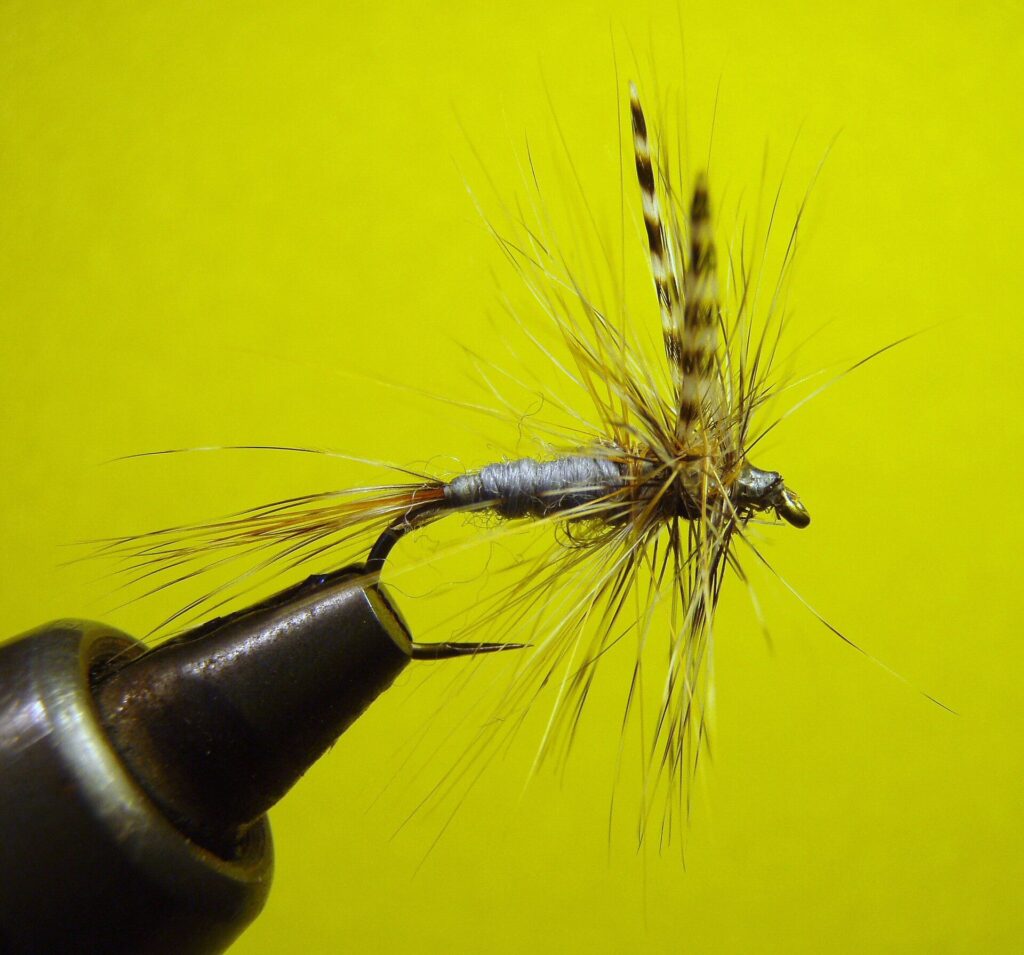
Choose The First Presentation
Short Nymph Drift
On the Chattahoochee, begin with a manageable tight-line presentation. Change depth and position before trying to cast across every current.
Visible Dry And Dropper
On Noontootla or a summer Jacks trip, pair an attractor dry with a small nymph. Adjust to the pocket rather than carrying one depth through the whole stream.
Fish The Surface Activity
On the lower Toccoa, use a caddis dry when the fish and conditions give you a reason. Keep a subsurface option for the quiet periods.
Our trout rod guide can help if you are comparing equipment. Choose for the casting room, flies, and water you expect to fish. A confined creek and a booked Soque stretch with larger fish need different conversations about line control and tackle.
For ordinary trout fishing, the SF 3X, 4X, and 5X tippet selection gives you sizes to compare with the fly and leader you are using. Ask the operator about heavier tackle when booking water with larger fish or substantial cover. Match the strength to the conditions, and replace damaged tippet before continuing.
For a winter Soque booking or a clear-water Dukes session, leave room for small midge and nymph patterns. Keep them easy to find, and confirm hook requirements before you arrive. Dukes requires barbless artificial lures; the delayed-harvest sections have their own single-hook rules.
Polarized glasses are another useful item to compare when packing. The KastKing Skidaway polarized sunglasses are one option; choose a comfortable fit and a lens suited to the light. Keep your footing decisions separate from what the lens appears to reveal.
Plan Around The Season And The Actual Water
There is no single calendar that describes all seven waters. A delayed-harvest period controls how a named reach is fished. Smithgall’s day-use schedule controls access. A dam release affects the water you will meet on a tailwater, even when the fishing season is open.
Three Different Checks Before A Trip
Delayed-Harvest Reach
From November 1 through May 14, the named Chattahoochee, Chattooga, and upper Toccoa sections require trout release and single-hook artificial lures. Locate the boundaries.
Dam-Controlled Water
For the Chattahoochee or lower Toccoa, use the correct dam and reach when planning around releases. Yesterday’s quiet water is not today’s forecast.
Reserved Fishing Day
Dukes day-use fishing runs October through May on the park’s specified days. A private Soque trip needs its own property and date confirmation.
For a cooler-month trip, consider a reserved Dukes session, a winter Soque booking with midge options, or one of the delayed-harvest reaches. Those are different ways to arrange a day, so choose the access and fishing style you prefer rather than treating the dates as a statewide promise of good fishing.
For summer, a Jacks outing offers the dry-dropper approach described above, while the Chattahoochee tailwater provides year-round trout opportunities. Leave room to change plans when the water or weather is unsuitable. Dukes does not offer ordinary summer day-use fishing, even though overnight guests have separate arrangements.
Read the current Georgia fishing rules for the water you select, then pair them with the operator’s access information. For the Chattahoochee park, the NPS fishing page also explains the artificial-lure stretch from Highway 20 to the Medlock Bridge Unit ramp and the park’s fishing hours.
Georgia River Questions
Consider the Chattahoochee for a public tailwater outing near Atlanta. For a prearranged private-water trip, compare the Soque properties. Noontootla is a different choice for a smaller wild-trout stream, while Dukes requires a reserved fishing day.
Day-use fishing at Smithgall Woods requires a reservation and is offered on Wednesdays, Saturdays, and Sundays from October through May. Day-use fishing is closed June through September. Overnight cottage guests have separate arrangements; confirm the water and terms with the park.
The named Chattahoochee, Chattooga, and upper Toccoa delayed-harvest reaches require immediate trout release and single-hook artificial lures from November 1 through May 14. Check the exact boundaries in the profiles and current Georgia rules; the designation does not cover each entire river.
Several options are built around walking or wading when conditions permit, including booked Soque water, Dukes, and the mountain-stream approaches. A float can connect upper Toccoa water, but it needs a suitable flow, takeout, and return plan. Choose the access before deciding what boat or equipment to bring.
Choose A Georgia Trip You Have Time To Enjoy
For a first trip, choose one river and make the access work. Reserve Dukes, confirm the Soque property, or pick a public approach on the Chattahoochee or upper Toccoa. If the walk is part of the appeal, give the Jacks or Noontootla the time the route deserves.
Keep the fly selection manageable and spend time improving the drift. A day learning the water in front of you is a useful start, whether that means one creek pool, a tailwater run, or a stretch you have booked for the afternoon.
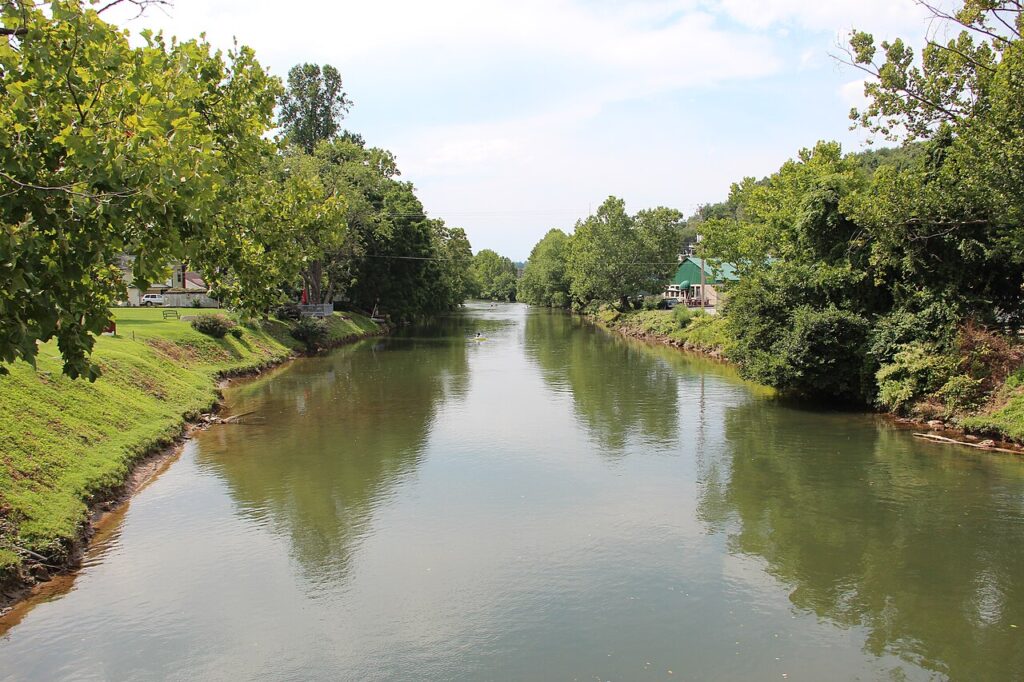
Featured photo: Chattahoochee River. Photo: TheSussman (Mike) / Wikimedia Commons, CC BY 2.0. Resized for display.
Save This Georgia River Guide For Later


Pin 1 photo: Scott Long / CC BY 3.0; cropped and overlaid with guide text. Pin 2 photo: ChattOconeeNF / CC BY 2.0; cropped and overlaid with guide text.
Amazon and the Amazon logo are trademarks of Amazon.com, Inc, or its affiliates.
As a part of the Amazon Associates Program and other affiliate programs, Into Fly Fishing® may receive a comission if you order products through links on this website.